Ailytics raises $7.4M to turn old CCTV into an AI safety layer for heavy industry
- Who: Ailytics, a Singapore vision-AI startup founded in 2021, led by co-founders Lenard Tan (CEO) and Prateek Manocha (CTO).
- What: A US$7.4 million Series A led by Tin Men Capital to expand across Asia-Pacific, the US and the Gulf.
- When: Announced October 25, 2026, in a PR Newswire release datelined Singapore.
- Growth: From 70 projects in four countries after a US$2.7 million pre-Series A in April 2024 to more than 400 deployments across 15 countries.
- Product: Ailyssa, which derives three-dimensional spatial understanding from a single two-dimensional CCTV feed, with the new AilyssaX reasoning engine.
- Backers: SEEDS (part of SG Growth Capital), Safie, one of Japan's largest construction companies, family offices and existing investors; Tin Men cites client churn below 1 per cent.
Singapore vision-AI startup Ailytics has raised US$7.4 million in a Series A led by Tin Men Capital, betting that the fastest way to bring AI onto a heavy-industry site is not new hardware, but the cameras already bolted to the wall. The company's product, Ailyssa, turns existing industrial CCTV into a real-time safety and operations layer — no rip-and-replace of camera fleets required. The round, announced October 25, 2026, will fund local teams in the US, Japan, Australia and the Gulf, with a focus on harsh outdoor industrial environments.
From 70 projects to more than 400 deployments
The growth story is the pitch. Since a US$2.7 million pre-Series A led by Tin Men Capital in April 2024, Ailytics says it has grown from 70 projects in four countries to more than 400 deployments across 15 countries. It began on Singapore public housing (HDB) projects and now runs large deployments at NatSteel, PaxOcean and DHL, at Rome's Leonardo da Vinci International Airport, and on the Changi Airport Terminal 5 build. “We are building a global industrial AI company from Singapore,” said Lenard Tan, Ailytics' co-founder and CEO.
Tin Men Capital's Jeremy Tan, the firm's co-founder and managing partner, pointed to the unit economics behind that expansion: Ailytics has reached 15 markets “with very robust unit economics and client churn below 1 per cent.” For a startup selling into heavy industry — where sales cycles are long and pilots die quietly — a sub-1% churn claim is the number that matters most to the next investor in line.
What Ailyssa actually does
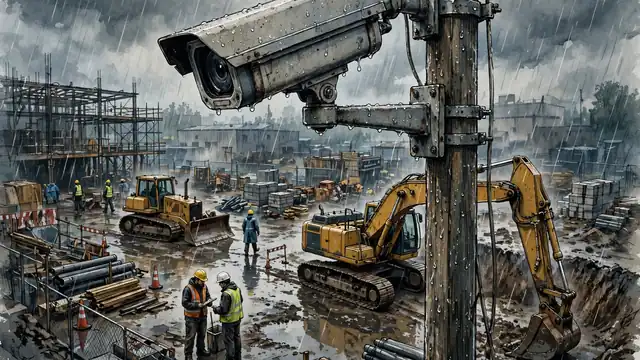
Ailyssa's core claim is spatial: it derives three-dimensional spatial understanding from a single two-dimensional feed, and it keeps working through rain, dust and poor lighting with decades-old cameras. Its latest reasoning engine, AilyssaX, processes contextual scenes as they unfold and verifies multi-step procedures, aiming for more accurate and more meaningful alerts rather than a stream of false alarms. That matters on a construction site or in a steel plant, where an alert nobody trusts gets ignored — and an ignored alert is worse than no alert at all.
The funding will also go into building Ailytics' own domain-specific reasoning models while keeping the cost of running AI low as demand grows, according to co-founder and CTO Prateek Manocha. That is a deliberate trade: instead of renting a general-purpose frontier model for every camera feed, Ailytics wants models tuned to industrial scenes, where the vocabulary of risk — a worker near a moving load, a procedure step skipped — is narrow but unforgiving.
Why this round, and why now
The investor list is a map of the expansion plan. Alongside Tin Men Capital, the round includes SEEDS, part of SG Growth Capital, Safie — Japan's largest cloud camera company — and one of Japan's largest construction companies, plus family offices and existing investors. A Japanese cloud-camera leader and a Japanese construction giant are not passive cheques: they are distribution into the exact sites Ailytics wants to cover next, and a signal that the company's “harsh outdoor industrial environments” focus is aimed squarely at Asia's biggest building programs as well as the US and Gulf markets.
The broader context is that industrial AI is shifting from pilots to procurement. Vision systems that once needed new sensors and new wiring can now run on infrastructure that sites already own, which collapses both the cost and the permission needed to start. Ailytics' bet is that safety and operations — not flashy demos — is where that shift pays first. If the next 400 deployments look like the last, the company's biggest risk is not the technology but the grind of local teams, language, and site-by-site trust in 15 markets at once.
What to watch
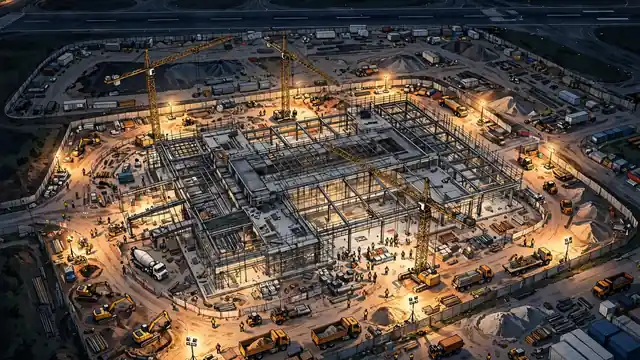
Two numbers will tell whether this round delivers. The first is deployment growth beyond the current 400: whether the new local teams convert the US, Japan, Australia and Gulf push into signed sites, or whether the 15-country footprint stalls. The second is whether domain-specific reasoning models actually cut alert noise and running costs, as Manocha promises, or whether cheaper general models eat that advantage. The original announcement is Ailytics' PR Newswire release, carried by Morningstar.
Frequently asked questions
What did Ailytics raise, and who led the round?
Ailytics raised US$7.4 million in a Series A led by Tin Men Capital, with SEEDS, part of SG Growth Capital, Safie, one of Japan's largest construction companies, family offices and existing investors also taking part.
What does Ailytics' product actually do?
Its product, Ailyssa, turns existing industrial CCTV into a real-time AI safety and operations layer, deriving three-dimensional spatial understanding from a single two-dimensional feed, even with decades-old cameras in rain, dust or poor lighting.
How big is Ailytics now?
Since a US$2.7 million pre-Series A in April 2024, it has grown from 70 projects in four countries to more than 400 deployments across 15 countries, including sites at NatSteel, PaxOcean, DHL, Rome's Leonardo da Vinci International Airport and the Changi Airport Terminal 5 build.