Canva launches Craft, its first homegrown image model — it sketches the picture before painting it
- Who: Canva, via its in-house AI lab Canva Research
- What: Craft, Canva’s first image generation model built and trained from scratch
- When: unveiled and launched October 22, 2026 — available starting today to all users globally; Craft-fast and Craft-ultrafast variants upcoming
- How: two-stage architecture — a planning model writes the composition, a rendering model paints it; up to 2K resolution, 30+ aspect ratios or custom size; text in 55 languages
- Training: millions of human-made templates from Canva’s own library; 25,000+ image pairs evaluated head-to-head against leading models with Canva’s professional designers
- Rankings (Canva’s figures): debuted #4 on DesignArena; #1 of 87 for People & Portraits, #1 of 85 for Landscapes & Nature; climbed to #2 overall behind OpenAI’s GPT-Image-2.5 Sunburst
Canva has stepped into the model race. On Thursday, October 22, 2026, the design platform unveiled Craft, the first state-of-the-art image generation model its in-house AI lab, Canva Research, has developed and trained from scratch. The model is available starting today to all of Canva’s users — more than a quarter of a billion people — inside Dream Lab, and to developers through Canva’s public API. Canva claims the debut makes it the world’s second most advanced AI lab for image generation, behind only OpenAI, citing the crowdsourced DesignArena leaderboard.
Until now, Canva has leaned on other companies’ models: Dream Lab launched in October 2024 running on Phoenix, the model from Leonardo.ai, the Sydney startup Canva acquired that year. Researchers from Leonardo contributed to Craft, Canva told TechCrunch. The new model is pitched squarely at the image generators from Google, OpenAI, ByteDance and Meta — but with a twist in how it works.
It plans the picture before it paints it
Most image models turn a prompt straight into pixels. Craft splits the job in two. First, an image-planning model reads the prompt and writes out a detailed plan of the composition: which elements appear, where they sit in relation to each other, their relative size, what matters most visually, and any text that has to appear in the image. Then a dedicated rendering model translates that plan into a finished picture at up to 2K resolution, in more than 30 aspect ratios or a custom size.
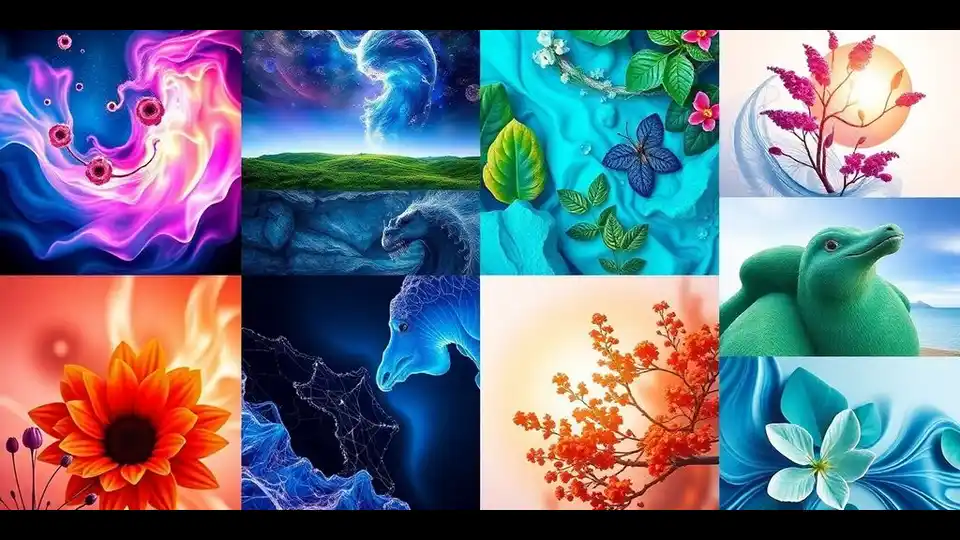
Reasoning about composition before rendering gives Craft legible text — it can write text in 55 languages — objects placed where you asked for them, and a useful property for design work: targeted changes to one element without redrawing everything else. The layered structure also feeds Magic Layers, Canva’s tool that turns a flat generated image into separate, editable design elements, with what Canva describes as more accurate and faster conversion via JSON boundary boxing.
Trained on templates, judged by designers
Canva says most image models learn mainly from photographs, while Craft’s training leaned heavily on millions of human-made templates from its own content library: posters, social posts, presentations, infographics, menus and typography-rich layouts. Unlike flat images, those templates teach the model how layout, hierarchy and typography fit together — not just what finished images look like.
After pre-training, Canva optimized Craft with supervised fine-tuning and reinforcement learning using feedback from its professional designers. Dozens of researchers worked alongside them to assess more than 25,000 pairs of images in head-to-head comparisons against leading models — and when automated evaluations and human judgments differed, Canva writes, “the designers were right.”
The rankings it’s claiming
Canva says Craft debuted as the fourth most advanced image model on DesignArena, and ranks #1 globally for People & Portraits (out of 87 models) and Landscapes & Nature (out of 85), #2 for Abstract & Patterns and #4 for Products. By Thursday evening it had reportedly climbed to second on DesignArena’s public image leaderboard, behind only OpenAI’s GPT-Image-2.5 Sunburst. Those category placings — and the “second most advanced lab” claim built on them — are Canva’s own figures, and should be read as the company’s marketing until independently verified.

Why Canva built it: the money
Craft is also an AI-economics story. In August, Canva cut its 2026 growth forecast from 30% to 20%, with chief executive Melanie Perkins telling shareholders the average cost of serving an AI task was too high and the company had been relying too heavily on frontier models. With more than 400 designs created on Canva every second, every image Craft generates in-house is one Canva no longer pays a third party to make.
Canva says advanced model distillation and a custom inference engine optimized for the planning stage make Craft an order of magnitude faster than its first internal version — and two cheaper variants, Craft-fast and Craft-ultrafast, are already on the way, which the company says will cost a fraction of leading frontier models. Rivals are racing down the cost curve too: Google halved the cost of an image with Nano Banana 2.1 earlier this month.
How to get it
Craft is available now to all Canva users globally, free and paid, through Dream Lab in the bottom-left panel of the editor. Developers can build it into their own apps — marketing platforms, e-commerce sites, ad builders, print services — through the public API. Craft through the Canva MCP server is “coming soon,” which would let AI assistants and agents create ready-to-use graphics as one step in a bigger task; Canva already has a plug-in inside ChatGPT, shown off at OpenAI’s DevDay last month. Like all AI products on Canva, Craft is backed by Canva Shield, the company’s safety approach with input and output moderation, privacy controls and reporting tools.
Sources: Canva Newsroom, TechCrunch.
Frequently asked questions
What is Canva Craft?
Canva Craft is Canva’s first state-of-the-art image generation model developed and trained from scratch by Canva Research, the company’s in-house AI lab. Canva unveiled and launched it on October 22, 2026, and it is available starting today to all Canva users worldwide.
How is Craft different from other image generators?
Instead of generating pixels directly from a prompt, Craft uses a two-stage architecture: a planning model writes a detailed composition plan (elements, spatial relationships, relative scale, visual hierarchy, text), then a rendering model turns it into an image at up to 2K resolution across 30+ aspect ratios. Its training leaned heavily on millions of human-designed Canva templates rather than mainly photographs, and its outputs feed Magic Layers, which turn generated images into fully editable design elements.
Who can use it, and what does it cost?
Craft is available now to every Canva user globally, free and paid, through Dream Lab, and to developers through Canva’s public API. Support through the Canva MCP server — so AI assistants and agents can generate ready-to-use graphics — is coming soon. Canva hasn’t disclosed how many Craft images each plan includes or API pricing. Like all Canva AI products, Craft is backed by Canva Shield, the company’s AI safety framework.