DeepL launches Aure v2: live voice translation with half the delay
DeepL’s new Aure v2 translates speech directly into translated speech, cutting the median delay of live voice translation in half. It is live now for DeepL Voice customers in six languages — with the company’s own benchmarks doing all the talking, for now.
- The launch: Aure v2, unveiled November 26, 2026, at DeepL’s inaugural Unmute Summit in Tokyo; live now for DeepL Voice customers.
- The architecture: end-to-end speech-to-speech — one model instead of the usual transcribe, translate and synthesise relay.
- The speed claim: 50% lower median translation delay than Aure, launched November 11; DeepL’s launch materials put the median at 3.3 seconds from spoken word to translated word heard.
- The quality claim: in DeepL’s internal November 2026 study — one-minute recordings of real speech across 10 language pairs — Aure v2 beat six competing systems in every tested pair, with 32% fewer English-to-Japanese errors than Google Gemini 3.5 Live Translate.
- The languages: six at launch — English, German, French, Spanish, Japanese and Korean — auto-enabled, no setup. The original Aure covered eight, adding Italian and Portuguese; those stay available through DeepL’s existing voice models.
- The adoption: DeepL Voice minutes rose more than eightfold year over year in Q3 2026, and translated meeting minutes rose about sevenfold.
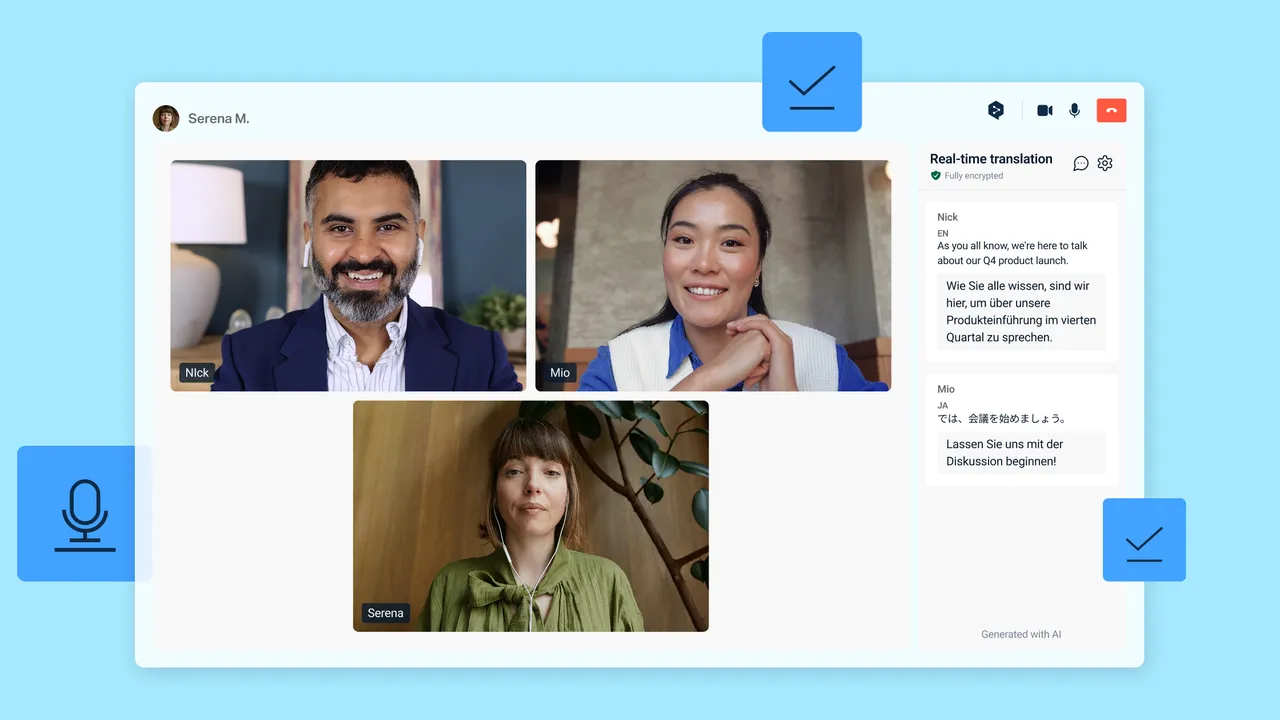
DeepL has a new model for live conversation, and the headline number is a halved delay. Aure v2, unveiled on Thursday at the company’s first Unmute Summit in Tokyo, translates speech straight into translated speech — no transcription step, no text-translation step, no separate voice synthesis — and DeepL says the median wait is now 50% shorter than its predecessor, which itself launched only fifteen days earlier.
That predecessor, the original Aure, arrived on November 11 with a different selling point: translated speech that continuously adapted to the speaker’s tone, emotion, emphasis and pace, rather than deriving its delivery from a static sample taken at the start of a call. Aure v2 keeps that expressiveness and turns to the other half of the problem — speed and accuracy.
One model instead of three#
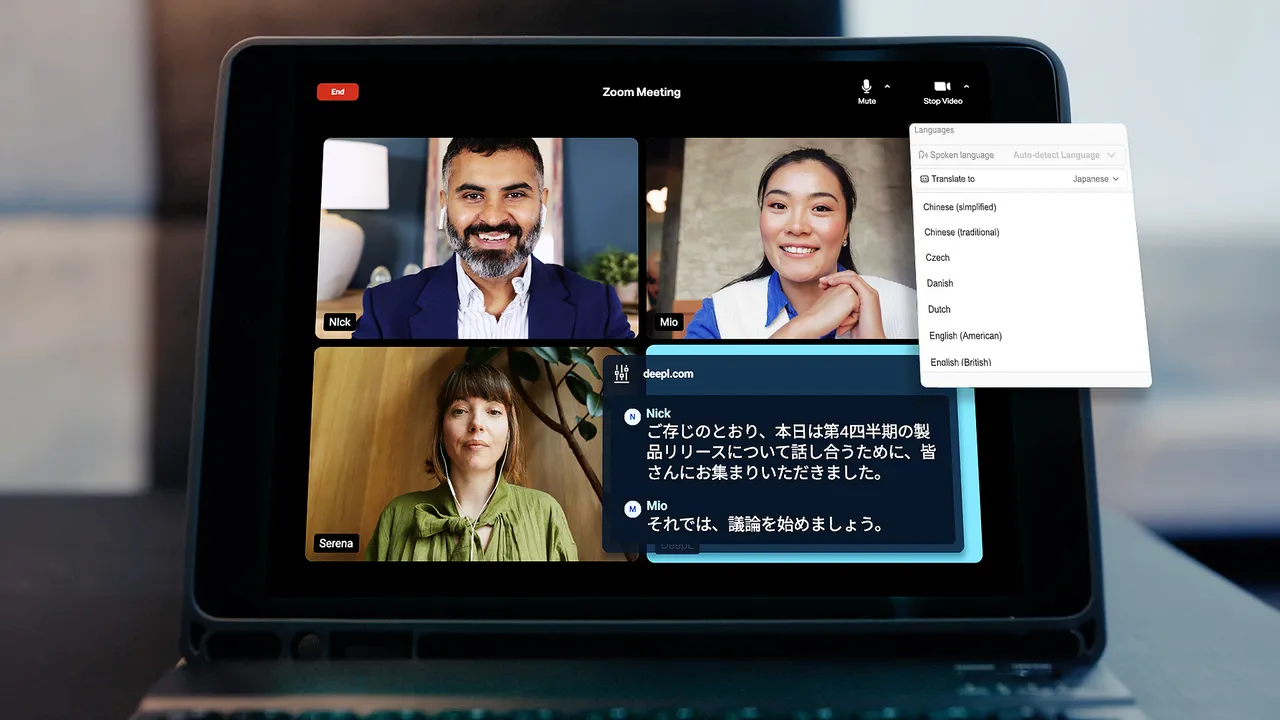
Traditional live translation is a relay race. Speech is transcribed to text, the text is translated, and a voice is synthesised from the translation — three stages, three chances to add delay and lose nuance. Aure v2 collapses the relay into a single end-to-end model that goes directly from speech in one language to speech in another.
DeepL’s launch materials put the result at a 3.3-second median latency — the point by which half of the translated words have been heard. The model is trained with reinforcement learning, which matters for a reason that has nothing to do with raw speed.
The hard part is knowing when to start#
In live translation, starting early and starting well pull in opposite directions. Begin too soon and the model translates without enough context; wait too long and the conversation stalls. DeepL singles out German and Japanese as especially tricky, because the information that decides a sentence’s meaning can arrive at its very end.
Good training data for that judgement is scarce — there are not many recordings of well-timed, expressive real-time translation to learn from — so DeepL trained Aure v2 with reinforcement learning instead, rewarding it for accurate translations that began quickly, until it learned when it had heard enough to start speaking.
The numbers come with a caveat#
Every performance figure in the launch comes from DeepL’s own November 2026 study: one-minute recordings of real speech across ten language pairs, with human-validated transcripts, each model accessed through public APIs. In that study Aure v2 scored higher on translation quality than six competing systems in every language pair tested, including 32% fewer English-to-Japanese translation errors than Google’s Gemini 3.5 Live Translate.
Those are DeepL’s numbers, from DeepL’s test, with no independent verification yet — and DeepL itself notes that results may differ in real conversations. The 50% delay cut and the quality lead are claims to watch being tested, not settled facts. What is settled is that the model exists, it is shipping, and its architecture is genuinely different from the relay it replaces.
Where it runs#
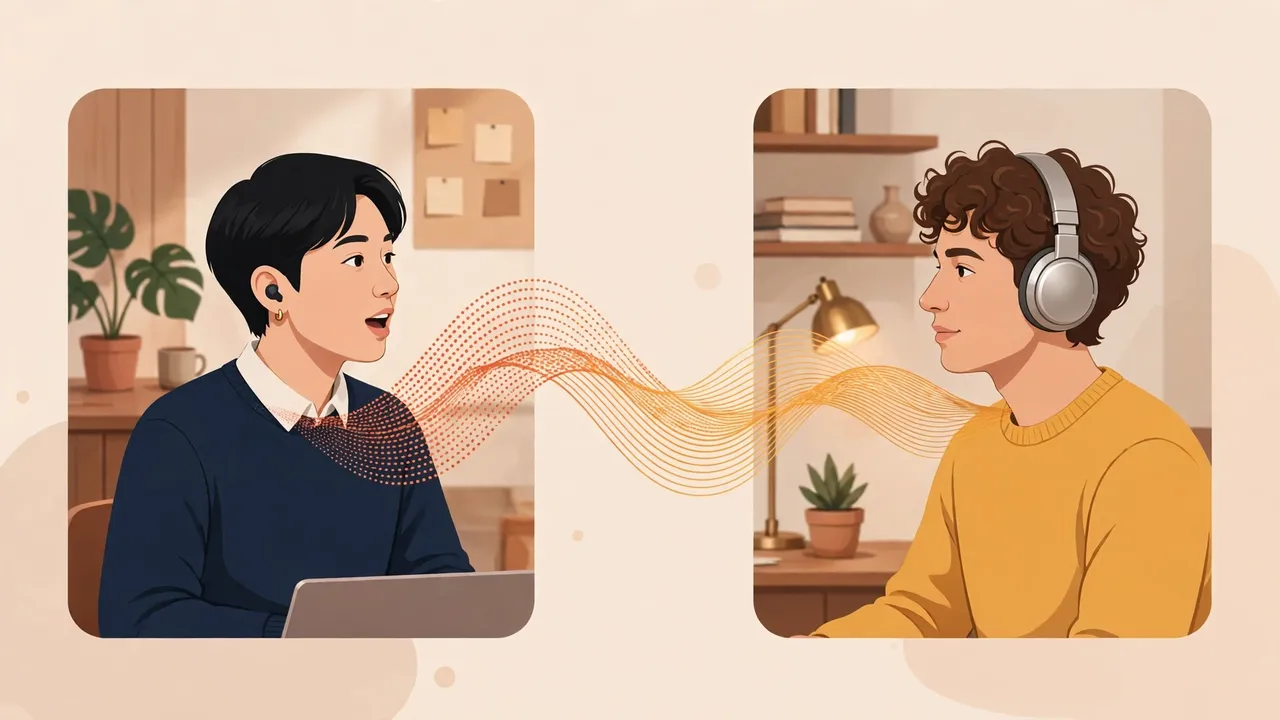
Aure v2 is live now across DeepL Voice for Online Meetings, DeepL Voice for In-Person Conversations and the DeepL API for Voice, and it switches on automatically for supported languages — no setup, no toggle. Six languages are supported at launch: English, German, French, Spanish, Japanese and Korean. The original Aure covered eight, adding Italian and Portuguese; DeepL says those languages remain available through its existing voice models, with more languages coming.
For enterprise customers, DeepL says audio, transcriptions and translations are not used for training, and meeting data is deleted when calls end, subject to customer-controlled retention settings. The company holds ISO 27001 and SOC 2 Type II certifications and says it supports GDPR compliance — the kind of assurances that matter when a translation model sits inside every meeting.
Why now#
The launch lands as DeepL Voice grows fast: total voice minutes rose more than eightfold year over year in Q3 2026, and translated meeting minutes about sevenfold. Active Voice subscriptions with meeting usage grew roughly twelvefold in Japan and South Korea combined, eightfold in the US and ninefold in Germany. The Tokyo unveiling was a deliberate nod to that momentum — Japan is one of the product’s fastest-growing markets.
DeepL also used the event to announce a Disaster Multilingual Communication Support Program, launching the same day, which gives municipalities, support organisations and people affected by disasters free access to DeepL Voice for In-Person Conversations — a small, concrete use case for a model built to make strangers understand each other in real time.
What to watch#
Three things will decide whether Aure v2 matters beyond its launch numbers: independent benchmarks, where the 50% and 32% figures will be confirmed or cut down; real-world latency, where a 3.3-second median in controlled recordings meets noisy calls with overlapping speakers; and the language list — whether Italian and Portuguese return, and how fast the six grows.
What to watch: independent benchmarks of Aure v2’s delay and quality claims; how the 3.3-second median holds up in real meetings; and when DeepL expands beyond the six launch languages.
Sources: DeepL, “DeepL introduces Aure v2, its fastest Voice AI translation model”; Unite.AI, “DeepL Launches Aure V2 with End-to-End Speech Translation”; PR Newswire, “DeepL introduces Aure v2, its fastest Voice AI translation model”