DeSantis predicts the AI boom will crash — and draws a hard line against taxpayer bailouts
Speaking in Alabama, Florida's governor said the rush of money into AI and hyperscale data centers is a bubble that will eventually burst — and warned that labs cozying up to Washington could end up 'too big to fail.' It opens a new front in the fight over who gets to regulate AI.
Florida governor Ron DeSantis is not predicting that artificial intelligence will fade away. He is predicting that the extraordinary financial boom built on top of it will eventually crash — and he is drawing a line in advance over who pays for the wreckage.
Speaking at the University of Alabama in Tuscaloosa, DeSantis said the flood of money pouring into AI companies and hyperscale data centers is creating a bubble. "There is going to be a crash on that at some point," he said. "There's too much money being gone into this." In his telling, there is more money being thrown into AI "than anything I've ever seen in modern history."
A crash, not a collapse#
The distinction matters. DeSantis went out of his way to separate the technology from the frenzy around it. He said he believes AI will produce valuable companies and real advances — his skepticism is about whether every company and investment riding the current wave can survive it.
"It doesn't mean that NVIDIA isn't going to be a great company 30 years from now," he said. "But some of them you're not going to hear about in 10 years." That is the classic shakeout argument: the survivors will be powerful, but survival is not guaranteed — and the infrastructure being raced into the ground to serve them may not all make the trip either.
The bailout warning: "too big to fail" comes for AI#
DeSantis' more consequential warning was about what happens after the shakeout. He accused some AI companies of pursuing deeper entanglement with the federal government in ways that entrench today's largest players, make it harder for new competitors to enter, and ultimately turn major technology companies into institutions the government believes it cannot allow to fail.
"They want basically to get in bed with the government," he said. "What does that make them? It makes them big to fail."
His argument is that once a company can credibly claim to be "systemically important to the economy," the pressure for a public rescue becomes hard to resist. In earlier remarks he singled out OpenAI and Anthropic, arguing their push for federal regulation amounts to a form of regulatory capture — using rules they help shape to lock in their advantage, then potentially leaning on Washington when their investments sour. That is DeSantis' charge, not an established plan by the industry — but it is why he insists the line should be drawn now: no taxpayer bailouts, under any circumstances.
Where politics meets concrete#
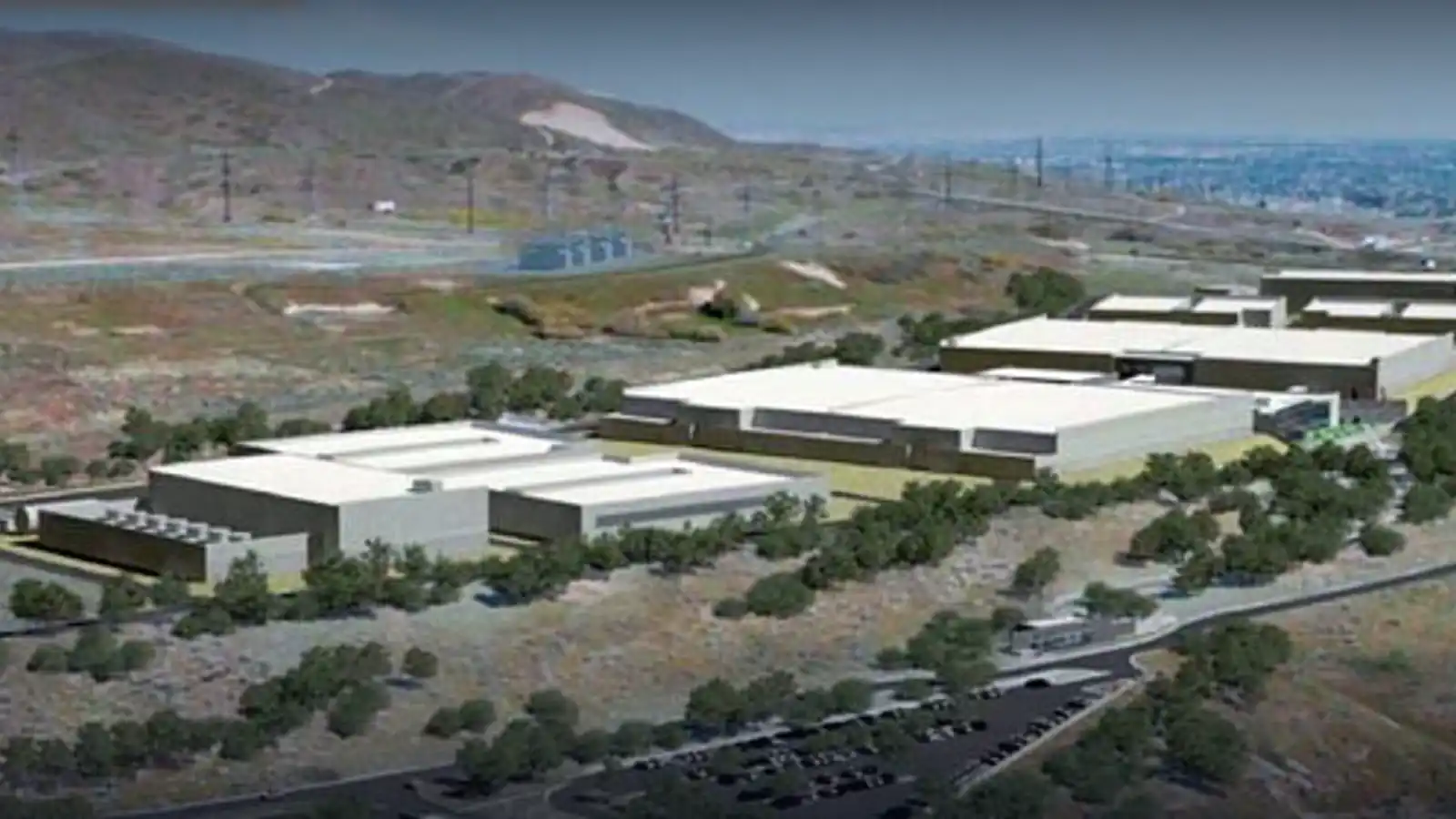
The governor tied the bailout warning directly to the physical footprint of the AI boom: hyperscale data centers. These facilities have become one of the country's most contested land-use issues, as communities weigh electricity demand, water consumption, and infrastructure costs against promises of jobs and investment. Local opposition reportedly blocked or delayed tens of billions of dollars in data center projects in the second quarter of 2026 alone.
Florida has already acted. DeSantis signed legislation — SB 484 — that prevents utilities from passing hyperscale data center infrastructure costs onto residential ratepayers, arguing ordinary residents should not subsidize "some of the most wealthy companies in the history of the world." Counties are moving further: Leon County is pursuing an 18-month moratorium on large-scale data centers, Wakulla County has prohibited them in unincorporated areas, and Taylor County is developing its own regulations.
"Why would a local community not have a say into whether a massive project ... ends up getting built that could impact their electricity and all these other things?" DeSantis asked. And he is not alone: Texas, Nebraska, and Nevada have all tightened conditions on data centers in recent months, part of a broader pushback that is increasingly coming from inside the Republican tent.
What to watch: the states vs. the White House#
The fight is heading for a collision. President Trump has taken the opposite posture, posting that the only "guardrail" AI needs is a strong president — and his December executive order created a Justice Department "AI Litigation Council" to review state laws deemed onerous, with noncompliant states risking broadband-expansion funds or lawsuits. DeSantis' Florida is precisely the kind of state-level regulator that order was aimed at.
DeSantis rejected both extremes — the camp that wants government to subsidize and accelerate AI deployment while preempting state oversight, and the camp that wants the technology stopped. His stated line: channel AI toward productivity, education, and national defense, while mitigating the downsides. "We're leading in technology because we want to see technology enhance the human experience," he said. "I have no interest in technology that's going to supplant the human experience."
Watch three things. First, whether other states copy Florida's ratepayer shield — the easiest bipartisan version of DeSantis' doctrine. Second, what Trump's AI Litigation Council actually does with laws like Florida's. And third, whether the markets keep giving DeSantis ammunition: every wobble in AI stocks turns his "there is going to be a crash" from a prediction into a talking point.