Fitbit Edge launches today: Google's $180 tracker with a Gemini coach and a week of battery
Google's new band-style tracker is on pre-order today: a $180 Fitbit with an always-on display, built-in GPS, and a Gemini-powered coach that turns its sensor data into weekly training plans.
Google's first traditional fitness-band refresh in three years is here. The Fitbit Edge, confirmed by Google on Friday and on pre-order today, is a $180 band-style tracker that slots between the screenless Fitbit Air and the $400 Pixel Watch 5 — with a Gemini-powered Health Coach as its headline feature. It hits shelves October 27. (iPhone in Canada, TechGuysSmartBuy)
The teaser was characteristically brief — Google's official Google Health account posted "Get an Edge on your health. 10.12.26" on X on Friday — ending weeks of leaks that, it turns out, nailed nearly everything: the Edge name, the 1.34-inch always-on AMOLED display, the week of battery life, and the $180 price. (9to5Google)
A Gemini coach on your wrist
The AI story is the coaching layer. The tracker's Health Coach builds weekly fitness plans that adjust to your schedule, then delivers on-wrist cues during runs — telling you when to "push harder, ease up, or hold your pace." The tracker itself has no microphone or speaker, so most Gemini support arrives through the Google Health app's Personal Coach on your phone; hands-free voice requests need a Pixel Watch. (iPhone in Canada, TechGuysSmartBuy)
Many of the coaching features need a Google Health Premium subscription. The Edge ships with a three-month free trial, and Google says Premium is also bundled with its Google AI Pro and AI Ultra plans — a sign of how tightly Google is wiring the Health app into its AI subscription stack.
The hardware numbers
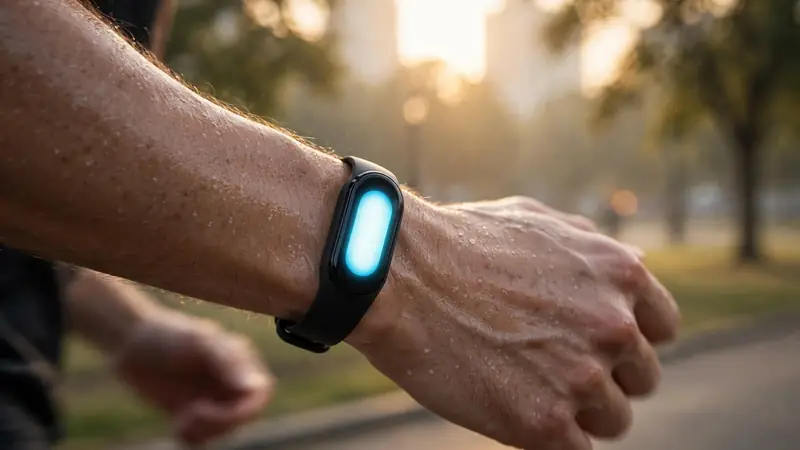
Google calls it the largest and brightest screen on any Fitbit tracker, with 46% more viewing area, in a body just 11.5mm thin and 17.7 grams — with a case Google says is 45% lighter than the Apple Watch Series 12. The metal chassis carries a physical side button, and the display handles Google Maps, media controls and notifications. (iPhone in Canada)
Battery is the other headline: Google quotes up to seven days on a charge, with five minutes on the charger buying a full day and a complete charge taking about 90 minutes. It is also Google's first repairable fitness tracker, with a user-replaceable battery — a genuine rarity in a category built on sealed units.

Sensors and what it watches
The sensor list is flagship-grade for a $180 device: ECG app, continuous heart-rate monitoring, heart-rate variability, high and low heart-rate alerts, SpO2, skin temperature, and sleep tracking Google claims is 15% more accurate at detecting sleep stages. It detects atrial fibrillation and irregular heart rhythms, and supports the monthly blood pressure and insulin-resistance trends from Google's Health Guardian features. Built-in GPS is claimed to be up to 40% more accurate than previous trackers, with a built-in altimeter for hills and stairs, and it can automatically recognize up to 100 workout types. (iPhone in Canada)
Why it matters
The Edge is Google's answer to the awkward middle of the wearables market: people who want a real display, serious sensors and week-long battery without paying smartwatch prices or living on a charger. It is also the clearest sign yet of where Google is taking Fitbit — not a watch competitor, but the data-gathering arm of its AI health stack, with Gemini turning the sensor stream into plans, prompts and trends. Pricing is $180 in the US, $229 in Canada, €179 in Europe and £159 in the UK, with a Steph Curry Edition at $220; it works with iPhones on iOS 16.4 or later and Android 11 or later through the Google Health app. Pre-orders opened today on the Google Store and through retail partners. (TechGuysSmartBuy, iPhone in Canada)