GMO's 6,000-person Gemini bet: Japan's internet giant rebuilds work around AI agents with Google Cloud
GMO Internet Group today launched a joint AI project with Google Cloud, giving some 6,000 employees Gemini Enterprise and Google Workspace — and a mandate to redesign whole business processes around AI agents, not just chat with them.
GMO Internet Group and Google Cloud today launched a joint "AI Promotion Project" that puts Gemini Enterprise and Google Workspace in front of about 6,000 of the Japanese conglomerate's employees — with instructions to stop treating AI as a chat tool and start rebuilding business processes around AI agents. The announcement, dated October 9 on GMO's own news feed, is the clearest signal yet that Japan's internet giants are competing not on model quality but on who can rewire their entire workforce around agents first.
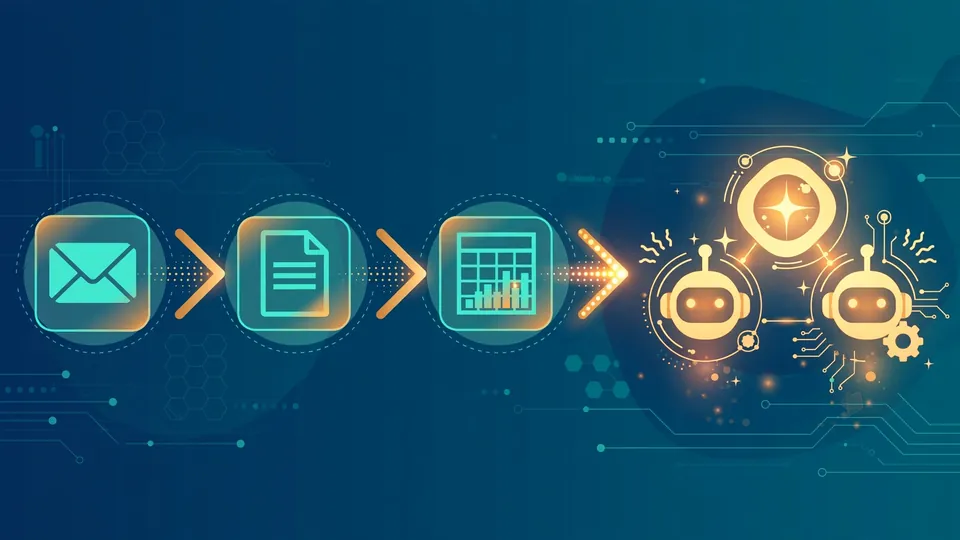
The project has four pillars. First, an "Agentic Workflow" migration: roughly 6,000 GMO partners (the company's term for employees) get Gemini Enterprise, and the group will redesign workflows on the assumption that AI agents carry the work — backed by a group-wide hackathon meant to grow in-house AI talent. Second, a "Data Agent" common foundation built on BigQuery and Looker that unifies the group's data so agents make decisions on correct numbers rather than siloed ones. Third, "Agentic Commerce": new EC and payments services in which agents infer a user's intent and proactively propose and execute services. Fourth, "Agentic Defence", which uses Google Cloud security technology to sharpen detection and response for AI-era threats.
The four agentic pillars
The framing matters. GMO didn't announce a pilot or an internal chatbot. Each pillar is named for what the agent does — workflow, data, commerce, defence — and the company explicitly positions the project as moving past "chat with AI" into process redesign. Data comes before flash: unifying group data on BigQuery and Looker is the second pillar precisely because agent decisions are only as good as the data behind them, a lesson most enterprises are learning the hard way.
The commercial angle is the most ambitious. GMO's core businesses are internet infrastructure, security, payments and online shopping — the EC/payments side is where "Agentic Commerce" gets built. Agents that understand user intent and continuously propose and execute services would put GMO in direct competition with the agent-driven shopping push from Google itself, which has been weaving its own agents into commerce flows.
Why GMO is the one to watch
Japan's big internet players are turning agent adoption into a competitive sport. SoftBank has reportedly built more than 2.5 million AI agents across all its employees, and Rakuten Group has rolled out its own "Rakuten AI 3.0" platform. GMO's own receipts are unusually concrete: the group says generative AI saved it an estimated 1.5 million work hours in 2024, and it has publicly committed to becoming "Japan's most hyper-automated company group" by November 30, 2027 — using AI agents across the board.
The physical half of the story is already under way. On October 6, GMO opened the "GMO Humanoid Lab Shibuya Showroom", described as one of Japan's largest R&D facilities dedicated to humanoid robots, run through its GMO AI & Robotics trading arm. The project announcement points to a next step: fusing Google's Gemini Robotics with the group's robotics know-how to carry the screen-based agent economy into the physical world. GMO calls that the "second half of the internet revolution".
The risk is the same one every company faces: agents that touch real money and real systems need the data foundation and governance in place first, not after. GMO is at least building it in that order — shared data definitions on BigQuery and Looker, security capabilities from Google Cloud's Wiz, CodeMender and Mandiant tooling. Whether 6,000 employees can turn a Workspace mandate into redesigned processes, rather than 6,000 new chatbots, is the experiment worth watching through the November 2027 deadline.