Huawei declares the era of the 'city super agent': 14 partners join its AI CITY alliance at HUAWEI CONNECT 2026
Smart cities were about sensors and dashboards. Huawei says the next phase is about agents. At the Global Government AI CITY Innovation Summit during HUAWEI CONNECT 2026, the company and 14 partners launched a global alliance to build AI CITY — and, with China’s State Information Center, published a 2026 research report arguing that cities are moving from the “data-driven” era into the era of the “city super agent.”
- Who: Huawei plus 14 partners — including TIS, Egabi Solution, HMN Tech, Epoint, and UNIDO — at a summit drawing 500+ participants.
- What: the Global AI CITY Innovation & Development Ecosystem Alliance, and the AI CITY Development Research Report 2026.
- When: announced October 16, 2026, at the Global Government AI CITY Innovation Summit during HUAWEI CONNECT 2026.
- The thesis: cities move from the “data-driven” era to the era of “city super agents”; benchmark cases: Shenzhen, Wuhan, Karamay.
- The stack: OpenHarmony as the unified foundation for city terminals; Ascend AI compute for device-edge-cloud collaboration.
- The examples: a city governance agent in Shenzhen’s Longgang District, “Chat-to-Process” government services in Shantou, and a “Token Factory” cross-border model.
The summit, the alliance, and the playbook
The summit, themed “Digitalize & Innovate Cities, AI Delivers Value to All Nations,” drew more than 500 participants — global industry experts, government representatives, and ecosystem partners — to discuss how AI and data can power industry, government services, and city governance, according to Huawei’s announcement.
The centerpiece was the Global AI CITY Innovation & Development Ecosystem Alliance, launched by Huawei with 14 global partners including TIS, Egabi Solution, HMN Tech, Epoint, and the United Nations Industrial Development Organization (UNIDO). The alliance’s stated focus: compute collaboration, data circulation, and scenario innovation — consolidating industrial strength to build an open, shared ecosystem for digital and intelligent urban development. Its theme: “Smart-Digital Innovative Cities, AI for Global Inclusion.”
From “data-driven” to “city super agents”
During the summit, Huawei and the State Information Center of China jointly released the AI CITY Development Research Report 2026, billed as guidance for the comprehensive digital and intelligent upgrade of cities.
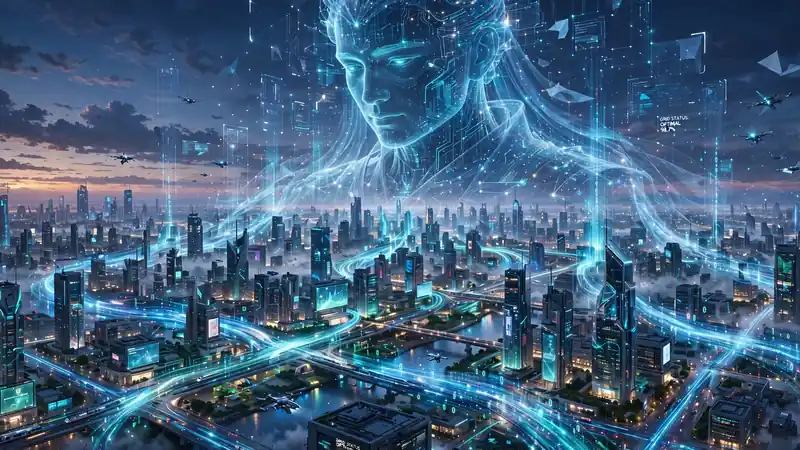
The report defines the AI CITY paradigm and makes the headline claim: cities are moving from the “data-driven” era to the era of “city super agents.” AI CITY, it argues, will use intelligent computing and city public clouds as the foundation for high-value intelligent scenarios — and the emphasis shifts from building capabilities to delivering value. Benchmark cases from Shenzhen, Wuhan, and Karamay are included as replicable paths for intelligent city upgrades.
The technical reference architecture
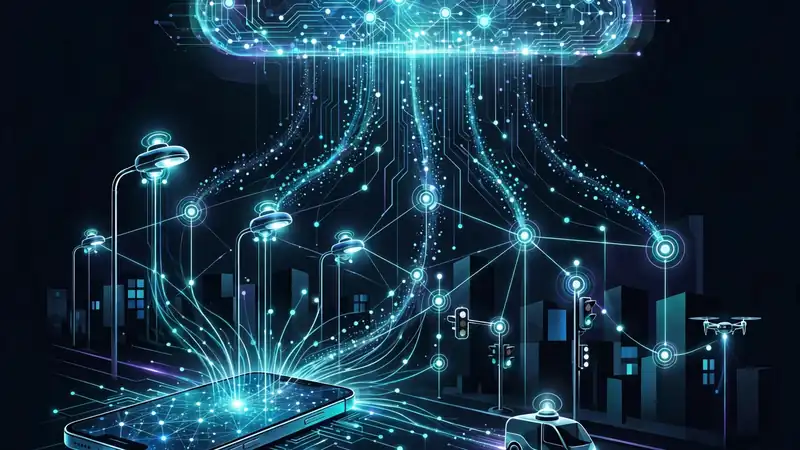
Huawei also proposed an AI CITY technical reference architecture with its partners: OpenHarmony as the unified foundation for city terminals, and Ascend AI compute enabling device-edge-cloud intelligent collaboration — the stack intended to support large-scale deployment of city AI scenarios.
What it looks like on the ground
Customers from Angola, Saudi Arabia, and Ethiopia — as well as Guangzhou and Shanghai in China — shared their AI CITY construction experiences at the summit.
Simon Zou, vice president of Huawei’s Government Public Services Digitalization BU and president of Marketing & Solution Sales, told stories from Shenzhen’s Longgang District and the city of Shantou: a city governance agent that makes city safety visible and cuts labor costs with compute; and a government service agent enabling “Chat-to-Process,” shifting city services from citizens crowding service windows and guessing policies to proactive, user-centric service that delivers benefits directly to those eligible.
Zou also described a “Token Factory” cross-border model: consume power locally, keep data within borders, and export AI services globally.
The pitch to governments
Tao Jingwen, Huawei’s deputy chairman of the supervisory board, said AI is integrating into every aspect of city development, with compute and data as the core drivers of high-quality city development — and pledged openness, inclusiveness, and win-win cooperation as Huawei works with ecosystem partners and government customers. Yang Ruikai, CEO of Huawei’s Government Public Services Digitalization BU, attended the event.
One note on sourcing: the summit details come from Huawei’s own announcement — a company release dated October 16, 2026 (PR Asia mirror). The efficacy claims for city agents and the “city super agent” framing are Huawei’s; independent verification of the report’s benchmarks and the alliance’s deliverables will have to wait for the deployments it promises.
Frequently asked questions
What is the Global AI CITY Innovation & Development Ecosystem Alliance?
The alliance launched by Huawei with 14 global partners — including TIS, Egabi Solution, HMN Tech, Epoint, and UNIDO — at HUAWEI CONNECT 2026. It focuses on compute collaboration, data circulation, and scenario innovation to build an open, shared ecosystem for AI CITY development, under the theme “Smart-Digital Innovative Cities, AI for Global Inclusion.”
What does Huawei mean by “city super agents”?
It is the central claim of the AI CITY Development Research Report 2026, released jointly by Huawei and China’s State Information Center: cities are moving from the “data-driven” era to an era where AI agents run city services, built on intelligent computing and city public clouds, with the emphasis shifting from building capabilities to delivering value.
What technology underpins Huawei’s AI CITY proposal?
Huawei’s AI CITY technical reference architecture uses OpenHarmony as the unified foundation for city terminals and Ascend AI compute to enable device-edge-cloud intelligent collaboration.