Instinct raises $1B at a $10B valuation: the personal AI agent that books, calls, and sorts your bills
Instinct announced a $1B Series C at a $10B valuation from Sequoia, Benchmark, and Coatue — a month after a $250M round valued it at $2.5B — betting a personal agent with its own phone and computer can take over the chores of everyday life.

The consumer agent gold rush just got its biggest check yet. Instinct announced on Monday that it has raised $1 billion in Series C funding at a $10 billion valuation, from Sequoia Capital, Benchmark Capital, and Coatue. It’s the second jumbo round in about a month for a startup that only launched its invite-only service in August 2026.
The valuation momentum is the headline: a $250 million round roughly a month earlier valued the San Francisco company at $2.5 billion, according to TechCrunch — meaning this round repriced it fourfold in about four weeks. The fundraising effort had been reported earlier this month by The Information.
What Instinct actually does#
Instinct’s pitch is a personal agent for everyday life rather than a narrow workplace copilot. Users text or call it, and Instinct uses its own phone number and its own computer to complete the whole task end to end — planning a cross-country road trip, ordering the weekly groceries, canceling forgotten subscriptions, placing actual phone calls. The difference from a chatbot is the point: it doesn’t just answer, it executes.
“We’re building Instinct to be the best personal agent that can handle the deeply personal nuances of everyday life,” founder Noah Shinn said in the company’s announcement. “This funding helps us bring Instinct to more people and continue building the future of personal AI. It’s an exciting, creative time, and we’re just getting started.”
The new product bundle#
Alongside the raise, Instinct detailed several product updates from the last few months, all aimed at making the agent more capable — and more embedded — in users’ lives:
- Instinct Concierge — a white-glove service for high-touch cases: making phone calls, booking the restaurant that doesn’t take online reservations, getting on the dentist’s cancellation list, sorting out a cable bill.
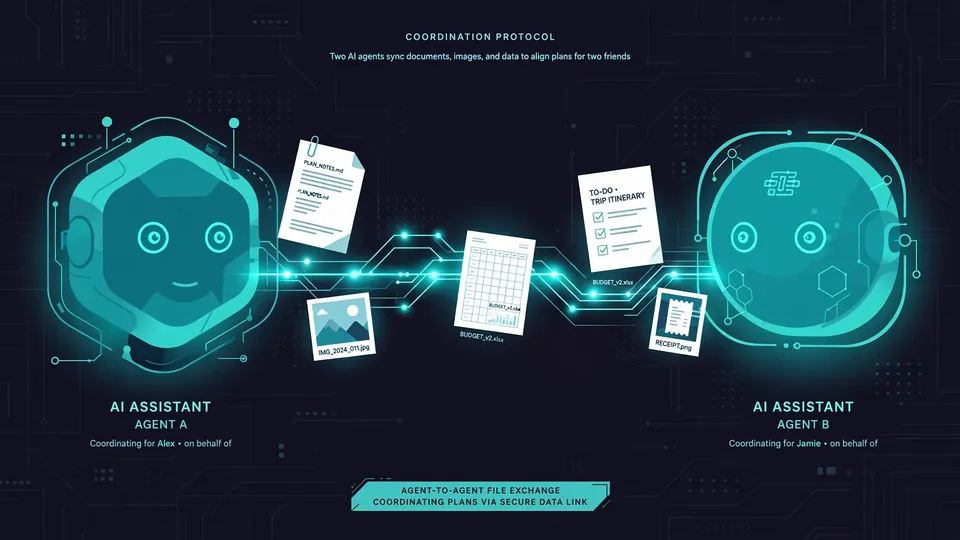
- Trusted Person Network — powered by an Instinct-to-Instinct communication protocol, one person’s Instinct can talk to other Instincts to coordinate plans on their behalf, with direct file sharing for PDFs, images, and spreadsheets.
- Location Sharing — shared over iMessage, Instinct can recognize when users arrive somewhere and make suggestions based on personal preferences.
- Privacy advancements — isolated sandboxes, short-lived local credentials, and identity-signed tool execution built into the product from day one, plus a new “active detective system” meant to catch hallucinations before the agent generates or executes a response.

The privacy trade-off#
The whole model rests on deep access: email, messaging, screen, audio, location. That’s the fuel for the convenience — and it’s what made Instinct’s initial privacy policy draw scrutiny. TechCrunch notes the first version of the policy was criticized for overreach, and the policy has since been updated.
Instinct’s answer is architectural: isolated sandboxes, credentials that expire quickly, identity-signed execution so every tool call is attributable, and hallucination filtering before the agent acts. Whether that’s enough for a product that reads your messages and hears your calls will be one of the defining questions for the consumer agent category.
The elephant: Meta’s Muse#
Instinct doesn’t have the lane to itself. Meta’s own AI assistant, Muse, offers many similar features plus deep integration with Meta’s social products — monitoring Instagram DMs and Facebook Groups, watching Marketplace listings — and, per TechCrunch, has been downloaded millions of times to the top of the U.S. app stores.
Meanwhile Instinct still communicates over SMS and texting and doesn’t have a mobile app yet, and the company has not shared user numbers or growth metrics. The investors are clearly betting on momentum rather than metrics: a viral assistant, an early-access queue, and the idea that the winning consumer agent is the one that acts, not just chats.
What to watch#
Three things. First, whether the capital converts into distribution: Instinct has a $10 billion valuation and no mobile app, against Meta’s app-store machine. Second, the privacy question — the agent only gets more useful the more it sees, and regulators are watching this category closely. Third, the valuation clock: a 4x step-up in a month is a lot of optimism to grow into before the next round has to justify it.
For now, the message from the market is unmistakable: the race for the personal AI agent — the one that does your errands, not just your homework — is the hottest funding story in tech.
Sources
- Instinct press release — Business Wire (September 28, 2026)
- “Viral AI agent Instinct raises $1B Series C at a $10B valuation” — TechCrunch (September 28, 2026)
- “AI agent firm Instinct raises $1 billion in latest funding round” — Reuters (September 28, 2026)