Leidos HeadWay Dispatch: AI agent governance that lets operators block, approve, or auto-run agent actions
Leidos introduced HeadWay Dispatch on November 4, 2026, a governance platform for AI agents built by different vendors. Instead of asking organizations to replace the agents they already run, it wraps them in three controls — Know, Control, and Prove — so operators can see what agents can do, set what they may do alone, and reconstruct what they did.
- Who and when: Leidos (NYSE: LDOS), headquartered in Reston, Virginia; HeadWay Dispatch introduced November 4, 2026, as part of the HeadWay product suite.
- The three controls: Know — see which agents are operating, what they can do, and which systems they can access; Control — set boundaries for independent action, human approval, or blocked actions; Prove — tamper-evident records of agent decisions as they occur.
- Calibrated autonomy: agents gain or lose autonomy based on task complexity, consequence severity, and operational context, scoring into four bands: block, confirm before act, notify and proceed, auto execute.
- Evidence and containment: Flight Recorder gives tamper-evident reasoning provenance with a full chain of custody; the Kill Switch contains activity at tool boundaries regardless of lost connectivity; Circuit Breakers throttle battery, bandwidth, and compute quotas.
- Delivery: software license with implementation services, running on customer-selected infrastructure; governs existing investments, custom-built agents, and third-party task agents without replacing current technology.
- Still in development: Experience (role-tailored operator views) and Intelligence (cross-vendor coordination under a common policy), plus extension so controls hold when network connections are degraded or lost. Leidos reported approximately 50,000 employees and approximately $17.2 billion in revenue for the fiscal year ended January 2, 2026.

Leidos introduced HeadWay Dispatch on November 4, framing it as an answer to a specific problem: AI agents are taking on more responsibility while acting with limited human involvement, and organizations need clear operating limits that keep people in charge of critical decisions. HeadWay Dispatch is part of the HeadWay product suite, which Leidos describes as integrating enterprise data platforms, advanced analytics, and AI to deliver continuous operational insight. The pitch is governance around the agents an organization already has, not a new set of agents to adopt.
Know, Control, Prove: the three controls
The platform's initial framework has three parts. Know shows which agents are operating, what they can do, and which systems they can access. Control sets and enforces the boundaries: which actions agents can take independently, which require human approval, and which are blocked. Prove creates tamper-evident records of agent decisions as they occur, so activity can be reviewed afterward to support accountability. Together, the three are meant to replace identity checks alone as the basis for trust: knowing an agent is verified, Leidos argues, does not by itself prove it stayed inside its bounds.
Two design choices carry most of the practical weight. First, safeguards apply to agents from different providers without rebuilding or replacing them, preserving existing investments and reducing dependence on a single vendor. Second, credential protection is built into the routing: AI agent requests pass through HeadWay Dispatch, so agents do not need to store passwords and API keys themselves, reducing the risk of theft by malicious actors. Operators get a unified view of agent activity, approvals, and alerts, instead of switching between tools to act. Keeping credentials out of agents' hands is a wider security theme this year: Infisical raised $40M to lock down AI agents without ever handing them the keys.
“HeadWay Dispatch is designed to give organizations oversight without requiring them to start over with their existing AI investments,” said Steve Hull, president of Leidos Digital. “As AI agents operate with greater autonomy, organizations need to know when to trust them, when to intervene and how to account for their actions.”
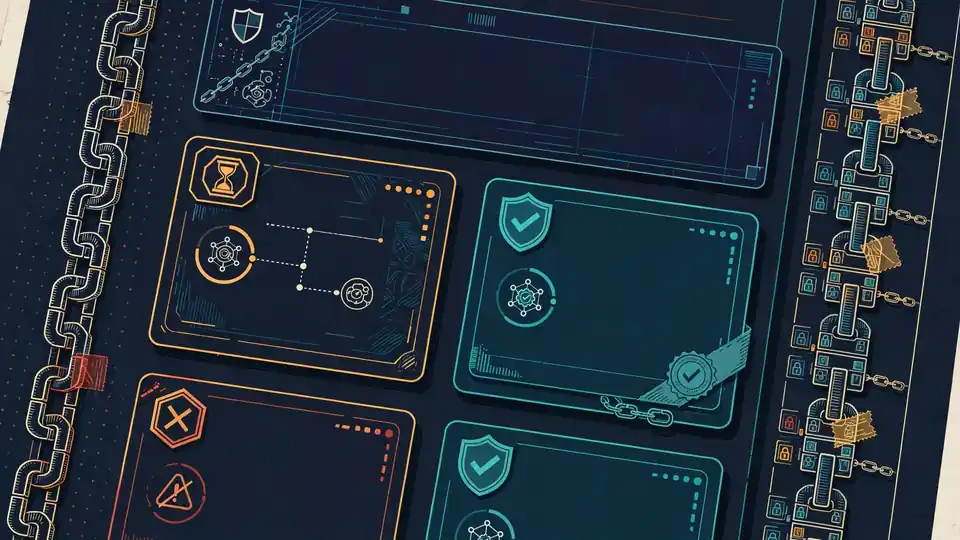
Calibrated trust: four bands, a flight recorder, and a kill switch
Leidos's official HeadWay Dispatch factsheet explains how autonomy is calibrated. Agents earn or lose autonomy based on task complexity, consequence severity, and operational context, and each action scores into one of four bands: block, confirm before acting, notify and proceed, or execute automatically. Low-risk, reversible work can therefore proceed without the same approval burden as a consequential action. The factsheet illustrates the sprawl problem with one organization's example: roughly 8,000 agents generated in 48 hours.
The evidence side is handled by Flight Recorder, which provides tamper-evident reasoning provenance with a full chain of custody, aligned in the factsheet to the federal oversight memoranda discussed below. Containment has two further mechanisms. A Kill Switch contains activity at tool boundaries regardless of lost connectivity, and Circuit Breakers throttle battery, bandwidth, and compute quotas to constrain runaway agents. The kill-switch idea is becoming a pattern in agent security: CrowdStrike added an AI Kill Switch to Falcon Guardian the day before this launch. HeadWay Dispatch's version is distinguished by its disconnected operation — the controls are designed to hold when the network does not.
Cross-vendor coordination is the third pillar, alongside governance and operator experience. Agent Cards let agents advertise capabilities and self-organize into a coordinated team under the same policy, and the factsheet gives Databricks agents working alongside Salesforce agents under one authority as the example. Dispatch is delivered as a software license with implementation services and runs on infrastructure selected by the customer, covering existing AI investments, custom-built agents, and third-party task agents. For teams building their own multi-agent systems, the same guardrail questions apply at smaller scale, as in our hands-on tutorial for building a multi-agent system with the OpenAI Agents SDK, which covers tools, handoffs, and guardrails.

What the launch does not settle
Two of the three pillars are still partly on the roadmap. Leidos says it is developing Experience, which will tailor what each operator sees based on role and mission needs, and Intelligence, which will coordinate AI agents from different vendors under a common policy. It is also extending HeadWay Dispatch so its controls hold when network connections are degraded or lost — the degraded-mode operation described in the factsheet, with local authority under a lost link and reconciliation on reconnect, is part of that development agenda rather than a shipped claim in the announcement.
The announcement names no pricing, no customers, and no measured results for the platform, and the autonomy, recorder, and kill-switch claims are Leidos's, unmeasured by any independent test in the release. What is checkable is the scope: the three controls, the four autonomy bands, the delivery model, and the federal context. Leidos says HeadWay Dispatch can assist federal agencies in addressing Office of Management and Budget requirements outlined in memoranda M-25-21 on AI governance and human oversight and M-25-22 on competition and portability in AI purchasing. Leidos, headquartered in Reston, Virginia, reported approximately 50,000 global employees and approximately $17.2 billion in annual revenue for the fiscal year ended January 2, 2026 — the scale of the government-technology incumbent now selling agent governance to the organizations already running agents at scale.
Frequently asked questions
What is HeadWay Dispatch?
HeadWay Dispatch is Leidos's AI agent governance platform, introduced November 4, 2026, as part of the HeadWay product suite. It governs AI agents from different vendors through three controls — Know, Control, and Prove — so organizations can see what agents can do, set what they may do alone, and reconstruct what they did from tamper-evident records.
What are the four autonomy bands in HeadWay Dispatch?
Block, confirm before acting, notify and proceed, and execute automatically. Agents earn or lose autonomy based on task complexity, consequence severity, and operational context, so low-risk, reversible work proceeds without the same approval burden as a consequential action.
Does HeadWay Dispatch replace an organization's existing AI agents?
No. It is delivered as a software license with implementation services running on customer-selected infrastructure, and it governs existing AI investments, custom-built agents, and third-party task agents without replacing current technology. Two further capabilities, Experience and Intelligence, remain in development.