Mercedes-Benz and NVIDIA lock in a decade of AI driving: one stack from MB.OS to robolimousines
- Who: Mercedes-Benz and NVIDIA, announced jointly on October 16, 2026 via NVIDIA's newsroom and a Mercedes-Benz press release issued from Stuttgart and Santa Clara.
- What: An extension of their strategic partnership to jointly develop the next generation of driver-assistance and automated-driving systems.
- The stack: Mercedes-Benz's engineering and MB.OS operating system + NVIDIA Hyperion (in-vehicle compute and sensor architecture) + Alpamayo Stack (full-stack driving software with AI reasoning) + Halos (parallel safety stack with redundancy and guardrails).
- Target: Future SAE Level 4 automated-driving applications, including autonomous vehicles the companies describe as “robolimousines” — no launch dates, vehicles, or markets were given.
- Jörg Burzer, Mercedes-Benz Group AG's CTO, called NVIDIA the company's “most important strategic partner in automated driving.”
- Scope beyond the car: Mercedes-Benz also uses NVIDIA technology for vehicle-engineering simulation and in MO360, its digital production ecosystem.
Mercedes-Benz is going all-in on NVIDIA for the automated-driving decade. On October 16, the two companies announced in NVIDIA's newsroom and a Mercedes-Benz press release that they will extend their strategic partnership to jointly develop the next generation of driver-assistance and automated-driving systems — a joined-up stack that ties Mercedes-Benz engineering and its MB.OS operating system directly to NVIDIA's accelerated computing and AI technologies. It is the clearest signal yet that the German automaker's self-driving future will be written in AI software, not just hardware.
What each side brings
The division of labor is clean. Mercedes-Benz supplies the automotive engineering, its safety pedigree, and MB.OS — the operating-system platform that supports new driving functions and over-the-air updates. NVIDIA supplies the rest: Hyperion, the in-vehicle computing and sensor architecture; the Alpamayo Stack, full-stack driving software with AI reasoning; and Halos, the safety system layered on top.
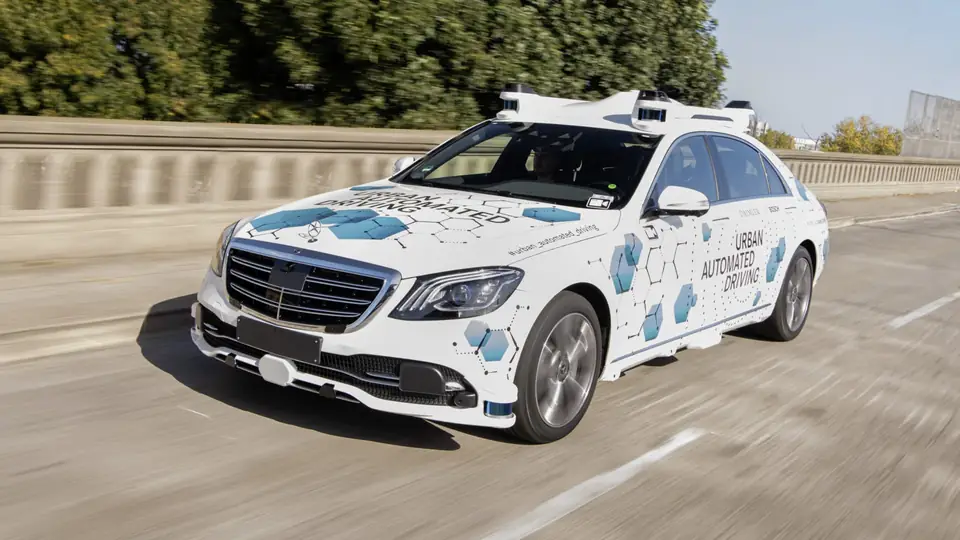
Alpamayo is the AI heart of the deal. NVIDIA describes it as full-stack driving software with AI reasoning capabilities, covering point-to-point urban assistance, active safety, and automated parking. Halos adds to Mercedes-Benz's existing safety foundation — including what the companies call a parallel safety stack with redundancy and guardrails, a prerequisite for anything resembling hands-off driving.
Jörg Burzer, Mercedes-Benz Group AG's board member for development and procurement and its CTO, called NVIDIA the company's "most important strategic partner in automated driving," noting the pair had already built what he described as the first urban point-to-point assistance system for the western world. NVIDIA's Ali Kani, vice president of automotive, framed the ambition simply: accelerated computing is giving vehicles "the intelligence to understand the world and reason through complex driving situations."
The destination: Level 4
Together, the companies say the stack supports advanced driver assistance and the development of future SAE Level 4 applications — vehicles that handle the entire driving task on their own within defined conditions — including autonomous passenger vehicles they describe as "robolimousines."
One thing the announcement is not: a product launch. It names no vehicles, no dates, and no markets. As reported on the release, the stack is positioned as supporting future development, not as something on the lot today. The partnership is about building the foundation over the next decade, not shipping a robotaxi next quarter.
Beyond the car: factories too
The partnership reaches past the driving experience. Mercedes-Benz already relies on NVIDIA technologies for vehicle-engineering simulation and inside MO360, its digital production ecosystem — from virtual planning to AI-based applications on the factory floor. The two partners say they will work to further improve efficiency, flexibility, and quality across Mercedes-Benz's global production network. The NVIDIA stack is colonizing both the product and the process.
The pattern: everyone is calling NVIDIA
Mercedes-Benz is not alone. The same week, Volvo Cars announced an expanded NVIDIA partnership of its own — built on the same Hyperion, Halos, and Alpamayo components, with the technology set to debut in a next-generation Volvo model — extending a collaboration between the two companies that goes back a decade. Two of Europe's biggest automakers consolidating on one AI stack in the same week is the story behind the story: the automated-driving race is increasingly a fight over whose compute platform the industry standardizes on, and right now that fight is NVIDIA's to lose.
For Mercedes-Benz, the decade bet is explicit: software-defined vehicles, continuous over-the-air improvement, and a path to Level 4 — all running on NVIDIA silicon. The hardware matters, but the announcement's real subject is AI software. Burzer's promise of the "best automated driving experience" will now be judged against what NVIDIA's models can do.
Frequently asked questions
Is Level 4 driving coming to Mercedes-Benz cars now?
Not yet. The announcement describes the stack as supporting the development of future SAE Level 4 applications and gives no launch dates, vehicles, or markets — the partnership is framed as a decade-long foundation, not a product launch.
What is NVIDIA's Alpamayo Stack?
Full-stack driving software with AI reasoning capabilities. In this partnership it covers point-to-point urban assistance, active safety, and automated parking, running on the Hyperion in-vehicle computing and sensor architecture.
What does Mercedes-Benz contribute to the partnership?
Automotive engineering, its safety foundation, and MB.OS — the operating-system platform that supports new driving functions and over-the-air updates — plus NVIDIA technology use in engineering simulation and the MO360 digital production ecosystem.