UK cyber chief warns AI malware is “highly likely” in a ransomware attack on critical infrastructure by 2028
The NCSC’s Annual Review 2026, published November 3, 2026, judges AI-powered malware “highly likely” to feature in a ransomware attack on UK critical national infrastructure by 2028 — not through new kinds of attack, but by finding old flaws faster.
- Who and when: The National Cyber Security Centre (NCSC), part of GCHQ, published its Annual Review 2026, State of the Cyber Nation, on November 3, 2026, covering September 1, 2025 to August 31, 2026, in the NCSC’s tenth year.
- The judgement: It is highly likely AI-powered malware will have been used in a ransomware attack on UK critical national infrastructure (CNI) between now and 2028.
- The assessment: AI is almost certain to act as a force multiplier, scaling existing tactics rather than creating new attack vectors; human operators highly likely remain essential to threat actors.
- Named risks: China highly likely has the intent and is best positioned to use AI against CNI; “shadow AI” use highly likely leaves organisations open to exploitation.
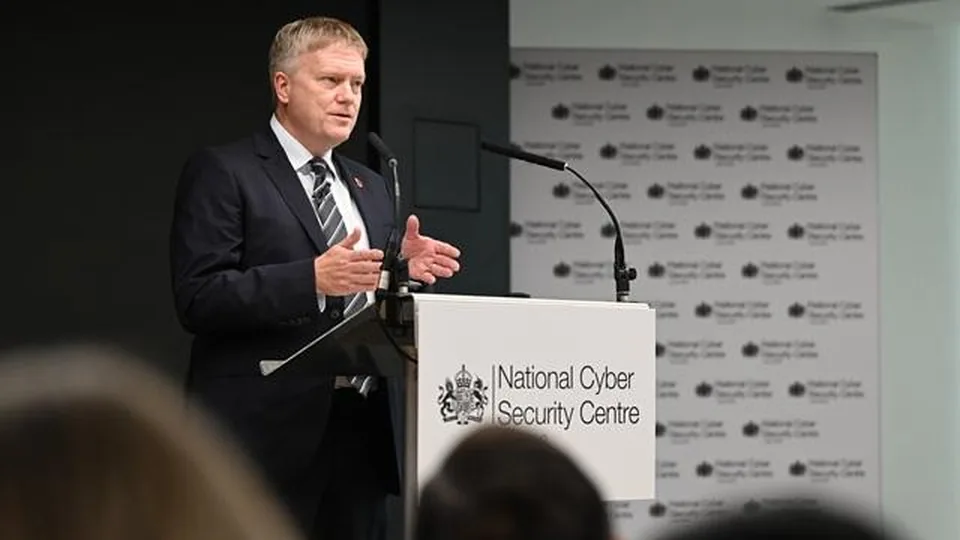
- The speech: NCSC chief executive Richard Horne said the UK has “got away with doing tech on the cheap” for decades, while vulnerabilities “tolerated for far too long” can now be exploited at unimaginable scale.
- The response: £60 million for a national Cyber Shield and £70 million for a NERV Centre, announced by the Chancellor last week, plus a Manchester AI Cyber Security Centre of Excellence, the Cyber Security and Resilience Bill and a forthcoming National Cyber Action Plan.

The UK’s National Cyber Security Centre has warned that AI-powered malware is “highly likely” to be used in a ransomware attack on the country’s critical national infrastructure by 2028. The judgement, published on November 3 in the NCSC’s Annual Review 2026, frames AI less as a source of new attacks than as an accelerant for old ones — finding and exploiting weaknesses that organisations have tolerated for years.
The report, titled State of the Cyber Nation, is the NCSC’s annual review in its tenth year, covering September 1, 2025 to August 31, 2026. The NCSC is part of GCHQ, the UK’s signals intelligence agency, and acts as the country’s technical authority for cyber security.
The 2028 judgement
“It is also highly likely that between now and 2028, AI-powered malware will have been used in a ransomware attack on UK CNI,” the report states, as reported by Cointelegraph. CNI is critical national infrastructure — the essential services the country depends on. The judgement is a forecast, not a report of an attack that has already happened.
More broadly, the NCSC warns that within the next two years, AI adoption by hostile actors is “highly likely” to increase the scale and efficiency of their operations, including ransomware attacks, social engineering and vulnerability exploitation. The report calls on organisations to make “significant changes” to avert a future in which AI is used against the UK economy and society.
Faster old attacks, not new ones
The NCSC’s central claim is deliberately undramatic. It is “almost certain”, the assessment says, that AI will act as a force multiplier across the cyber threat landscape, enhancing reconnaissance, social engineering, vulnerability discovery and coding for exploit development. But the greatest impact will be the acceleration and scaling of existing tactics, techniques and procedures, the assessment states, “as opposed to generating new attack vectors.”
That distinction drives the most practical warning in the report: a race to patch. AI models have become capable of detecting vulnerabilities in large codebases and misconfigurations in systems that have historically remained undetected, the NCSC says, and defenders and maintainers will face a race to shorten patch deployment timelines before threat actors can develop working exploits against the influx of newly found flaws.
The NCSC also tempers fears of fully autonomous attacks. It is highly likely, the assessment says, that AI will keep being integrated into threat actors’ operations rather than conducting end-to-end attacks on its own, with human operators remaining essential for directing, validating and adapting AI-generated outputs. Skilled operators see the greatest benefit, and losing control of an agentic AI will highly likely hinder threat actors from achieving their objectives.
China, shadow AI and a widening divide
On state threats, the assessment singles out China: it “highly likely has the intent and is best positioned to use AI for operations against critical national infrastructure and other strategic targets,” with its investment in AI and its frontier AI programmes almost certainly improving vulnerability identification, targeting efficiency and access operations. In his launch speech, Horne described China’s activity as the most sophisticated and sustained cyber challenge the UK faces, and noted sustained attempts to penetrate military networks, including notable campaigns by Russia that fall below the threshold of armed conflict.
A second risk comes from inside organisations. It is highly likely, the NCSC judges, that the use of “shadow AI” will leave organisations open to exploitation by advanced persistent threat groups and cyber criminals. Employees transferring sensitive company or proprietary data onto personal devices to use shadow AI almost certainly means organisations lose visibility of how the information is handled and who can access it.
And the benefits of defensive AI will not be shared evenly. It is almost certain, the assessment says, that a widening digital divide will emerge between organisations able to adopt AI for defence — improving threat detection, vulnerability prioritisation and defensive automation — and those with weaker security postures, legacy technology and limited resources, which may struggle to keep pace and become increasingly attractive targets.

“Tech on the cheap” is over
Launching the report, Horne framed the moment as a “Sliding Doors” choice, after the film in which small decisions change a life’s course. “In the coming months, we face a real prospect of an unprecedented rise in the number of cyber incidents,” he said in his speech. “But we must be clear that is not because AI has invented new ways to attack us. It is because vulnerabilities that have been tolerated for far too long can now be discovered and exploited at a scale that was once unimaginable.”
“For decades, we have collectively got away with doing tech on the cheap,” Horne said — end-of-life systems kept running for one more year, upgrades pushed back as a “cost efficiency”, access granted where it was convenient rather than necessary, services procured on price alone, and monitoring left unbuilt. Leaders who fail to make different choices now, he warned, may one day have to explain themselves “when food isn’t on shelves, lights aren’t on, businesses have gone under.”
His prescriptions are basic on purpose: address the failure to invest adequately in technology, stop having technology unnecessarily connected to the internet, and treat Cyber Essentials as the starting point for cyber security rather than the end goal, building greater resilience according to each organisation’s size, complexity and risk.
The defence side of AI gets equal billing. Horne called AI one of the greatest opportunities in cyber defence, noting that major technology providers are now fixing hundreds of vulnerabilities in a single update and that the Linux Kernel Project alone patched more than a thousand vulnerabilities last month. The NCSC itself issued more than 110,000 proactive notifications and Early Warning alerts to UK organisations in response to the PHP vulnerability, he said. Alongside the report, the government’s investments announced by the Chancellor last week include £60 million for the first phase of a national Cyber Shield, £70 million for a new National Exposure and Real-Time Vulnerability (NERV) Centre, and a new AI Cyber Security Centre of Excellence run by the NCSC in Manchester — backed by the Cyber Security and Resilience Bill and a forthcoming National Cyber Action Plan.
The report’s closing message is that the tools to blunt the forecast already exist. Organisations across the UK, the NCSC says, must make use of the tools, standards and frameworks that already exist and are evidenced to protect them from conventional and AI-powered attacks — before the choices Horne describes are made for them.
Frequently asked questions
What did the NCSC actually predict for 2028?
That it is highly likely AI-powered malware will have been used in a ransomware attack on UK critical national infrastructure between now and 2028. It is a forecast in the Annual Review 2026, published November 3, 2026, not a report of an attack that has already happened.
Does the NCSC expect AI to invent new kinds of cyberattack?
No. The assessment says it is almost certain AI will act as a force multiplier, accelerating and scaling existing tactics rather than generating new attack vectors, and that human operators will highly likely remain essential to threat actors’ operations.
What does the NCSC want organisations to do?
Invest adequately in their technology, stop connecting technology to the internet unnecessarily, and treat Cyber Essentials as the starting point rather than the end goal — using the tools, standards and frameworks that already exist. The government is backing that with £60 million for a national Cyber Shield, £70 million for a NERV Centre, a Manchester AI security centre, the Cyber Security and Resilience Bill and a forthcoming National Cyber Action Plan.