NVIDIA declares the 'ChatGPT moment for robotics' is near: Isaac platform gets a reference humanoid, Isaac Lab 3.0, and Schaeffler actuator twins
- Who: NVIDIA (announced at GTC Berlin), with Agile Robots and Schaeffler.
- What: a major expansion of the Isaac open robotics platform — the Agile ONE SN reference humanoid, Isaac Lab 3.0 (generally available), the Isaac OS runtime, the SimReady Central Library, the Human 1M Dataset, three open-source DGX Station reference workflows, and the Halos safety platform; Schaeffler’s actuators become the exclusive foundational component of Newton, the open-source physics engine.
- When: announced Wednesday, October 21, 2026; the Agile ONE SN is scheduled to be available in early 2027.
- Specs: Agile ONE SN — 1.40 m (4.59 ft) tall, 40 kg (88 lbs), 31 degrees of freedom, 3 kg payload per arm; dual WUJI Hand 2 hands with 20 degrees of freedom each, 1 kHz force control, and tactile sensing; NVIDIA Jetson Thor with 2,070 FP4 teraflops and 128 GB of unified memory.
- Data: Human 1M (diverse activities, synchronized three-view video, 3D hand tracking) and SimReady (2,000+ simulation-ready assets) — both available on Hugging Face; a typical humanoid carries about 26 actuators excluding the hands.
- Impact: Toyota Material Handling Europe and SoftServe report cutting deployment time by up to 50% with Omniverse and Isaac Sim; Schaeffler and NVIDIA target “zero-shot deployment” of humanoids.
NVIDIA on Wednesday unveiled a major expansion of its Isaac open robotics platform at GTC Berlin, and founder and CEO Jensen Huang didn’t undersell it: “General-purpose robotics is advancing at extraordinary speed — the ChatGPT moment for robotics is fast approaching.” The launch bundles a full-stack reference humanoid, a new open-source robot-learning framework, fresh datasets, and a safety platform — plus a digital-twin collaboration with Schaeffler aimed squarely at the sim-to-real gap that still holds humanoids back. (NVIDIA; Schaeffler)
Agile ONE SN: a reference humanoid that cuts setup from weeks to days
Agile Robots announced Agile ONE SN, a full-stack reference humanoid built on NVIDIA Isaac GR00T and powered by the NVIDIA Jetson Thor edge AI platform. It stands 1.40 meters (4.59 feet) tall, weighs 40 kilograms (88 pounds), has 31 degrees of freedom, and carries a 3-kilogram payload per arm. Its dual WUJI Hand 2 five-finger hands each pack 20 degrees of freedom, 1kHz force control, and tactile sensing for dexterous manipulation. Onboard compute comes from NVIDIA Jetson Thor — 2,070 FP4 teraflops of compute and 128GB of unified memory — feeding multimodal sensing that includes head and wrist cameras, lidar sensors, and inertial measurement units. Robotics researchers often struggle to integrate the separate simulation, training, and deployment tools needed to take robot skills from development to the physical world; Agile says the ONE SN unifies those workflows on a single platform, cutting setup time from weeks to days. The system is scheduled to be available in early 2027, with interest from institutions including Stanford University and ETH Zurich.
Isaac Lab 3.0 and Isaac OS: the software backbone
NVIDIA Isaac Lab 3.0 is now generally available — an open-source, agent-ready learning framework that trains and refines robot policies from desktop to data center using multi-GPU workflows and physics engines including Newton and NVIDIA PhysX. Sitting beneath it is the new NVIDIA Isaac OS, an open-source runtime framework built on NVIDIA Holoscan that connects AI, sensors, controls, and robot hardware for deterministic, real-time performance from simulation to physical robots. NVIDIA is also releasing three open-source reference workflows for DGX Station: refining GR00T 1.7 models with reinforcement learning, training dexterous manipulation skills in Isaac Lab, and post-training Cosmos world models for synthetic data generation using ChatGPT Astra. And NVIDIA Halos, a full-stack safety platform built on NVIDIA IGX Thor, is aimed at moving robots and autonomous vehicles from development to safer real-world deployment. (NVIDIA)
SimReady and Human 1M: attacking the data bottleneck
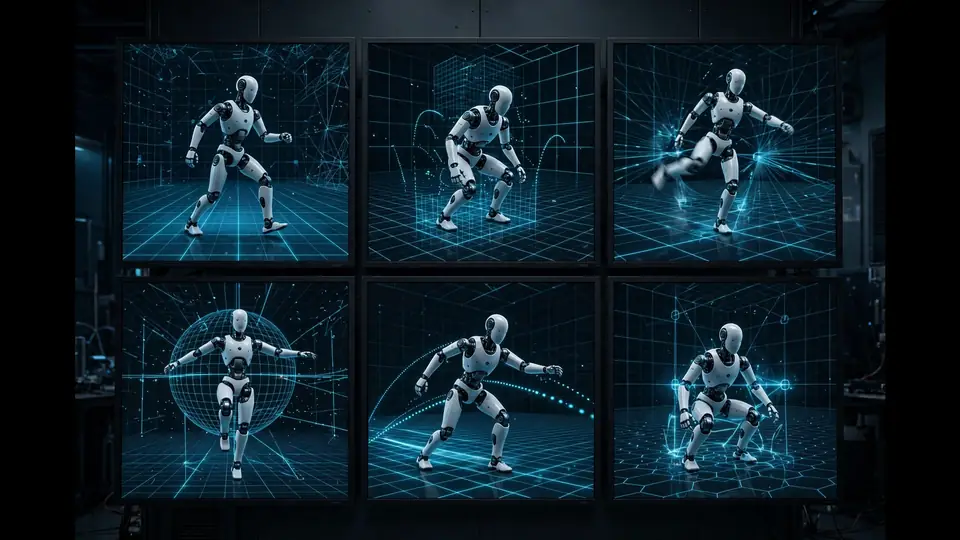
The announcements go after robotics’ biggest constraint: training data. The SimReady Central Library offers more than 2,000 simulation-ready robotics and factory assets — including contributions from Comau, FANUC, Franka Robotics, LG Electronics, Robotiq, and Universal Robots — while the Human 1M Dataset captures diverse human activities with synchronized three-view video and 3D hand tracking. Both are available on Hugging Face, with the full Human 1M Dataset going to Cosmos Coalition partners. NVIDIA’s open-source robot-learning reference workflows for DGX Station will be supported by solutions from 1X, Agile Robots, Humanoid, Sereact, and Skild AI, among others.
Schaeffler’s actuator twins: closing the sim-to-real gap
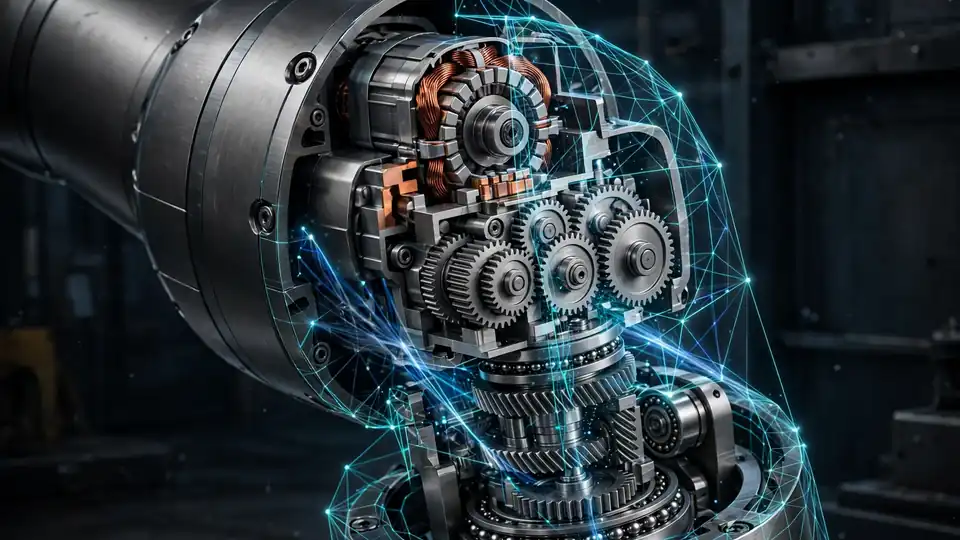
The same day, Schaeffler announced from Fort Mill, South Carolina, that its advanced actuator technology will integrate as the exclusive foundational component of Newton, the open-source physics engine for robot learning inside NVIDIA’s Isaac Lab and Isaac Sim frameworks. A typical humanoid carries roughly 26 actuators excluding the hands, and Schaeffler says its digital twin models each actuator with high fidelity while running fast enough to power large-scale simulation and machine-learning training. The goal is to close the “Sim2Real gap” — and, longer term, to reach “zero-shot deployment,” where humanoids perform tasks in the physical world without extensive physical training first. “Closing the sim-to-real gap is key to solving the data challenge of physical AI and accelerating the development of robotics applications,” said Amit Goel, head of robotics ecosystem at NVIDIA. Al Makke, head of humanoid robotics for the Americas at Schaeffler, said the aim is a digital-twin platform that closes the gap for humanoid actuators, built with direct feedback from developers and users. (Schaeffler; Tesla News Wire)
Why it matters
The partner roll call shows how broad the bet is. Flexion is using Isaac Lab and Newton to scale learning for Reflect, its unified robot intelligence model; NEURA Robotics is generating synthetic training data for Neuron AI, its multimodal foundation model; Hexagon Robotics is building AEON perception capabilities; Hugging Face and Pollen Robotics are building Microduck, a small open-source robot; Franka Robotics is turning natural-language requests into actions on its FR3 Duo; Bellboy’s Billie is already deployed at hotels operated by Marriott, Hilton, IHG, and OYO; and Toyota Material Handling Europe and SoftServe report cutting deployment time by up to 50% with Omniverse and Isaac Sim. Whether the ChatGPT moment arrives on Huang’s schedule is an open question — but with a reference humanoid, open learning software, open datasets, and physics that mirrors real hardware, NVIDIA is assembling the full stack it takes to find out.
Frequently asked questions
What did NVIDIA announce for its Isaac robotics platform?
At GTC Berlin on October 21, 2026, NVIDIA expanded the Isaac open robotics platform with the Agile ONE SN reference humanoid (1.40 m tall, 40 kg, 31 degrees of freedom), Isaac Lab 3.0 — now generally available as an open-source, agent-ready learning framework — the Isaac OS runtime, the SimReady Central Library of 2,000+ assets, the Human 1M Dataset, three open-source reference workflows for DGX Station, and the Halos safety platform.
How do Schaeffler’s actuator digital twins help humanoid developers?
Schaeffler’s actuator technology becomes the exclusive foundational component of Newton, NVIDIA’s open-source physics engine for robot learning. Each actuator is modeled with high fidelity while running fast enough for large-scale simulation and machine-learning training, so developers can design robots, train policies with reinforcement learning in Isaac Lab, and validate them in Isaac Sim before building hardware — aiming to close the sim-to-real gap and eventually enable zero-shot deployment.
When will the Agile ONE SN be available, and who is it for?
The Agile ONE SN is scheduled to be available in early 2027. It is aimed at robotics researchers and developers — NVIDIA cites interest from Stanford University and ETH Zurich — and Agile claims it cuts the setup of simulation-to-deployment workflows from weeks to days.