OpenAI offers free ChatGPT to 200,000 scientists as study finds researchers work nearly twice as fast with AI
OpenAI is doubling its free ChatGPT program for academic researchers to 200,000 scientists, with 50,000 new grants opening November 23. A companion study of 1,819 researchers found they estimate the same work would take nearly twice as long without AI — but that headline number is self-reported, and OpenAI itself says it proves nothing about faster discovery.
- The expansion: ChatGPT for Academic Researchers grows from a 100,000 target to 200,000 scientists, mathematicians and engineers worldwide. 50,000 new grants open November 23, 2026, first-come, first-served.
- What a grant covers: free ChatGPT Plus for the recipient and up to two collaborators — up to 150,000 people in this round. The July pilot gave participants ChatGPT Pro; new grants get the cheaper Plus tier.
- The pilot so far: 20,000 researchers in 33 countries have joined since July 2026. Data shared through the program is not used to train OpenAI’s models by default.
- The study: “Science at the Frontier: How Scientists Use ChatGPT” analysed 580,186 scientific messages from 1,819 researchers (August 20 – September 22, 2026) plus a survey of 251 participants (September 30 – October 7).
- The headline number: surveyed researchers estimated the same work at the same quality would have taken 1.9 times as long without AI. Self-reported; OpenAI says the findings do not establish causal effects.
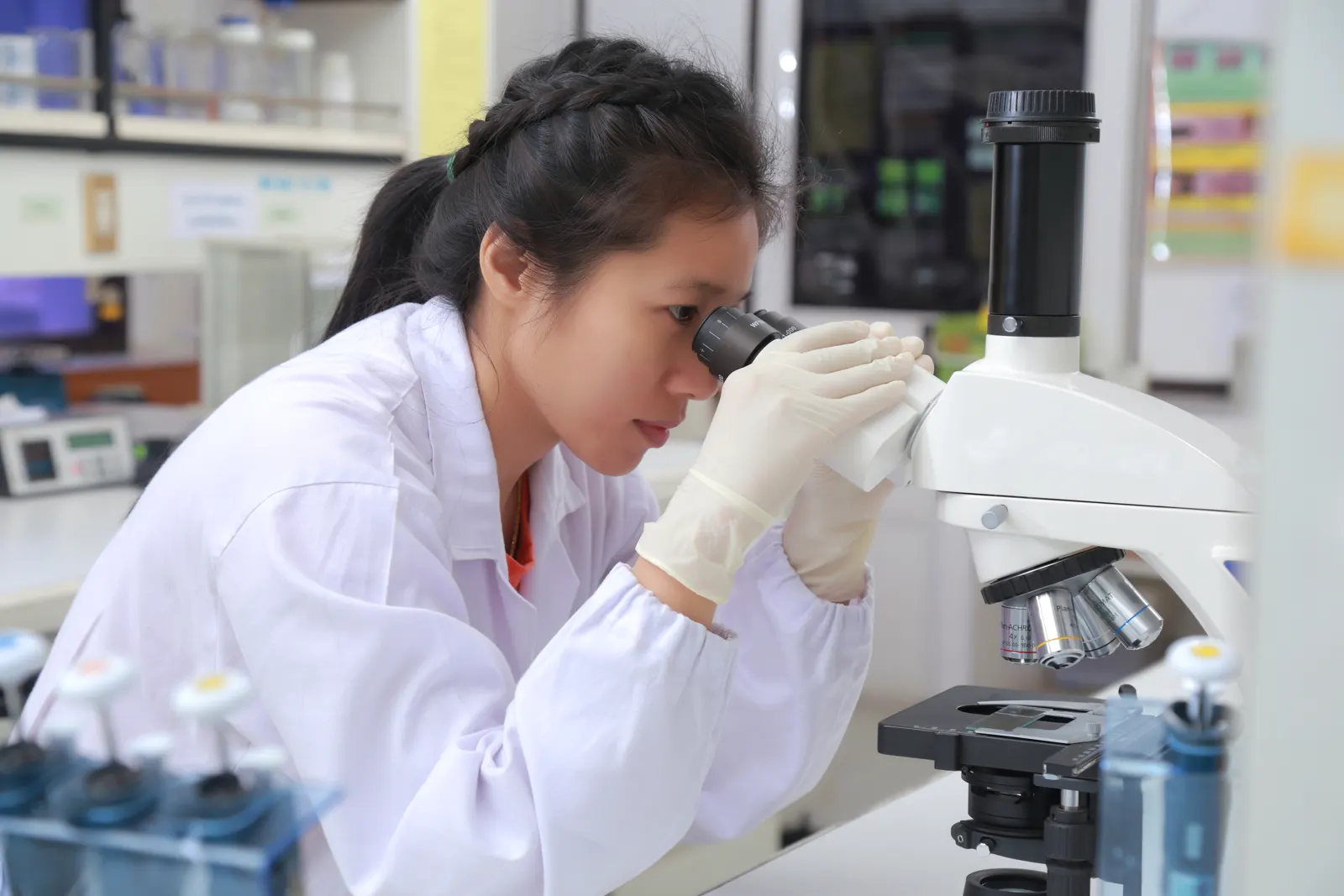
OpenAI wants to put its frontier models in the hands of 200,000 scientists — for free. The company announced on November 16 that it is doubling its ChatGPT for Academic Researchers program, which launched as a pilot in July with a target of 100,000 researchers. Fifty thousand new grants open on November 23, awarded first-come, first-served, each covering the recipient and up to two collaborators.
The expansion arrived with a study meant to justify it. OpenAI’s economic research team tracked how 1,819 pilot researchers actually used ChatGPT over a month, and the headline finding is striking: on average, the surveyed scientists estimated that the same work, at the same quality, would have taken nearly twice as long without AI. That number deserves a careful reading — and OpenAI, to its credit, says so itself.
What the program offers now#
ChatGPT for Academic Researchers gives scientists, mathematicians and engineers at academic institutions free access to OpenAI’s frontier models, plus training and support. The pilot, which began in July, has enrolled 20,000 researchers across 33 countries. The program sits inside a commitment of more than $250 million through 2027 to support external scientific research, and OpenAI says data shared through it is not used to train its models by default.
There is one notable downgrade in the expansion. Pilot participants received ChatGPT Pro, OpenAI’s top tier. New grants come with ChatGPT Plus instead. OpenAI’s explanation is practical: reviewing pilot usage, it found most participants would have stayed within Plus limits, so the cheaper tier lets the same money reach more researchers. The trade is explicit — breadth over depth — and it is the detail most coverage of the announcement has led with, for good reason: 50,000 grants at Plus prices reach far more labs than the same budget would at Pro prices.
The mechanics matter for anyone planning to apply. Grants go to the first eligible applicants rather than by lottery, as in the pilot. Each grant covers a small team — the recipient plus up to two collaborators — so this round alone could reach 150,000 researchers. Researchers already on the waitlist who qualify will be emailed before applications open, with instructions for activating an account.

What 1,800 scientists actually did with it#
The companion study, Science at the Frontier: How Scientists Use ChatGPT, is the more interesting half of the announcement. OpenAI’s Economic Research team analysed 580,186 scientific messages from 1,819 researchers between August 20 and September 22, 2026, alongside a survey of 251 participants conducted from September 30 to October 7.
The usage breakdown is unglamorous, which is what makes it believable. Reading and learning accounted for 28% of scientists’ scientific messages on average, and writing and communicating 27%. Analysing evidence and theories took 17%, and writing research software 14%. Sixty-eight percent of the scientists used ChatGPT to develop research ideas, defined as sending at least three ideation messages during the study window.
What the scientists did not do is just as telling. End-to-end autonomous research — asking the AI to coordinate literature review, ideation and downstream analysis — accounted for only 0.4% of the average scientist’s scientific messages. Fifteen percent sent at least one such request, a gap the paper reads as experimentation with full automation rather than routine use. The picture is of researchers using ChatGPT as a tireless assistant for reading, drafting and coding, not handing it the keys to the lab.
The 1.9x number, and its limits#
The figure that will travel furthest is the productivity estimate: surveyed scientists said completing the same work at the same quality without AI would have taken about 1.9 times as long. Reported ratios ranged from 1.36 times for administration to 2.85 times for research software and code development. Ninety-eight percent of the scientists answering a separate question expected AI to accelerate discovery in their field.
OpenAI is unusually direct about what those numbers do not prove. The participants were a selected group who applied for expanded AI access and chose to answer an AI survey, so the results may not generalise to all scientists. Usage shares describe requests, not research value or time allocation. And the findings do not establish causal effects — the study documents how AI fits into research work, not whether it produces discoveries faster.
The study also names the real bottleneck, and it is not access to models. Limited time or staffing was selected by 51.8% of respondents as a constraint on testing new ideas, and limited funding by 43.8%. Free ChatGPT helps with the reading and writing; it does not hire a postdoc or buy lab time. That is the honest limit on what this expansion can deliver, and it is in OpenAI’s own paper.

Why this matters beyond OpenAI#
The announcement landed on a day when the story was already moving on X, where OpenAI’s own post about the expansion was among the most-shared AI posts of the morning. That matters because the program is, in part, a distribution play: 200,000 researchers trained on ChatGPT’s tools become 200,000 researchers whose workflows, code and papers are shaped by them. Anthropic, Google and Meta all run their own academic outreach; the lab that owns the researcher’s daily workflow owns a durable advantage.
There is also a quieter policy angle. OpenAI is building a public record — a published study, a named cohort, a dollar commitment — that AI access accelerates science, at a moment when regulators and funders are asking labs to demonstrate public benefit. The study’s careful caveats make that record more credible, not less: a vendor that flags its own selection bias is harder to dismiss than one that hides it.
What to watch#
First, November 23, when applications open — and how fast 50,000 grants go on a first-come, first-served basis. A sell-out in hours would say more about demand than any survey. Second, whether the Plus-for-Pro swap draws complaints from heavy users whose pilot workflows actually needed Pro’s limits. Third, the follow-up research: OpenAI says determining whether researchers’ expectations of faster discovery translate into actual discoveries will require more study, and the next paper — not this announcement — is where that claim will be tested.
Until then, the fair summary is narrower than the headline: scientists in OpenAI’s pilot used ChatGPT heavily for reading, writing and coding, estimated large time savings, and almost never handed it end-to-end research. Free access for 200,000 of them is a real expansion of who gets to work that way. Whether it speeds up science itself is still an open question — one OpenAI’s own study is careful not to answer yet.
Sources: OpenAI — Accelerating scientific discovery with ChatGPT for Academic Researchers (updated Nov. 16, 2026); Neowin — OpenAI doubles free ChatGPT access to 200,000 scientists, but there’s a catch (Nov. 16, 2026); Unite.AI — OpenAI to Award 50,000 ChatGPT Plus Grants to Researchers (Nov. 16, 2026); Unite.AI — OpenAI Study Finds Scientists Rarely Request End-to-End AI Research (Nov. 16, 2026).