Sakana AI starts work on Sawara, a homegrown foundation model for Japan's factories — and its security services
Sakana AI has begun training Sawara, its first in-house foundation model, built for Japanese industry, manufacturing and security work. A smaller version is due in early 2027, with on-premises deployment for sensitive customers.
- Who: Sakana AI, a Tokyo startup; co-founder and CEO David Ha.
- What: Sawara, a homegrown foundation model; training begins in November 2026.
- When: a smaller model is targeted for early 2027, with a larger version to follow.
- Why: a domestic alternative for industry, manufacturing, cybersecurity and defence — deployable on-premises where foreign models cannot go.
- Background: a research contract with Japan’s Ministry of Defense signed in July 2026, plus disinformation-detection work with the Ministry of Internal Affairs and Communications.
- IPO: no near-term listing plans, despite speculation in Nikkei and Bloomberg reports; Ha expects an eventual listing in Japan.

Sakana AI, the Tokyo startup best known for research into evolving and merging models, is building one of its own from scratch. The company has started work on Sawara, its first home-grown foundation model, aimed at Japanese factories, manufacturers and government agencies. Training begins this month, and a smaller version is due in early 2027.
The announcement, made in an interview with TechCrunch by co-founder and chief executive David Ha, marks a change of direction for a company that has so far built on top of other labs' models. Sawara is the missing piece: the pre-training layer that would make Sakana a full-stack AI company, able to train, adapt and orchestrate models rather than only orchestrate and adapt them.
What Sakana announced#
Sakana revealed its plans to develop a domestic foundation model last month, and Ha has now confirmed the timetable: work starts in November 2026, a smaller model is targeted for early 2027, and a larger version follows after that. The smaller model is the priority because it is the one built for on-premises deployment — the form factor Japanese customers with sensitive data actually need.
Almost everything else about Sawara remains undisclosed. Sakana has said nothing about parameter counts, architecture, context length, modalities, benchmark scores or pricing, and has not said whether the model will be open-weight. That is normal for a project at the starting line, but it means the story so far is the strategy, not the model itself.
Why Japan wants its own model#
The case Ha makes is about dependence. Japan's industry runs on AI systems built elsewhere — mostly in the United States and China — and that dependence becomes a liability when the work is sensitive. In cybersecurity and defence, models often have to run on a customer's own servers, under that customer's control, and foreign models are not always built to allow that.
There is also a cultural problem with borrowing models wholesale. Open-weight models trained abroad carry their creators' assumptions, and Ha argues they do not always handle Japanese language, politics and business norms well — in some cases refusing to answer questions about Japan at all. A model trained with Japanese users in mind would not have that blind spot, and its behaviour could be audited and adjusted by the people deploying it.
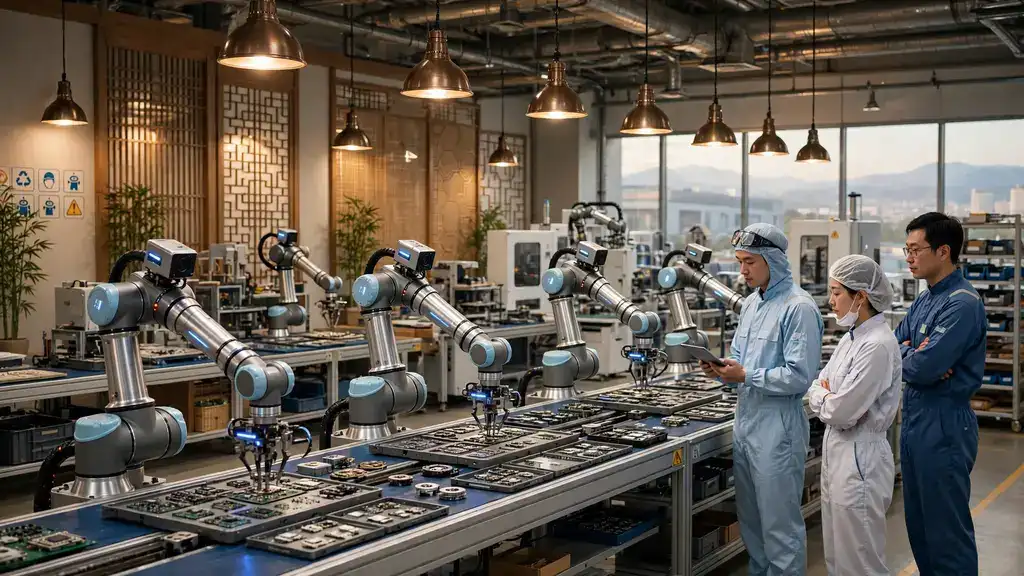
None of this means Japan is walking away from foreign AI. Ha is explicit that Japanese companies will keep using American systems — the goal is a domestic alternative for the cases where a foreign system will not do, not a replacement for everything. He points to companies like Palantir, Snowflake and Datadog with respect, then draws the line: for national defence, Japan will want its own systems.
The full-stack play: Fugu, Namazu, Sawara#
Sawara completes a stack Sakana has been assembling for more than a year. Fugu, launched about five months ago, is an orchestration system that combines large language models — including ones from US labs — into agents built for a specific task. Namazu is a Japanese-focused model that fine-tunes open-weight models from Meta and DeepSeek to handle translation, political questions and enterprise workflows in Japanese.
What both of those products share is that they sit on top of someone else's foundation model. Sawara removes that dependency. With its own pre-trained base, Sakana could build agents and tuned models on a foundation it controls end to end — including the training data, which matters to government customers who want to audit what a model was taught.
What the government work taught them#
Sakana's government engagements shaped the plan. In July it signed a research contract with Japan's Ministry of Defense to explore how AI can analyse and integrate information from multiple sources, and it has worked with the Ministry of Internal Affairs and Communications on systems for detecting disinformation. Ha says those projects taught the company what government customers demand: auditable training data, models that can be customised, and deployment on the customer's own premises.
For now, the government-facing work concentrates on two areas — detecting and analysing disinformation, and multimodal systems that pull together data from different government sources. Those are also the use cases most likely to be early customers for Sawara once it exists.

What to watch#
The first real test comes in early 2027, when the smaller Sawara is due. Watch for the details Sakana has not yet shared: how big it is, what it can do, whether it is open-weight, and how it compares with the foreign models it is meant to complement. A small, auditable, on-premises model that handles Japanese well would be genuinely useful even if it never tops a leaderboard — that is the niche Sakana is aiming at.
Also watch the business story. Reports from Nikkei and Bloomberg earlier this month raised the prospect of a Sakana listing, but Ha says there are no near-term plans to go public and called the reported timing and valuations speculative — though he expects the company to eventually list in Japan. And watch whether the sovereign-model template spreads: India, Taiwan and others are already pursuing domestic models of their own, and Sawara is the latest sign that mid-size economies would rather build than rent.
Sources: TechCrunch, "Sakana AI's CEO says its homegrown models are about more than Japan's national security"; AIFOD, "Sakana AI Begins Work on Domestic Sawara Foundation Model"; AI.info, "Sakana CEO tells TechCrunch planned Japanese AI model has industrial aims"