Sui Foundation bets $30M on AI's data supply problem: DATA Network retires its own chain for Sui
Sui Foundation is investing $30 million in DATA Network as the AI-data protocol abandons its own chain for Sui, pulling the Trace registry — 250 million rights-cleared contributions and counting — onto a single stack with Walrus storage.
The open internet has been read. The Sui Foundation and the DATA Foundation announced on Monday that DATA Network — the project that launched last year as the programmable-IP blockchain Story Protocol — will shut down its own chain and rebuild as a protocol running natively on Sui. The move is backed by a $30 million investment from the Sui Foundation, establishing the largest institutional stake in the network, and pulls one of the largest live supplies of rights-cleared AI training data onto a single blockchain stack.
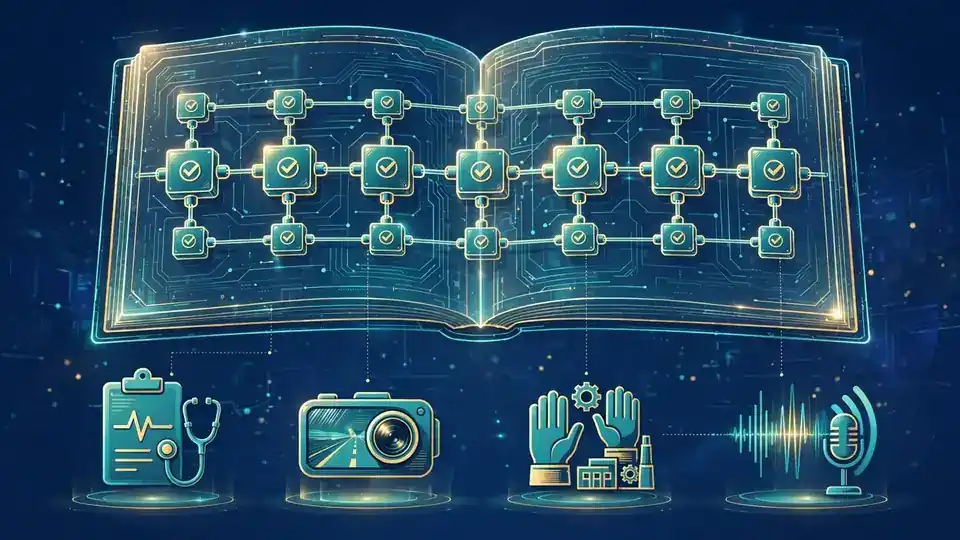
At the centre of the deal is Trace, the DATA Foundation's onchain registry for AI training data. Launched in June, Trace records the origin of each data contribution, the rights attached to it, and settles payment to the person who contributed it. The registry has logged more than 250 million contributions since launch and now processes over 3 million receipts a day. Applications already writing to it include Kled, described as the largest opt-in human data marketplace with over 1.5 billion records being onboarded, plus Numo and Oto, which license data to frontier AI labs and robotics companies.
What actually changes
The DATA Network stops maintaining its own infrastructure entirely. Its independent chain will be retired, and DATA will continue as the token of the DATA protocol on Sui, carried over one-to-one — with holder economics and governance rights at least equivalent to today, and locked and vesting positions unchanged. The existing network keeps running until the upgrade is complete; a detailed timeline and holder transition plan will be published before it begins.
Walrus, the decentralized storage layer built by the same Mysten Labs team behind Sui, becomes the default storage for applications operated by the DATA Foundation. That matters more than it sounds: today a Trace record proves a file was registered and when; with Walrus, Trace will hold an encrypted, immutable copy of the contributed file itself. The record's hash can then be regenerated from the data rather than from application-supplied metadata, and any later processing of the file can be checked against the original.
The money and the people
The Sui Foundation's $30 million is a straight bet on provenance as the next scarce input for AI. As Mysten Labs co-founder and CPO Adeniyi Abiodun put it in the announcement: “The AI industry has reached the point where the open internet has been read, and the next frontier is defined by access to datasets with the consent and provenance that regulators require.”
The investment is part of a long-term strategic alignment that also moves people. SY Lee — chairman of Poseidon and CEO of PIP Labs, Story's original development company — joins the Sui Foundation as a strategic advisor. PIP Labs and the DATA Foundation continue as the network's other major institutional holders.
Why the provenance market is heating up
The timing is not accidental. The announcement frames next-generation models as constrained by access to real-world data: the open web has been scraped, and what comes next must be sourced from people, with consent and with provenance that regulators and legal teams accept. The EU AI Act and ongoing litigation over training data have turned provenance from a nice-to-have into a procurement requirement for labs.
The data those models need no longer sits on the open web. A nurse describing a patient's night in her own words, a dashcam recording of a rainy commute in Jakarta, a factory technician's hands diagnosing a fault, a customer call conducted in Bengali — personal, often regulated, and owned by the people who generated it. Trace's pitch is consent, provenance, and payment wired into the same registry.
From programmable IP to AI data
The migration completes a pivot that began in June, when the project rebranded from Story Protocol to the DATA Foundation and migrated IP token holders to the new DATA token one-to-one. Story had launched in February 2025 as an EVM-compatible Layer 1 built for programmable intellectual property and automated licensing; the rebrand refocused it on infrastructure for AI training data, responding to rising demand from AI developers for datasets that are verifiable and gathered with consent.
What to watch
Two details are still missing. No migration date has been announced — only the promise of a detailed schedule and holder instructions ahead of the upgrade. And developers building on the current chain face a real adjustment: an EVM-compatible environment is not Sui's Move-based programming model, so applications like Kled and Numo will need a clear path to keep running once the old chain goes dark.
The broader pattern is worth naming: chains increasingly compete not just for users but for entire applications, and foundation money is the tool for winning migrations. Sui just spent $30 million to buy itself the data layer for AI. Whether provenance registries become the infrastructure they claim to be will depend on whether labs actually buy the data that flows through them.