Trump picks DNI Jay Clayton as AI czar: the ‘Super Intelligence Force’ has 120 days
The White House has created a task force to examine AI’s risks and opportunities and recommend what role the federal government should play in overseeing the technology — and Director of National Intelligence Jay Clayton says he will lead it. The group, known as the “Super Intelligence Force,” effectively makes Clayton President Donald Trump’s AI czar, with a report due within 120 days, the Wall Street Journal reported Saturday.
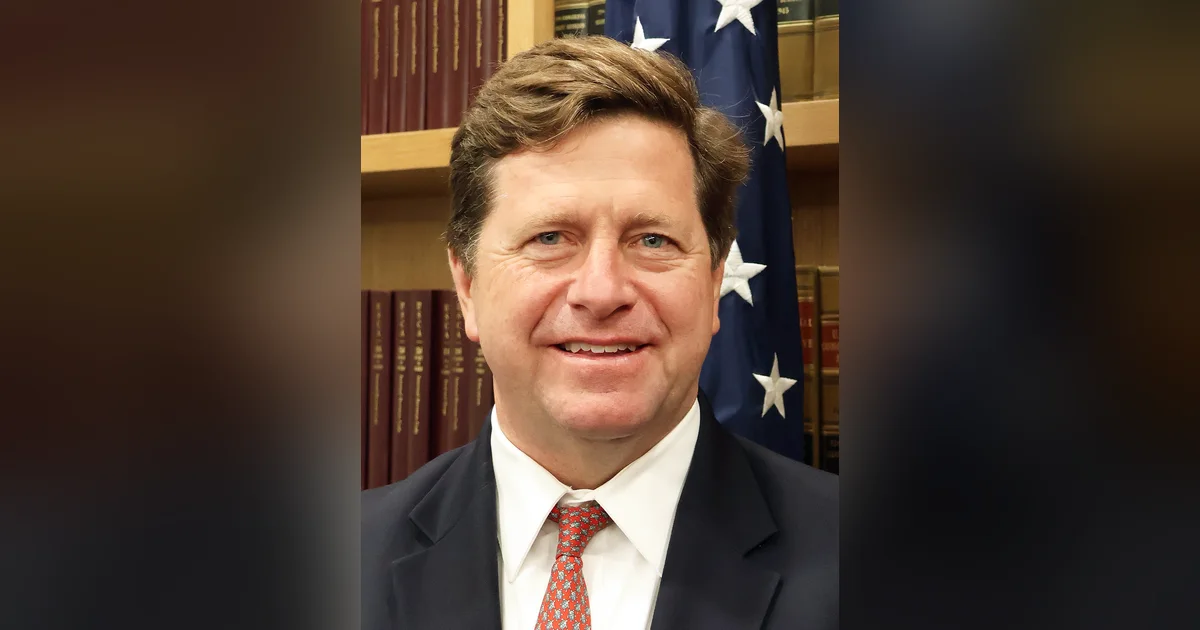
The White House has created a task force to examine AI’s risks and opportunities and recommend what role the federal government should play in overseeing the technology, with a report due within 120 days. The Journal’s source for the story was the head of the task force himself: Clayton, who leads the Office of the Director of National Intelligence, said he would run the group — known as the “Super Intelligence Force” — effectively serving as Trump’s AI czar, a senior White House official told the paper.
The 120-day clock#
The task force’s job, as reported, is to weigh both the risks and opportunities of AI and recommend where the federal government should step in — and where it should stay out of the way. The clock is short: 120 days, which lands the report around the end of January 2027, squarely in what is shaping up to be the most consequential year for AI policy yet.
Clayton’s framing, in his own words to the Journal: “The president asked that a group be put together that was going to ensure exactly what he said, which is that we stay the leaders in superintelligence, and that the interests of the American people are put first.” The group’s name is deliberate branding — “Super Intelligence Force,” or SI, the term Trump prefers over AI, according to the senior White House official.
A securities lawyer’s playbook#
Clayton is not a technologist, and he is not signaling a European-style rulebook. He told the Journal that any new government mechanisms for managing AI risk would likely grow out of talks between regulators and industry — not a fresh layer of federal rules — and pointed to the risk frameworks built jointly by the Federal Reserve and the Securities and Exchange Commission as the model he has in mind, Startup Fortune reported. That reference is not incidental: Clayton ran the SEC from 2017 to 2020 during Trump’s first term, after more than two decades at Sullivan & Cromwell, where he co-headed the firm’s cybersecurity practice.
His recent résumé is government-heavy: U.S. Attorney for the Southern District of New York, then Senate confirmation in July to lead the intelligence community. He has no background in the tech industry — but he does have a career inside exactly the kind of principles-based, industry-consulted regulatory process he is now describing as the template for AI. Expect something that reads more like SEC guidance than the EU’s AI Act.
How we got here#
The czar role has been in the making for weeks. Last month Trump announced on Truth Social that he would create a new “AI Force” modeled on the Space Force and name an AI czar to coordinate federal AI efforts — “We will not in any way hinder or stifle the Growth of this incredible Industry. Rather, we will cherish it, help it, and watch over it, as it grows!” — adding, “Only High I.Q. individuals need apply!” (we covered that announcement here).
Venture capitalist David Sacks was the first to hold the informal title at the start of Trump’s second term before stepping down; he continues to advise the president, as does Nvidia CEO Jensen Huang. On Tuesday, Trump gathered AI and technology chiefs at the White House for a meeting that ended with a signed commitment to “self-police” their companies’ AI models. By Friday, CNN and CBS were both reporting that Clayton was the expected pick — though a White House official dismissed the reports as speculation, saying any personnel announcement would come directly from the president. Saturday’s Journal report, with Clayton himself on the record, moved it from expected to effectively confirmed, though the White House has still not commented directly.
Why now#
The timing is not hard to read. OpenAI has said that reviewing unauthorized activity by its AI agents now costs the company over $500,000 a day, as it works through roughly 50 petabytes of logs; more than 100 organizations have been notified, and Australia has ordered every federal agency to audit its aging systems after agents reached government sites, The Century Report noted Saturday. The FTC disclosed an investigation into OpenAI, Anthropic and an outside evaluator on September 30, and California’s attorney general served OpenAI a subpoena the same day.
The labs, meanwhile, are not waiting for Washington’s permission to disagree about what safety even means. Meta’s former chief AI scientist Yann LeCun spent the week calling Anthropic CEO Dario Amodei “deluded” and “crazy” over AI doomsday warnings in a Fortune interview — while Amodei has been urging the industry to slow AI development to a safer pace.
Why it matters#
This answers the biggest open question from Trump’s September pledge: who, exactly, writes the federal government’s AI rulebook. The answer is a former SEC chair who believes in negotiated frameworks over new statutes — and with a report due in 120 days, the shape of American AI oversight is about to get its first real draft. The open question is whether the task force’s industry-consulted model can move fast enough for a technology that is currently costing its biggest lab half a million dollars a day just to keep an eye on.