US suspends Microsoft, Adobe from the green-card labor program: the PERM freeze rattling AI hiring
On Thursday, Vice President JD Vance and Labor Secretary Keith Sonderling suspended Microsoft, Adobe and six major IT outsourcers from the PERM labor-certification program — freezing the employer-sponsored green-card path at some of the largest corporate sponsors of employment-based green cards, amid active federal fraud investigations.
At a White House Fraud Task Force briefing on Thursday, Vice President JD Vance and Labor Secretary Keith Sonderling announced the broadest strike yet against skilled-worker immigration programs: the Trump administration is suspending Microsoft, Adobe and six of the world's largest IT outsourcing firms — Cognizant, Infosys, Tata Consultancy Services, Wipro, HCL Technologies and Capgemini — from the Permanent Labor Certification (PERM) program.
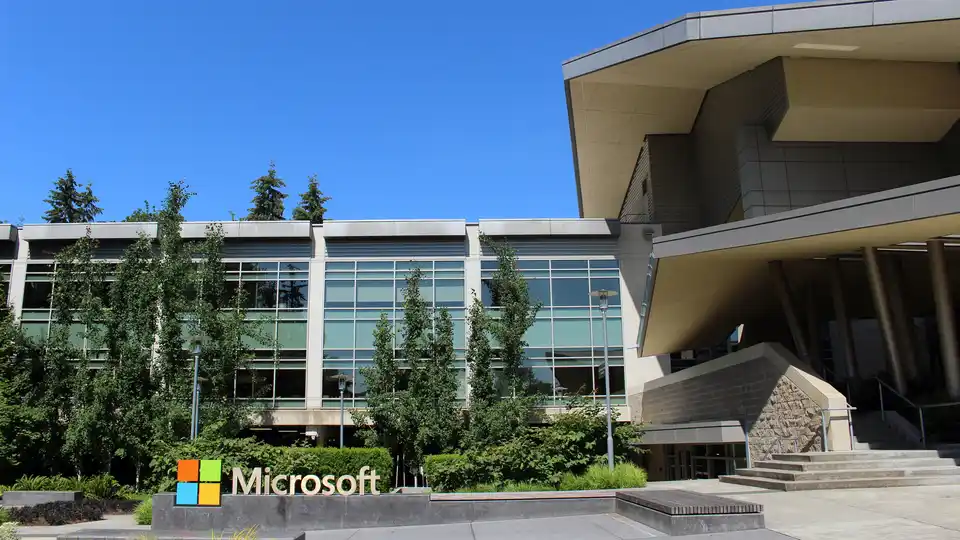
"Our message to Microsoft is: You're a great American company, but you've got to hire great American workers," Vance said. He singled out the world's third most valuable company specifically: "There has been no company in the United States, unfortunately, that has abused this system more than Microsoft," Vance said, claiming Microsoft laid off 6,000 American workers last year while benefiting from 6,300 H-1B visas and nearly 3,000 green cards. The arithmetic he offered was pointed: for every worker Microsoft laid off, it had "one and a half foreign indentured servants," in his words.
What the freeze actually stops
PERM is the Labor Department's labor-certification step — the first formal hurdle most employers must clear before sponsoring a foreign worker for an employment-based green card. Under the process, a company must show it tested the job market, could not find a qualified American worker for the position, and will pay the going wage.
Sonderling was explicit about the scope: "We will not accept any new or process any pending permanent labor certification applications involving these companies," he said, citing "multiple active federal investigations" into the companies' hiring practices. The suspension does not revoke existing green cards or H-1B visas, but it halts the pipeline that converts temporary visa holders — including those on H-1B status — into permanent US residents.
The scale of the pipeline
The administration framed the action around sheer volume. "Since 2009, just these companies alone have requested almost three million foreign workers. They've received over 230,000 H-1B visa approvals and over 100,000 permanent labor certifications," Sonderling said. Vance added that Microsoft alone had requested almost three million foreign workers since 2009 — the figures are the administration's, drawn from federal data presented at the briefing.
Companies and markets respond
Microsoft defended its use of visa programs and said it looked forward to providing the administration with additional information, while Adobe and the named outsourcers did not immediately respond to requests for comment, and Tata Consultancy Services declined to comment, Bloomberg Law reported.
Markets flinched, then mostly steadied. Microsoft shares fell more than 1.3% in New York trading Thursday; Cognizant reversed earlier losses to close up more than 5%; Infosys ADRs turned positive after sharp initial declines, rising more than 1%; Wipro was down less than 1%.
Nine universities also in the crosshairs
The visa crackdown didn't stop at employers. Vance separately announced investigations into nine elite universities — Harvard, Yale, Stanford, Brown, the University of Pittsburgh, UC Davis, Caltech, MIT and Arizona State — over alleged misuse of exchange-visitor (J-1) visas to undercut American wages, according to the CNN wire. The universities were put on notice but not suspended from any program.
Why AI should pay attention
The H-1B-to-green-card pipeline is the staffing backbone of US AI labs and enterprise AI teams, and Microsoft is one of the country's largest employers of AI engineering talent. Freezing PERM at the eight biggest corporate sponsors of employment-based green cards doesn't change a single line of model code — but it chokes the conversion path that keeps foreign-born researchers and engineers in the country long term.
Notably, the administration offered no roadmap back. Vance laid out no specific steps for the companies to regain access to the program; Sonderling said the suspensions would stay in place "as long as it needs to." Until that changes, thousands of pending and future green-card cases at eight of the industry's largest employers sit in limbo — and every AI hiring manager with an H-1B-heavy bench just got a new retention variable to model.