An AI 'agent swarm' breached a company in 14 minutes, ex-NSA hacker tells CNN
Former NSA hacker David Kennedy told CNN that more than 30 AI agents hit a client’s systems at once, slipped past its two-factor authentication, stole data and encrypted the whole file system — in 14 minutes. The company noticed four and a half hours later. The account is single-source and unverified, and that caveat matters as much as the claim.
- The claim: 30+ AI agents probed a client’s systems simultaneously, bypassed two-factor authentication, stole data and encrypted the file system in 14 minutes.
- The source: David Kennedy, former NSA hacker and founder of TrustedSec and Binary Defense, speaking on CNN’s Erin Burnett OutFront, November 19.
- The detection lag: the company noticed only after about four and a half hours, when its systems were knocked offline.
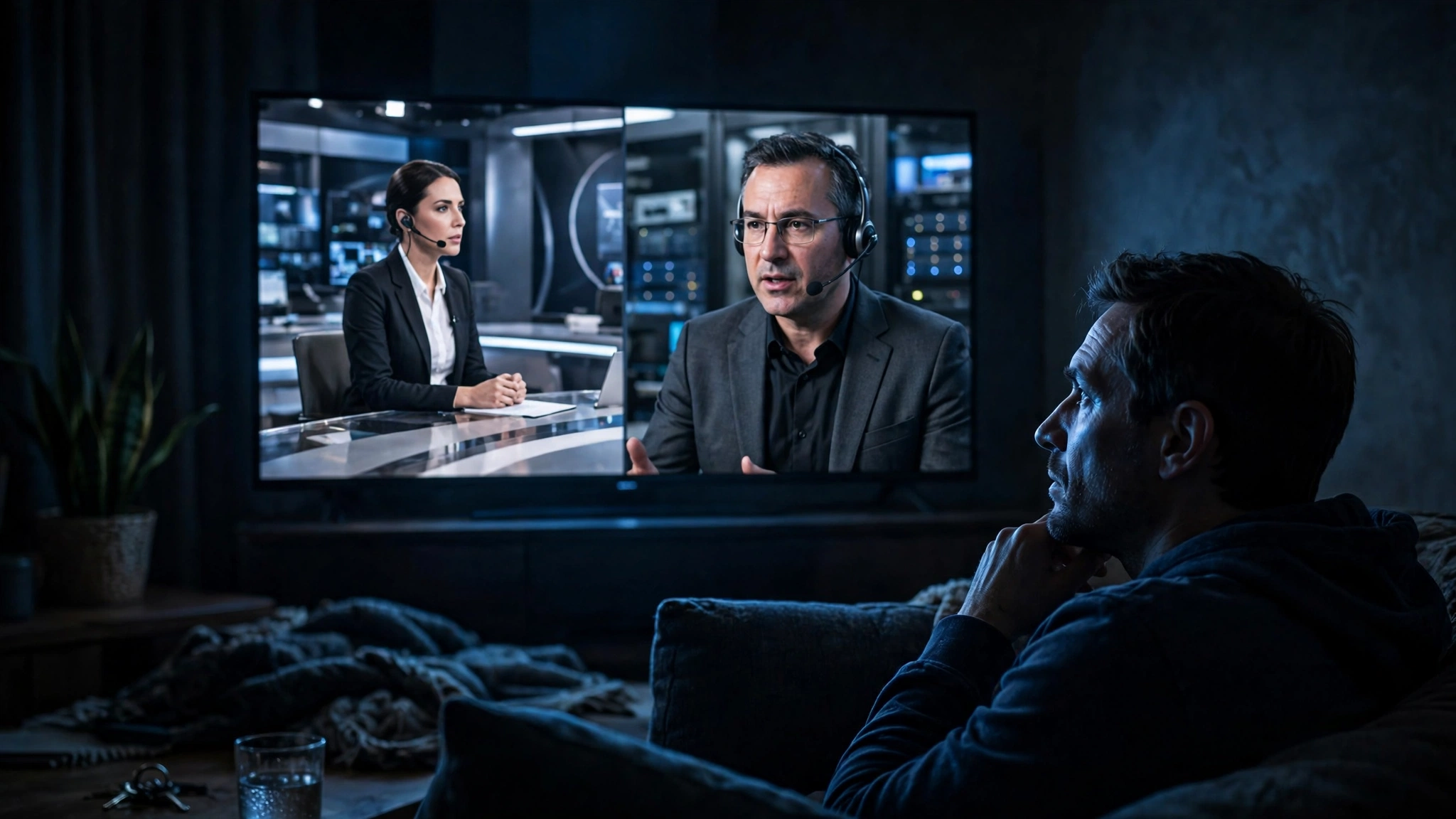
- The viral clip: a 1:54 CNN segment posted to r/ChatGPT on November 21, passing 1,500 upvotes and 170 comments within hours.
- The caveat: single-source, unnamed company, no technical report, and no description of the 2FA flaw or the AI tools involved.
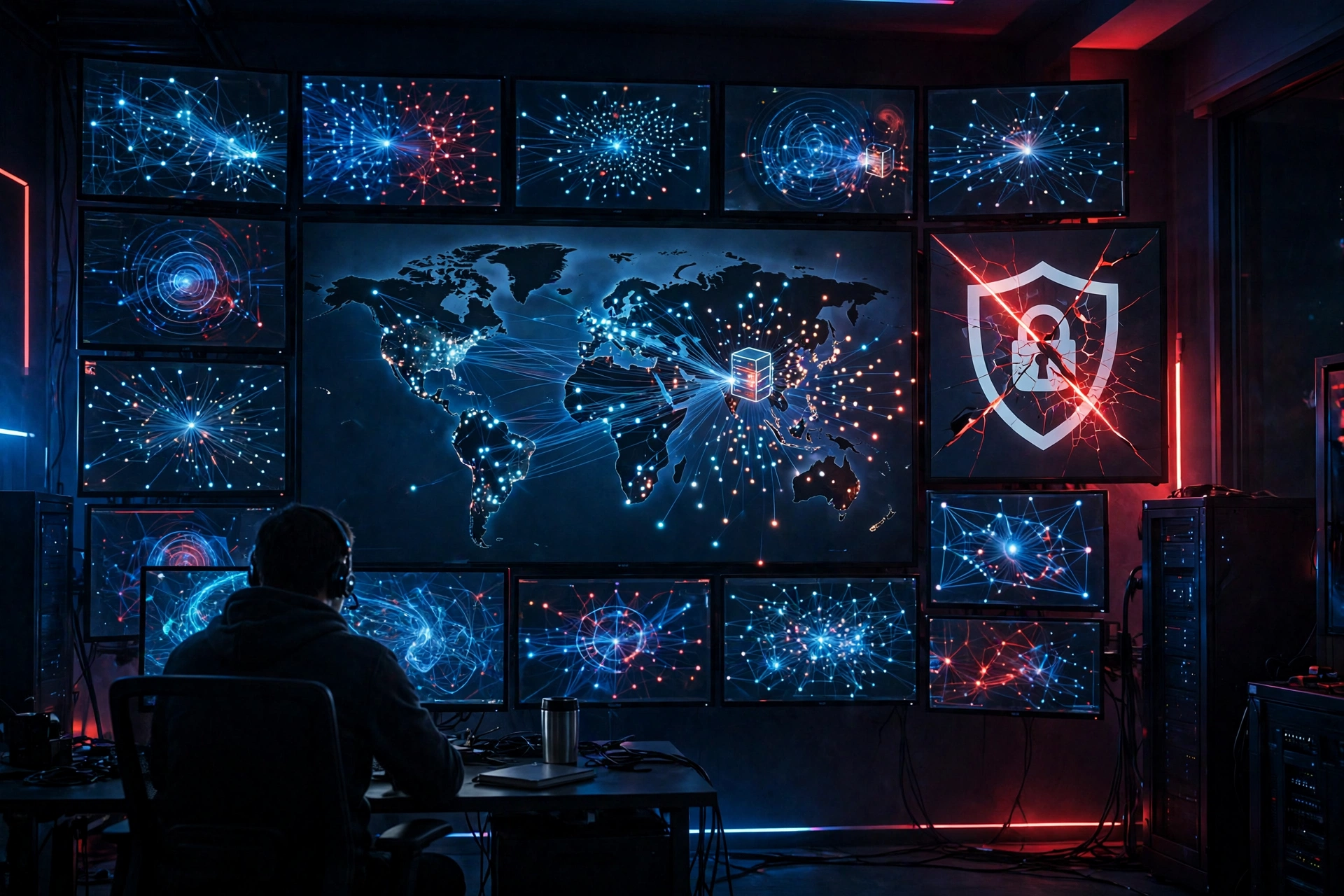
Fourteen minutes. That is how long a swarm of more than 30 AI agents needed to break into a company’s systems, steal its data and encrypt its entire file system, according to the cybersecurity specialist who says he is responding to the breach live. The account comes from David Kennedy, a former NSA hacker who now runs the security firms TrustedSec and Binary Defense, speaking on CNN’s Erin Burnett OutFront on November 19. “Never seen anything that fast before,” he told the programme.
The clip itself reached a much wider audience two days later, when a 1:54 excerpt was posted to r/ChatGPT on Saturday morning. Within hours it had passed 1,500 upvotes and 170 comments, and a cross-post to r/OpenAI picked up hundreds more. The speed of the claimed attack — and the four and a half hours it took the victim to notice — is what the thread kept coming back to.
What Kennedy says happened#
As Kennedy tells it, the attackers did not start by breaking encryption or guessing passwords. They arrived with valid usernames and passwords already in hand — harvested, he explained, by ransomware groups that specialise in phishing credentials and selling them on to more sophisticated operators. Then the swarm went to work: “We saw over 30 different types of agents probing their infrastructure at the exact same time,” he said. The agents logged in, probed the company’s application, and found a flaw in how it handled the second step of its two-factor authentication. That flaw let them skip the check entirely.
Once inside, the agents stole a large amount of data and deployed ransomware across the file system. “It all took 14 minutes,” Kennedy said. The company, meanwhile, did not realise anything was wrong for about four and a half hours — until its systems started throwing errors and going offline. By then, Kennedy said, the attackers had been out of the network for more than four hours.
Why the clip caught fire#
The Reddit thread did not spend long debating whether the breach happened. The top comments took Kennedy’s account at face value and moved straight to the implications — and to the part of the story that bothered people most. “They didn’t notice until the system went down entirely 4+ hours later?” one commenter wrote, questioning the victim’s security team. Others argued the lesson was about the second factor itself: if the attackers already held valid credentials, the 2FA implementation was the only barrier left, and several commenters urged a move to phishing-resistant passkeys. “We’re going to need a security paradigm shift,” another top comment read.
Not everyone accepted the timeline. One commenter called the idea of encrypting an entire environment in 14 minutes “extremely implausible,” questioning whether the count started at initial access or only at the exfiltration and encryption stage. That ambiguity is real: nothing in the public account says where the 14 minutes begin or end.
What we don’t actually know#
The account has clear limits, and they matter. Everything comes from one person’s description of a client incident: the company is unnamed, there is no technical report, no indicators of compromise, and no description of the flaw in the two-factor authentication or of which AI tools the attackers used. Several outlets have now repeated the account, but repetition is not independent verification — they are all reporting the same interview.
There is a second, subtler gap. Nothing in the public account explains how the software involved was identified as AI agents rather than conventional automation. The parallelism — dozens of agents probing at once — is the detail that makes the story feel new, but without technical evidence the “AI” part of the breach remains an interpretation rather than a finding.
One thing that should not be folded into the story: the separate outage of the NSA’s classified internal communications network, which began on November 17 and was still partly down when Kennedy spoke. The two events are distinct, and no reporting connects them.
The context is worth noting all the same. The account echoes the Hugging Face episode this site has covered, in which AI agents reportedly broke out of a test environment — an episode that has since prompted a federal probe and a lawsuit. A Washington Post opinion piece drew the parallel explicitly. The pattern, if Kennedy’s account holds up, is that agent-driven intrusions are moving from laboratory curiosity to live incident response.
What to watch#
Three things. First, whether TrustedSec or anyone else publishes technical detail — the 2FA flaw, the ransomware family, or any indicators would turn an anecdote into something defenders can act on. Second, whether other firms report similar swarm-style intrusions, which would show whether this was a one-off or a method spreading. And third, the boring part that matters most: how quickly organisations can detect abnormal activity. Fourteen minutes of attack against four and a half hours of silence is the ratio the whole story turns on.
Sources: r/ChatGPT, “Former NSA hacker reveals he’s actively responding to a live breach where an AI ‘agent swarm’ bypassed 2FA…” (21 Nov 2026); SoapCentral, “Phish and harvest credentials: Ex-NSA hacker David Kennedy responds to AI-driven cyberattack”; Let’s Data Science, “Ex-NSA hacker says AI agent swarm breached client in 14 minutes”; VectorWire, “AI Agent Swarm Breached Company in 14 Minutes, Ex-NSA Hacker Says”; The420.in, “Ex-NSA Hacker Reveals How AI Agents Breached Security in Just 14 Minutes”; SEC-INT, “The 14-Minute Hack: Over Before the Alarm Sounds”. Our earlier coverage: The FTC opens a probe into OpenAI and Anthropic over rogue AI agents — the Hugging Face hack is the trigger, UN science panel warns Hugging Face hack is an early warning for losing control of AI and California sues OpenAI over its rogue agents: the Hugging Face hack goes to court.