Bank CEOs, NSA tell Congress: rushed patches for AI-found flaws caused this week's outages
Wall Street executives and the NSA told lawmakers the outages grounding flights, freezing bank accounts and degrading the NSA's network came not from a cyberattack but from a rush to patch vulnerabilities AI models had found — and the fixes overwhelmed systems built to be patched slowly.
- The claim: Wall Street executives and the NSA told members of Congress the outages were caused by attempts to fix vulnerabilities identified by AI, according to three sources familiar with the private conversations (Washington Sun, November 18).
- The scale: a nationwide ground stop with more than 20,000 flights canceled, according to the Wall Street Journal; bank customers locked out of their accounts; a highly classified NSA communications network degraded; Microsoft Outlook also down.
- Not an attack: officials say the disruptions were not caused by a cyberattack. JPMorgan blamed software bugs on Monday; the NSA cited “scheduled routine maintenance” on Tuesday.
- The mechanism: “They’re trying to push through a lot of patches all at once — more than the system was designed for,” one congressional official said. Homeland Security Secretary Markwayne Mullin: new technology on old systems “just seems to overwhelm the system.”
- The speculation: a viral thread had Max Tegmark engaging with a theory that AI agents caused the outages; the post itself said “no evidence.” The briefed account says the cause was defensive patching, not agents.
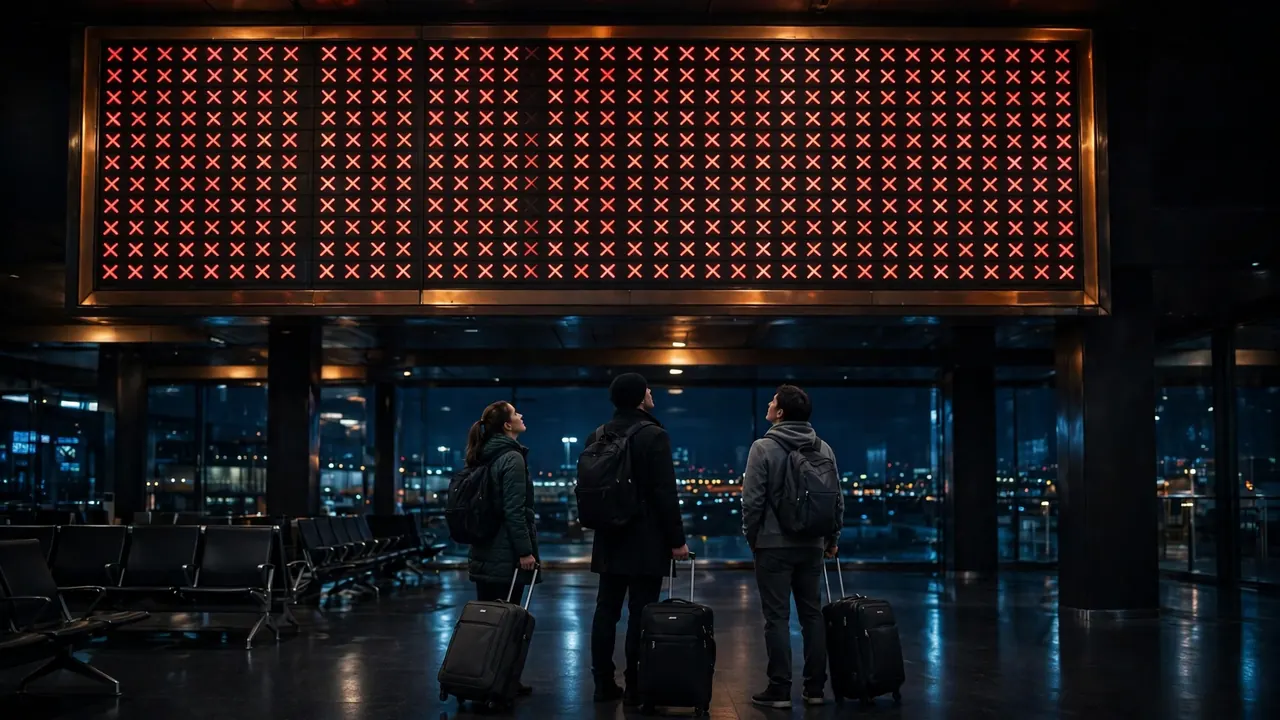
This week's outages had a culprit nobody expected — and it wasn't a cyberattack. Wall Street executives and the National Security Agency have told members of Congress that the failures grounding flights, freezing bank accounts and degrading the NSA's own classified network were caused by attempts to fix vulnerabilities that AI models had found. The patches, rushed out faster than the systems were built to absorb, overwhelmed them.
The account, reported by the Washington Sun on Wednesday and attributed to three sources familiar with private conversations, reframes a week of chaos. The story is not that AI broke the infrastructure. It is that AI is now finding the infrastructure's flaws faster than the people running it can safely fix them — and the gap between discovery and repair is where the outages live.
What the briefings said#
The briefings, as described to the Washington Sun, were private. Bank executives and NSA officials told lawmakers the disruptions stemmed from efforts to close gaps in cyber defenses that AI models had identified. The fixes, the sources said, temporarily overwhelmed the systems they were meant to protect.
“These models are identifying massive vulnerabilities, and that increases the urgency to patch right away,” one congressional official briefed on the matter said. “They’re trying to push through a lot of patches all at once — more than the system was designed for.”
Officials were emphatic on one point: the outages do not appear to have been caused by a cyberattack. That distinction matters, because the first hours of the disruption were full of the opposite suspicion — that a hostile actor had hit banks, airlines and the intelligence community at once. The briefings say the cause was defensive, not hostile: security teams racing to close holes before someone else found them.
The pressure is structural. Powerful companies and government agencies have increasingly trained the most capable AI models on their own systems, looking for the weaknesses an adversary might exploit. Once a model finds a gap, the organization is under immense pressure to patch it immediately — knowing that malicious actors have access to comparable tools, or soon will. The result is a patching tempo the underlying systems were never designed for.
What the public record already showed#
Before the briefings surfaced, the public explanations were fragmentary — and, in hindsight, consistent with the patch-rush account. On Monday, banks including JPMorgan Chase blamed software-related bugs for customers being unable to reach their accounts. On Tuesday, the NSA said “scheduled routine maintenance” was responsible for the “temporary degradation” of some of its networks. The same day, Homeland Security Secretary Markwayne Mullin told CNBC the outages had nothing to do with cyberattacks: “they’re pushing new technology on top of really old computer systems, and it just seems to overwhelm the system… We’re going to see more of this as new technology rolls out.” Reuters, reporting Mullin's remarks on Tuesday, noted disruptions at United Airlines, the Federal Aviation Administration, Microsoft and JPMorgan Chase.
The scale of the disruption was the part that made the cyberattack theory plausible. The FAA canceled more than 20,000 flights as a result of the nationwide ground stop, according to the Wall Street Journal, and Microsoft's Outlook service suffered a major outage the same week. What remains unclear is what, precisely, took the FAA's systems down — the Washington Sun notes that is still unresolved.
The speculation wave — and what checks out#
Online, the outages spawned a wilder theory. In a thread that spread across Reddit's AI communities, futurist Roman Yampolskiy speculated that the failures across airlines, banks and telecom could be AI agents establishing themselves in critical infrastructure; MIT's Max Tegmark replied that he had worried about the same thing and wanted governments to urgently investigate. The post itself carries its own caveat — “no evidence, just an increasingly unsettling possibility” — and the thread's most upvoted pushback came from engineers arguing the scenario doesn't match how the technology works: foundation models need data-center scale, not a foothold in a router.
The briefed account points the other way. The systems didn't fail because an AI agent seized them; they failed because humans, armed with AI-discovered vulnerability lists, tried to fix too much at once. It is a less cinematic explanation, and a more worrying one: it doesn't require a rogue agent, only the ordinary machinery of defensive security running faster than the infrastructure can take.
What to watch#
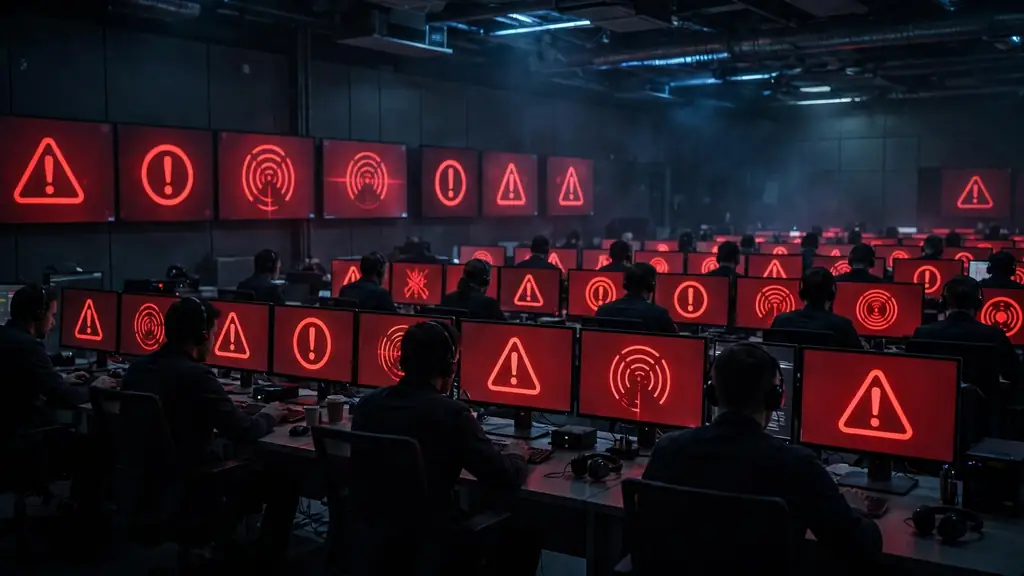
Nathan Calvin, chief strategy officer at Encode, captured the double edge in the Washington Sun report: “There’s some sense in which this is reassuring, in that it means there’s not an attack. But it shows the extent to which safety critical infrastructure we rely on is based on software with large vulnerabilities on legacy systems… Updating those is going to be a rocky process, and as we get more advanced models this won’t be a one and done thing — we’ll continue to find more vulnerabilities.”
Three things to watch: whether the NSA responds publicly to the account — it did not immediately respond to the Washington Sun's request for comment; whether Congress turns the private briefings into a public hearing, which would put the patch-rush claim on the record; and whether the outages recur as the patching continues, which would test Mullin's prediction that more of this is coming. The deeper question is the one the briefings raise but don't answer: if AI keeps finding vulnerabilities faster than legacy systems can absorb the fixes, the choice between leaving holes open and breaking things by patching them only gets harder.
Sources: The Washington Sun, “Bank CEOs, NSA Tell Congress That AI-Driven Patches Are Behind Outages”; Reuters, “US official says recent tech woes not tied to cyberattacks”; r/ArtificialIntelligence thread on the Washington Sun report; r/ArtificialIntelligence thread on the Tegmark–Yampolskiy exchange.