Fock Ball: the fake sports league Claude built that plays, broadcasts and reports on itself
A product designer spent five months with Claude Code building a fictional football league — 30 teams, 38 years of simulated history, a real physics engine — and on Tuesday it went live with a nightly 3D broadcast. The league now runs itself.
- Posted Tuesday morning by u/MitchThunder on r/ClaudeAI — about 1,000 upvotes and 222 comments within the day.
- Built with Claude Code on the $100-a-month Claude Max plan: roughly 140,000 lines of code and more than 1,200 commits in under five months.
- 30 teams, 38 seasons of simulated history (1988–2025), 15 games a week, with a live 3D broadcast nightly at 7:30 PM ET on fockball.com.
- The top comment asked about betting lines; the creator says Claude already calculates odds — tonight’s Tacoma Gnomes are a 6.5-point road favorite over Anchorage.
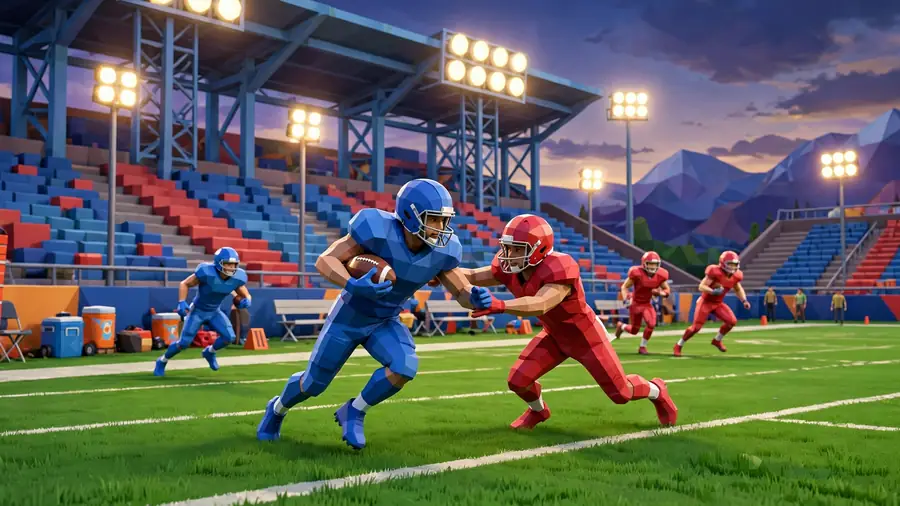
There is a football league with 30 teams, 38 seasons of history, a salary cap, a police blotter and a satirical tabloid covering it all. None of it is real — and none of it needs its creator anymore. Fock Ball, a made-up sport built almost entirely with Claude Code, launched on Tuesday, and the 55-second clip of its 3D broadcast posted to r/ClaudeAI collected about 1,000 upvotes and 222 comments within the day. The community’s first question was not how it works, but where to bet on it.
The creator, a product designer posting as u/MitchThunder, says the idea began years ago as an hour-long podcast about a sport that did not exist, recorded with a friend. It never got past one episode: keeping player names, results and trades consistent by hand was impossible. This summer, experimenting with Claude Code, he realized the tool could finally turn the joke into something real — and spent five months doing exactly that.
The sport that does not exist#
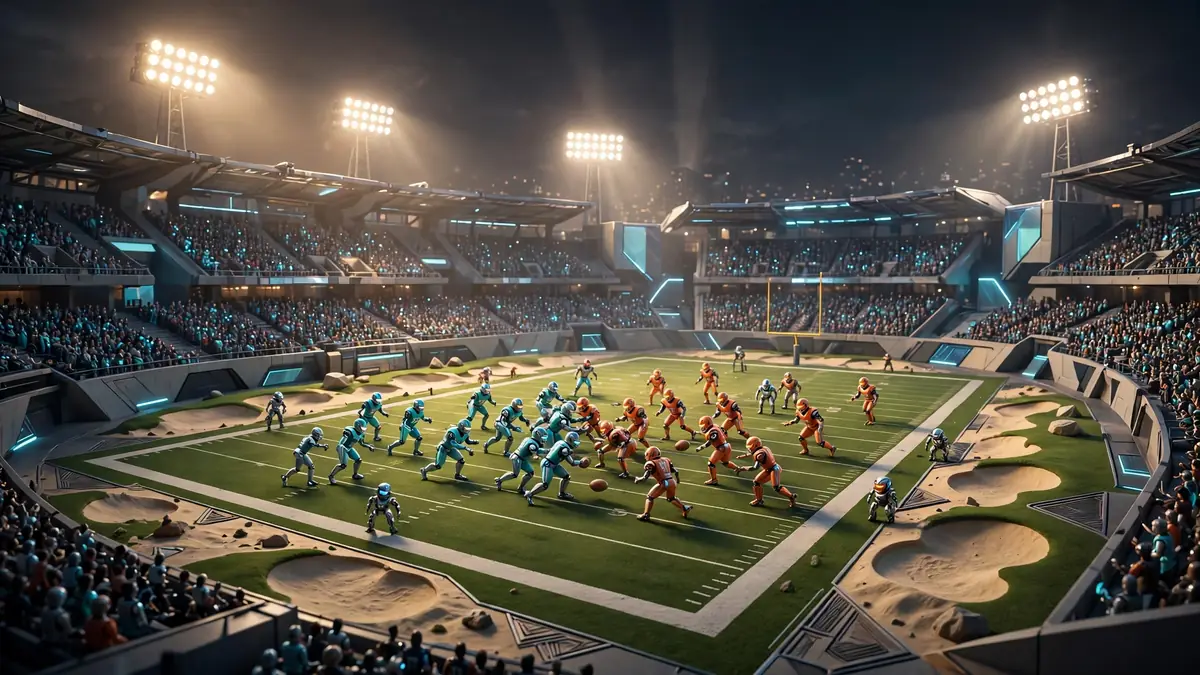
Fock Ball is modified football: seven on seven on a football field, with sand traps running down each side. Teams score by getting the ball into the goal at either end — three points for running it in or a short throw, six for a long shot into the goal area. Teams play each other once a year, with an annual draft, year-round trades, and players who can be bought and sold.
All 30 teams have an original branded identity, with logos generated using Google’s Nano Banana and custom wordmarks. Players are generated body first — height, weight and build are rolled before anything else — then given 19 attributes covering speed, throwing and experience, plus a personality, a likelihood of getting into trouble, a look and a bio. Off the field, the league runs like a real one: a hard salary cap, contracts with guaranteed money, free agency, injuries, retirements and cuts. Some players get into trouble, from a DUI on a riding mower to stealing hotel bathrobes in Las Vegas, and a commissioner hands out suspensions from a police blotter.
Four engines to get to real physics#
The game itself took four rebuilds. The first version rolled dice for each player and printed a box score. The second played out every possession in order, with a game clock and a written log — but reading logs got boring. The third added a proper 3D broadcast, except the animation faked movement to match the outcomes, the players had no physics, and every play had to be animated by hand.
So the creator threw the engine out and rebuilt it as a real physical simulation. The field is now a real place: the players are physically simulated bodies, the ball is a physically simulated football with a hard shell and an offset weight, tackles are real collisions and every catch is real. His favorite detail is that the ball is genuinely fumbled about once per game — and the game simulates it bouncing around and the unscripted scrum to pick it up. The creator notes the contrast with a recent AI-run Aussie rules league, where Claude coaches the teams and decides results; Fock Ball takes the opposite approach, letting a structured, physics-driven game decide what happens.
A league that runs itself#
Once the game worked, the creator built the world around it: grandstands, fans, an old-school PA system, an animated open, a pregame countdown, intermissions and a closing credit roll, crowd noise and a stadium organist — the organ synthesized entirely in code, in the browser, with no audio files. Outdoor games are played in each city’s real forecast, pulled every morning from Open-Meteo.
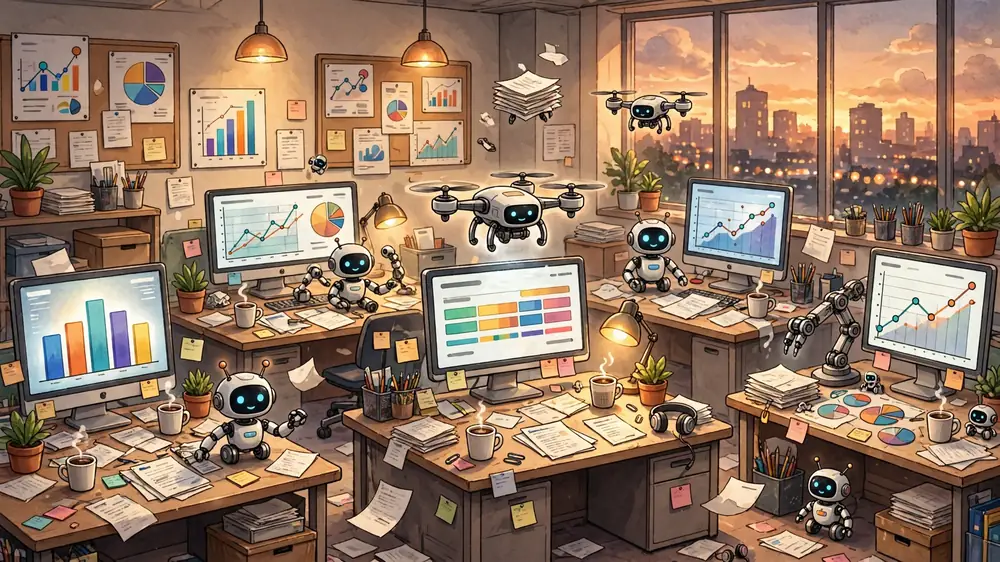
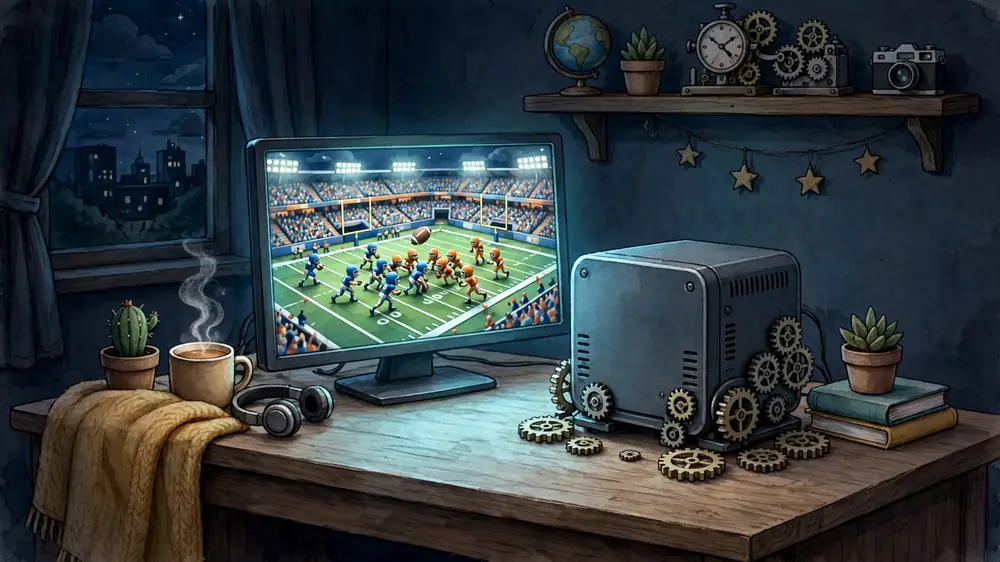
Then the league was set loose. A Mac mini plays each day’s games every morning, writes and voices the announcements, the news articles and the social feed, and posts a highlight of each game’s best play to TikTok, Instagram and YouTube. Five reporters cover the league, each with a beat and a voice: a Monday recap, Friday game previews, a weekly power ranking, a trade deadline show, a satirical tabloid, a straight news site and a sports talk show. Fifteen games a week are played one at a time so they never overlap. An hour before kickoff the home page switches to a countdown; the broadcast runs from 7:30 to 9:00 PM ET; at the final whistle the score and standings update, and the highlight posts 15 minutes later. The history was played, not written: the sim ran every season from 1988 to 2025 through the same code that runs the league today.
The scale of the build is part of the story: about 140,000 lines of code and more than 1,200 commits in under five months, all on the $100-a-month Claude Max plan.
The thread’s verdict — and one launch-day bug#
The most upvoted comment asked whether the games are listed on Kalshi, Polymarket or DraftKings. Not yet, the creator replied — but Claude is already calculating betting odds: the Tacoma Gnomes are a 6.5-point road favorite over Anchorage tonight, at −340 straight up, Anchorage at +265, with the over/under at 46. Other top comments praised the team names — the Little Rock Big Rocks, the Portland Heels — and the rabbit hole of the league’s newsroom lore.
The community also caught a real bug on launch day. A commenter flagged a player celebration animation that resembled a Nazi salute, with a screenshot. The creator replied that it was meant to be a high five, that Claude has no idea how humans operate when animating 3D models, and that the fix was already in the repo — players will celebrate with a standard chest bump instead.
What to watch#
The first test is tonight: the Tacoma Gnomes visit the Anchorage Glaciers at 7:30 PM ET, live at fockball.com, with highlights on TikTok, Instagram and YouTube as @fockball and discussion on r/fockball. The creator’s roadmap runs to a higher-fidelity broadcast, better player models and stadiums, a real fantasy league, merch — and betting odds.
The bigger question is whether a league nobody plays can hold an audience once the launch-day novelty fades. One-person, Claude-built projects keep finding audiences on Reddit — a vibe-coded Photoshop rival crossed 20,000 users the same way — but few of them have to produce a fresh broadcast, a news cycle and a scandal every single night. Fock Ball has to, starting tonight.