AI gave my brother independence: head-movement games built with Google Astra and Claude Opus 5.5
On r/singularity, a first-person post shows what the new wave of AI-built software looks like up close: three head-movement-controlled games, made with Google Astra and Claude Opus 5.5, for a brother with Tubb4a-related Leukodystrophy who hadn’t played anything like them in over a decade — released free and open source.
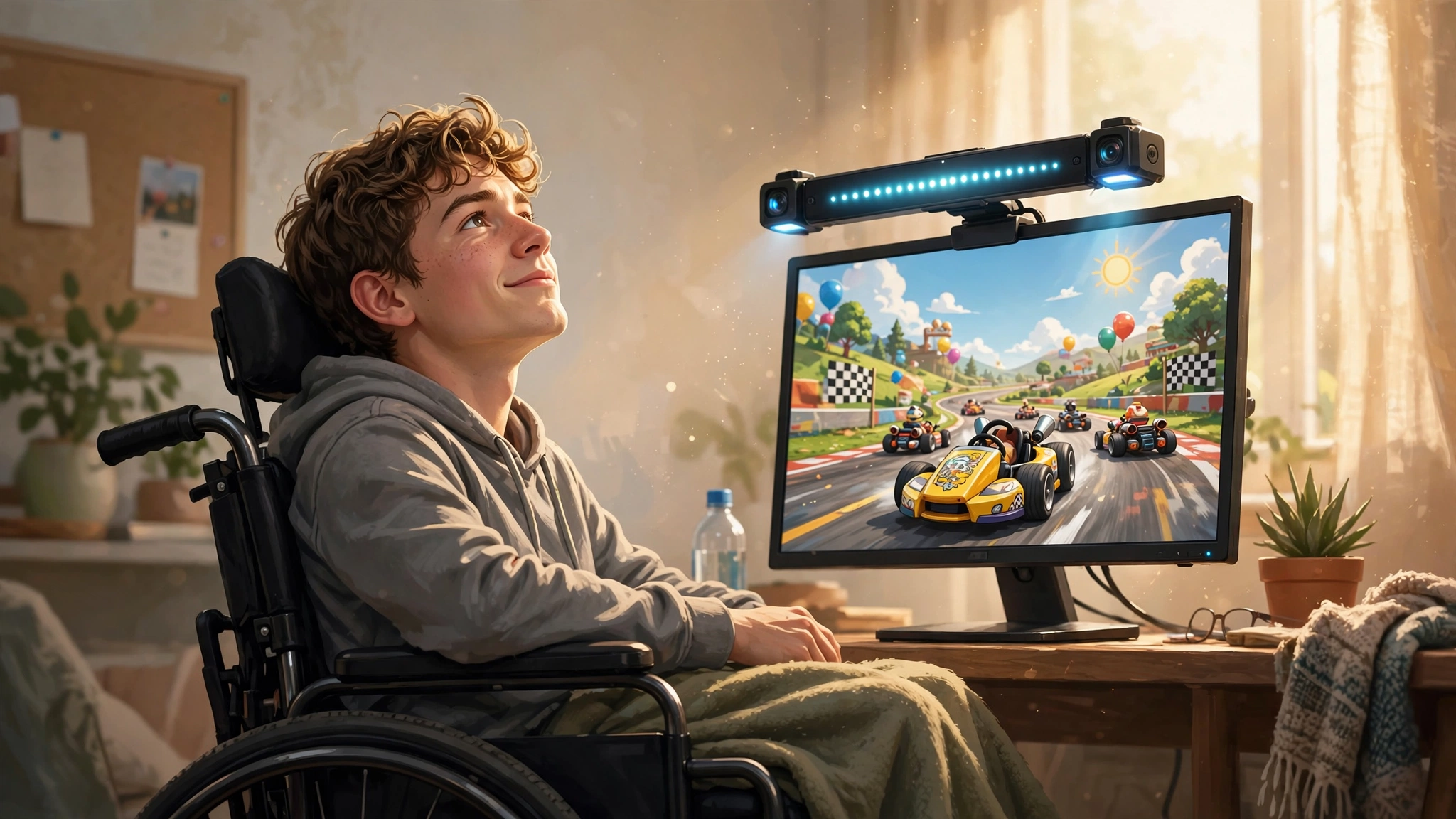
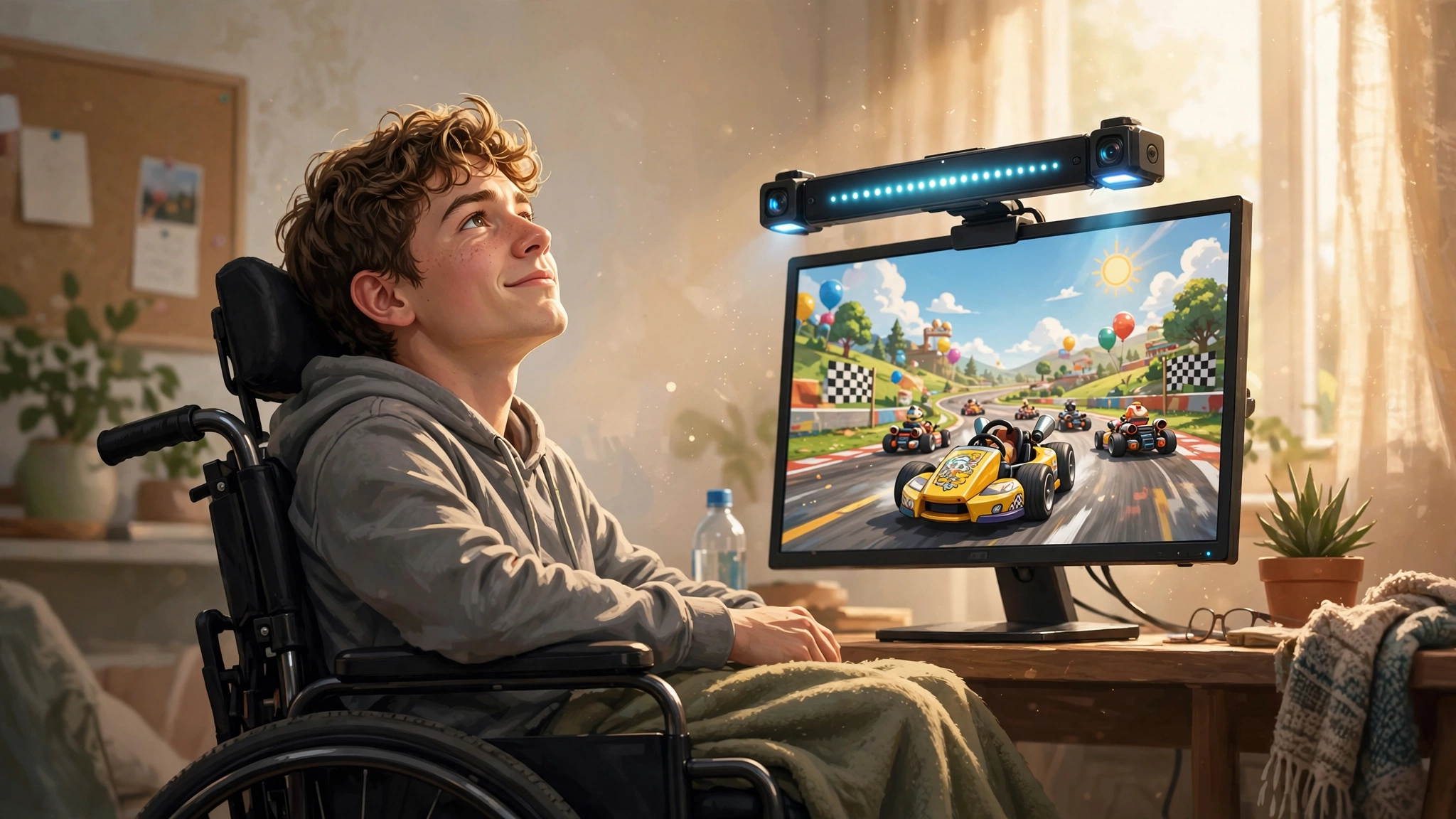
On Tuesday evening, a user posting as u/acrolicious gave r/singularity something the sub rarely sees: a first-person video. “AI Gave my brother independence,” the post read, attached to a 4:42 clip of Ben — the poster’s brother — playing games controlled entirely by head movement. Within five hours the thread had gathered nearly 500 upvotes and 46 comments, and the comments section turned into one of the most unanimously moved threads the sub has seen in a while.
Ben has the ultra-rare progressive condition Tubb4a-related Leukodystrophy. According to his brother, he can no longer walk, talk, speak, or use his eyes effectively — but he can still move his head left and right. That is the entire controller. And this week, it was enough for three brand-new games: a Mario Kart-like racer, a 3D Angry Birds-style game, and a pet simulator. The poster says they are the first games of their kind Ben has had in over a decade.
The video#
The clip is the whole argument. There is no demo-day framing, no benchmark chart — just Ben playing, with the head-tracking input doing all the work. The poster built the games with current AI tooling: Google’s Astra alongside Anthropic’s Claude Opus 5.5, the model that has been dominating AI coding chatter since its release. The video makes the case that “vibe-coded” software can be more than a novelty when the person building it is solving for exactly one user with a very specific set of abilities.
It also landed in a subreddit that has spent much of the year arguing about “AI slop” — low-effort generated content flooding feeds. Commenters picked up on that tension immediately. “This is what I (and many others on this sub) envisioned for AI all those years ago,” wrote RusselTheBrickLever, a top commenter. Another, mrekted, framed the post as the real-world counterpoint to the slop discourse: AI “democratizing expertise… to transform lives.”
Three new games this week#
All three titles were built this week for Ben’s specific input channel — head left, head right:
- A Mario Kart-like racer — the arcade centerpiece, and the one that reads best on video: steering through head movement alone.
- A 3D Angry Birds-style game — slingshot mechanics remapped to head tilt.
- A pet simulator — slower-paced, built for companionship and low-intensity play.
The poster says everything — the games and the tools behind them — is released free and open source, at switchedgames.org and bennyshub.com. That detail matters: this isn’t a demo for a funding round, it’s a working kit someone else’s family can pick up and adapt.

How they built it#
The build stack, as described in the thread, pairs Google’s Astra with Claude Opus 5.5 — the model that has been at the center of the recent “agents that actually ship” conversation. The combination is telling: a capable vision-capable assistant on one side, a frontier coding model on the other, and a builder with a sharply defined accessibility target in the middle.
The comment section also became an impromptu accessibility engineering review. One commenter suggested an Emotiv brainwave headset (around $500 and up) plus Eleven Labs voice cloning; the poster replied that Ben already has a custom voice, and that brainwave interfaces don’t work for him because his myelin-related condition means neural signals don’t travel in the typical way. Another suggested a tongue-controlled mousepad; the answer was that Ben’s tongue and fine motor control are unreliable and worsening. It’s a useful reminder that accessibility is a long tail of individual bodies, not a feature checklist — and it’s exactly the kind of long tail that one-off AI-built software is well suited to.
The comment section’s verdict#
Nothing in the thread was disputed — no corrections, no debunks, no skepticism about whether the games were real. The dominant reaction was a software engineer, ColoringZebra, saying the post inspired them to start a similar accessibility side project. Another top commenter, Commercial_Sell_4825, captured the mood: “Imagine Ben going online and seeing people saying ‘But what has AI changed about the real world’ 😅”
That line is the story, really. The AI industry’s favorite debate right now — whether any of this is changing the real world — keeps getting answered in threads like this one, by people who aren’t in the debate at all.
What to watch#
The open question is whether this pattern scales. One family, one developer, one sharply defined user — can the same stack produce accessible games for dozens of conditions, built by people who aren’t professional game studios? The free, open-source release is the bet that it can. Watch switchedgames.org for forks and adaptations: the moment another family ships a game for a different condition using the same tooling, this stops being a heartwarming post and starts being a template.
Sources
- “AI Gave my brother independence” — u/acrolicious, r/singularity (Reddit, September 29, 2026)
- switchedgames.org and bennyshub.com — the free, open-source release of the games and tools, per the original thread