Akamai turns its edge cloud into a full AI stack: managed inference, an agent sandbox, and Blackwell Ultra GPUs
Akamai introduced Akamai Inference and Akamai Agent Sandbox on October 27, 2026, adding managed model serving and isolated agent execution to Akamai Cloud — alongside Blackwell Ultra GPU clusters — with both products in beta.
- Who: Akamai (Nasdaq: AKAM), announcing October 27, 2026, from Cambridge, Massachusetts.
- What: Akamai Inference, a managed model-serving service, and Akamai Agent Sandbox, an isolated execution environment for AI agents — both in beta.
- Inference catalog: 12 open-weight models from 8 billion to 2.8 trillion parameters, including NVIDIA Nemotron 3 Ultra, OpenAI gpt-oss-120b, and Google Gemma 4, plus embedding models — served through OpenAI-compatible APIs, serverless or dedicated.
- Sandbox isolation: agents run on Akamai Functions; code they write runs in its own WebAssembly-isolated environment, delivered as an open source Spin component, with limits on compute, memory, outbound connections, and system capabilities.
- Hardware: NVIDIA Blackwell Ultra clusters; each eight-GPU node carries 288 GB of HBM3e per GPU, 2.3 TB total; RTX PRO 6000 Blackwell Server Edition GPUs for low-latency inference; Vera Rubin support planned for 2027.
- Scale: more than 4,350 edge locations; multiyear Akamai Cloud contracts collectively worth more than $14 billion.

Akamai wants to be the place where enterprise AI actually runs — not just the network it travels over. On October 27, 2026, the company introduced two products that fill the biggest gaps in its cloud: Akamai Inference, a managed model-serving service, and Akamai Agent Sandbox, an isolated place for AI agents to execute code. Both are available in beta, and both run on the same Akamai Cloud platform the company has spent the last few years building out for AI workloads.
The pitch is consolidation. Akamai argues that teams moving AI into production today assemble the pieces themselves — model serving here, data access there, security somewhere else — and then secure the seams. Akamai Inference and Agent Sandbox add the inference and execution layers that turn its infrastructure into, in the company's words, a full AI stack, protected by the security portfolio it already sells.
Managed inference, without the rewrite#
Akamai Inference gives enterprises managed access to open-weight and custom models through OpenAI-compatible APIs, so existing applications move without rewrites. Customers choose serverless, pay-per-use inference or dedicated deployments. At launch, the catalog includes 12 open-weight models ranging from 8 billion to 2.8 trillion parameters, including NVIDIA Nemotron 3 Ultra, OpenAI gpt-oss-120b, and Google Gemma 4, along with embedding models for retrieval-augmented generation.
Akamai Cloud supplies managed databases and object storage and connects to private and public clouds, so models can draw on enterprise data. Akamai Inference then handles orchestration, model execution, and authentication, with requests running across Akamai's global network to cut latency. As SiliconANGLE notes, the point is that teams can deploy new AI applications and agents at the edge without rewriting code, with the embedding models connecting open-weight models to managed databases so responses stay grounded in company data.
A boundary around code agents write#
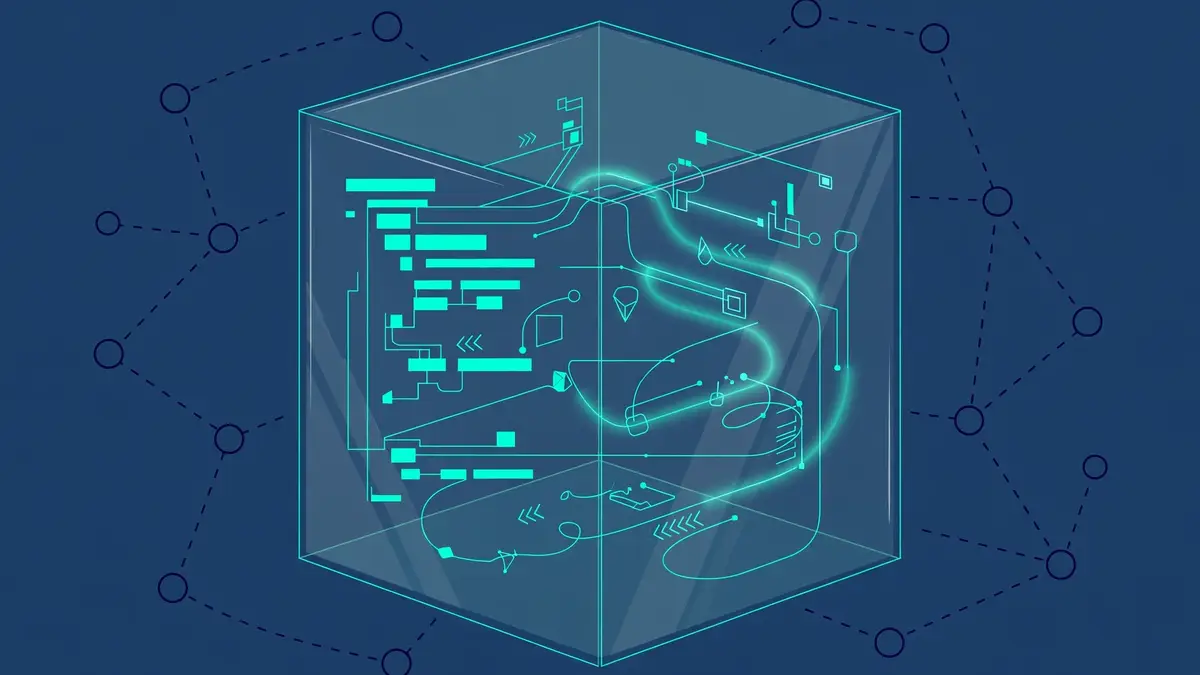
The sandbox addresses the newer, sharper problem: agents no longer just answer questions — they take actions and write and run their own code. Akamai Agent Sandbox gives developers a place to run both. Agents run on Akamai Functions, and the code they write runs in its own isolated environment, sequestered from the agent's runtime. Delivered as an open source component of the Spin framework, it uses WebAssembly isolation to set clear limits on compute, memory, outbound connections, and system capabilities.
That isolation model is one of several converging in the industry, alongside microVMs with snapshot and fork capability and policy-enforced containers. Akamai says developers can choose the architecture that fits their workload, with NVIDIA-accelerated and dedicated CPU infrastructure, managed Kubernetes, and Akamai Functions for serverless execution across edge and core — and it plans to add capabilities governing what agents can reach and what can reach them.
Blackwell Ultra now, Vera Rubin next#
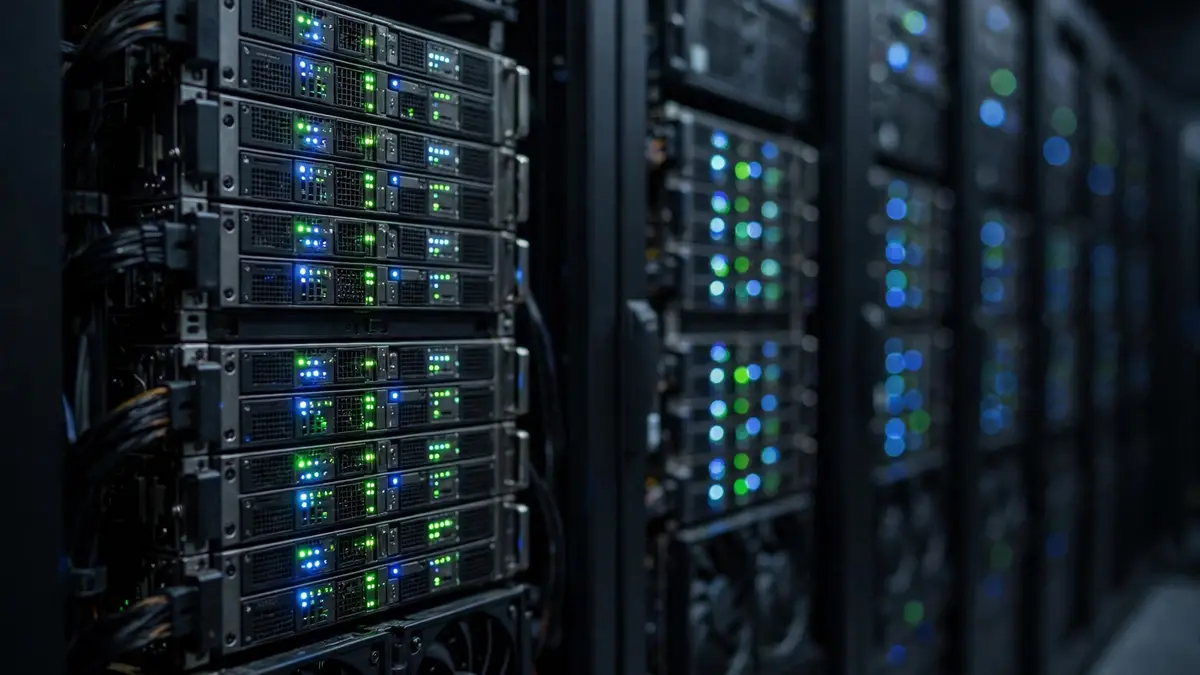
Alongside the software, Akamai expanded its dedicated GPU fleet to include NVIDIA Blackwell Ultra clusters, and is preparing its infrastructure to support the NVIDIA Vera Rubin platform in 2027. The fleet now spans RTX PRO 6000 Blackwell Server Edition GPUs for low-latency inference and Blackwell Ultra clusters for teams that want to build, tune, and self-host models on infrastructure they control.
Each eight-GPU Blackwell Ultra node carries 288 GB of HBM3e memory per GPU, 2.3 TB in total — enough, Akamai says, to hold frontier-class models. The architecture targets the workloads driving that memory demand: test-time scaling, chain-of-thought reasoning, and long-context agentic work. Clusters run without rate limits or shared-tenancy queueing, and give enterprises control over model versions and deprecation timelines.
Why it matters#
The context is scale. Akamai says multiyear contracts for Akamai Cloud are collectively worth more than $14 billion, and its compute now stretches from dense GPU and CPU clusters in core regions to more than 4,350 edge locations. "We have been implementing an AI infrastructure strategy based on the notion that AI inference will represent the majority of enterprise focus and investment," said Adam Karon, chief operating officer and general manager of Akamai Cloud. "Our customers proved that thesis and pulled us further."
The bet is that inference — not training — is where enterprise AI spending concentrates, and that agents need a hard boundary around the code they write. "Every team running agents needs a boundary around the code those agents write," said Jon Alexander, senior vice president of cloud technology at Akamai. Both products are in beta now; Akamai Inference's beta includes serverless deployment options, and availability of NVIDIA B300 GPU clusters is through Akamai Sales.
Frequently asked questions
What is Akamai Inference?
It is a managed service that gives enterprises access to open-weight and custom models through OpenAI-compatible APIs, so existing applications move without rewrites. Customers choose serverless, pay-per-use inference or dedicated deployments, from a launch catalog of 12 open-weight models ranging from 8 billion to 2.8 trillion parameters.
How does Akamai Agent Sandbox keep agent-written code safe?
Agents run on Akamai Functions, while the code they write runs in its own isolated environment, sequestered from the agent runtime. Delivered as an open source component of the Spin framework, it uses WebAssembly isolation to limit compute, memory, outbound connections, and system capabilities.
When can enterprises use these products?
Both are available in beta now. Akamai Inference beta includes serverless deployment options, and availability of NVIDIA B300 GPU clusters is through Akamai Sales.