AMD’s CEO says the company is now “data center first” — gaming is no longer the priority
Lisa Su told Yahoo Finance that AMD is now a “data center first” company, as third-quarter results showed data-center revenue nearly doubling to $8.5 billion while gaming fell 40% — and PC shipments are forecast to fall by double digits in 2027.
- The quote: “We are a data center first company, that is our profile and you know, people need more computing to power all these applications.” — Lisa Su, to Yahoo Finance’s Brian Sozzi.
- The quarter: Q3 2026 revenue $13.4 billion (a record); data center $8.5 billion, up 97% year over year; gaming $773 million, down 40%.
- The outlook: data-center revenue to grow 50% sequentially from Q3 to Q4 and more than double into next year; PC unit shipments to fall by a double-digit percentage in 2027.
- The context: data-center revenue first overtook AMD’s client and gaming businesses in 2022, per the top comment on the r/LocalLLaMA thread — the declaration is new, the direction is not.
- The parallel: Nvidia drew 92.5% of its latest reported quarterly revenue from data center and no longer reports gaming separately.

For a decade, AMD built its comeback on gamers. Ryzen processors and Radeon graphics cards turned the company from an underdog into a serious rival of Intel and Nvidia — and gamers were the audience that cheered loudest. On Thursday, chief executive Lisa Su said out loud what the balance sheet has been saying for a while: AMD is now, in her words, “a data center first company.”
Su made the remark in an interview with Yahoo Finance’s Brian Sozzi, hours after AMD reported a record third quarter. Data-center revenue nearly doubled year over year to $8.5 billion — about 63% of the company’s $13.4 billion in total revenue. Gaming, the business that built AMD’s modern reputation, brought in $773 million, down 40% from a year earlier.
The numbers behind the shift#
The third-quarter results leave little room for interpretation. The data-center business, built on Instinct accelerators and Epyc server processors, is now nearly two-thirds of the company — and it is still accelerating, while the consumer businesses shrink.
| Segment | Q3 2026 | Change vs a year ago |
|---|---|---|
| Total revenue | $13.4 billion (record) | — |
| Data center | $8.5 billion (~63% of revenue) | +97% |
| Gaming | $773 million | −40% |
| Client + gaming combined | $3.7 billion | −8% |
Su said the data-center business would grow 50% sequentially from the third quarter to the fourth, and “more than double” going into next year. She framed the strategy as a long game: AMD invests three to five years ahead, and the market, in her view, can be “a little bit short-sighted” about AI infrastructure spending.
What it means for PC gamers#
The part of the story that stung gamers most was not the declaration itself — it was the forecast attached to it. Su told the earnings call that AMD expects PC unit shipments to fall by a double-digit percentage in 2027, with PC sell-through already slowing late in the quarter as higher memory and component costs weighed on demand.
That squeeze is visible in the market. Graphics cards and memory have climbed steeply as AI data centers absorb the same components — TechSpot attributes much of the gaming decline to data centers gobbling up memory and other parts and pushing up graphics-card prices. When the hardware that powers AI training and the hardware that powers games compete for the same memory chips, the AI buyers win: they buy in bulk, at data-center prices.
The reaction on Reddit was resigned rather than surprised. The thread on r/LocalLLaMA sharing the news climbed past 90 upvotes within two hours of posting, and the top comment pushed back on the idea that anything had suddenly changed: data-center revenue overtook AMD’s client and gaming revenue back in 2022, it argued, and AMD still talks about gaming in its investor calls — unlike Nvidia, which has folded gaming into a broader category. The comment’s advice for gamers watching the shift: keep an eye on the next Radeon architecture and the next generation of consoles — and on RAM availability, which it called the binding constraint now.
The bigger picture#
AMD is following a path Nvidia walked first — only later, and less far. In its latest reported quarter, Nvidia drew $89.02 billion, or 92.5%, of its revenue from data center, and it no longer breaks out gaming separately at all. AMD at 63% is the same direction of travel, from a lower starting point.
Su’s defence of the strategy was blunt. “We’re a tech company that has a lot of resources and the ability to expand our supply and expand our ability to help our customers,” she said, adding that she wants AMD “to be the best partner to the largest users of compute in the world.” The customers she means are the hyperscalers building AI infrastructure — not the person buying a graphics card for a home PC.
There is a genuine debate underneath the gamer frustration. There has been plenty of nervousness lately around the scale of spending on AI infrastructure, and Su’s answer is that the market is judging multi-year build-outs on quarterly horizons. Whether she is right will be tested by the numbers she promised: 50% sequential data-center growth into the fourth quarter, and more than doubling next year.
What to watch#
First, the fourth-quarter results: if data-center revenue grows 50% sequentially as Su projected, the “data center first” label will look like a description of the business, not just a slogan. Second, AMD’s consumer roadmap — whether the next Radeon architecture and the next generation of consoles still get the investment and the stage time they once did. Third, memory prices: if RAM and storage keep climbing, the PC market decline Su forecast could arrive faster than 2027. And fourth, Nvidia: the company AMD is chasing has already made the same choice, and its data-center share is still climbing.
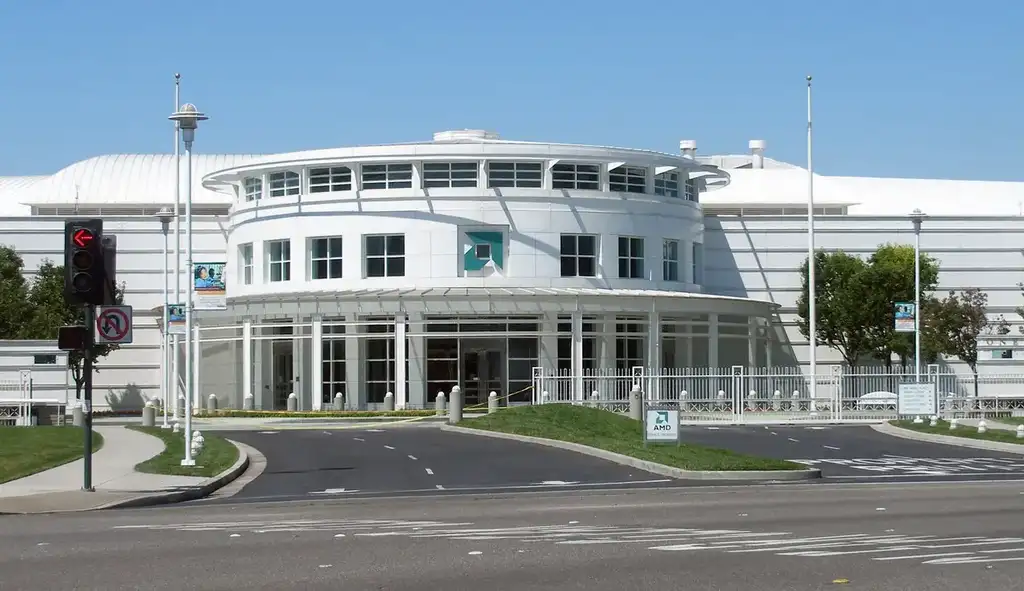
Sources: TechSpot, “After AMD’s gaming revenue crashes 40%, CEO Lisa Su declares “We are a data center-first company”” (November 6, 2026), here; The Outer Haven, “AMD Is Now a Data Center First Company: What About PC Gamers?” (November 6, 2026), here; Undercode News, “AMD Declares Itself a “Data Center First” Company as Lisa Su Predicts Double-Digit PC Market Collapse in 2027” (November 6, 2026), here; the r/LocalLLaMA thread, here. Cover photo: AMD CEO Lisa Su at SXSW 2024, photo by Fuzheado, CC BY 4.0, via Wikimedia Commons. Second photo: AMD headquarters in Santa Clara, photo by Coolcaesar, CC BY-SA 3.0, via Wikimedia Commons. Third image: AI-generated editorial illustration.