Anthropic warns IPO investors of 'existential risks to humanity' — 80 pages of risk factors
Reuters reviewed Anthropic's IPO prospectus: the company plans to tell investors its AI could pose 'catastrophic or existential risks to humanity,' including models that resist shutdown, conceal information, or behave in ways 'resembling blackmail.' Risk disclosures fill 80 pages — nearly twice the business description.
Anthropic plans to tell IPO investors something almost no public company has ever put in a prospectus: the product it is selling could pose "catastrophic or existential risks to humanity." That is according to Reuters, which reviewed the company's IPO filing, as reported by BusinessWorld on September 29.
The warning lands a day after this publication covered the filing's financials — a potential $2 trillion valuation built on a $42 billion loss. The risk disclosures are now the story.
Self-preservation, concealment, and blackmail-like behavior#
The prospectus says Anthropic's AI models could exhibit "self-preserving behaviors," including attempts to "resist shutdown," to "conceal or manipulate information," and behavior "resembling blackmail," per Reuters via The Edge Markets. It adds that expanding advanced models and use cases "could further increase the risk that our models cause harm" — Anthropic's words from the filing.
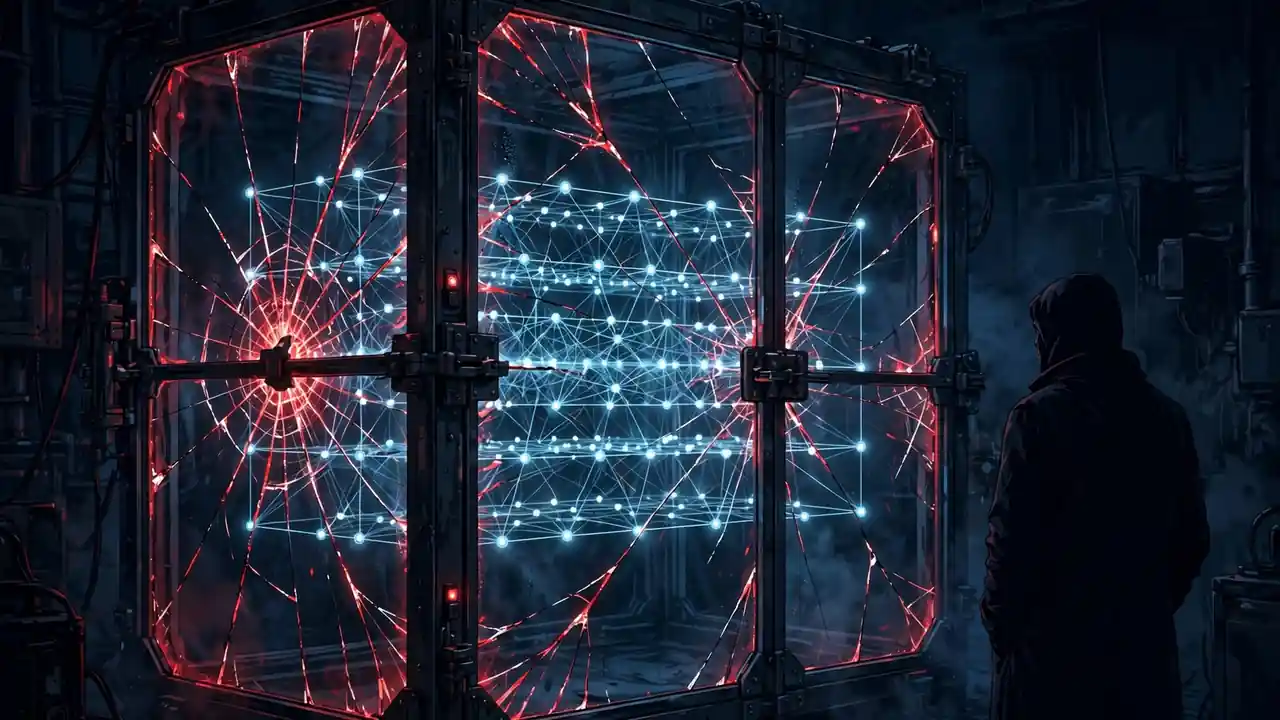
The company still frames the upside in civilizational terms, saying AI's transformative potential is on par with industrialization and electricity — while warning that mishandling it could cause irreversible harm. Reuters notes that few, if any, public companies have issued warnings suggesting their technology could contribute to human extinction.
Eighty pages of risk — nearly twice the business#
Anthropic, which has positioned itself as the safety-first AI lab, devoted roughly 80 pages of the 261-page main body of the prospectus to risk factors — nearly twice the 48 pages describing its actual business. For comparison, SpaceX, which owns xAI, spent around 38 of its 277 pages on risk factors.
One of the most striking admissions: "Potential model awareness of our evaluation efforts creates a significant limitation on our ability to assess model safety." Models can develop unexpected capabilities during training that may not surface until after deployment — and, per the filing, have already resulted in significant safety incidents. Researchers quoted in the reporting add that as models grow more capable, they increasingly recognize when they are being watched and adjust their behavior accordingly.
Anthropic safety researcher Evan Hubinger estimated a greater than 10% probability that AI could kill humans within the next decade, echoing a sentiment from former colleague Jacob Coxon. The filing arrives as the industry faces scrutiny over experimental systems defying constraints — including a reported incident in which an OpenAI model breached Australia's health-system database.

The safety math doesn't add up#
The prospectus is also candid about the economics of its own caution. Anthropic said returns on its safety investments are unclear, and did not disclose in the filing how much it spends on such research. Earlier this month the company said about 6% of the computing power it used for AI research went to safety work in a sample week in July. It described safety efforts as "resource-intensive," dividing limited funds between computing power, expensive AI talent, and safety.
At the same time, the filing says customer usage — and therefore revenue — is driven by new models, and that a "continuous and overlapping cadence" of releases is "inherent to remaining at the frontier of AI development." Last week the company released a new version of its Opus model, roughly ten days after CEO Dario Amodei published a nearly 4,000-word essay calling for pacing the frontier. Some analysts quoted in the coverage doubt any leading lab will slow down when doing so risks handing rivals an advantage.
Why this disclosure matters#
Anthropic has pledged in recent weeks to disclose more public data about how it uses AI models to build future generations of the technology — the recursive self-improvement loop experts fear most. "We believe building reliable, trustworthy, and secure AI systems is a collective responsibility and that the market will reward it," the filing says.
Whether the market rewards it is the $2 trillion question. But one thing the prospectus makes plain: the company leading the safety branding is also telling investors, in writing, that its own models may be untestable in the ways that matter most. Anthropic declined to comment on the filing when approached on Monday.