US appeals court keeps Anthropic on the Pentagon's national-security blacklist
The D.C. Circuit declined on Friday to block the Defense Department's order barring Anthropic from military contracts — keeping the Claude maker labeled a national-security supply-chain risk as it heads toward a blockbuster IPO.
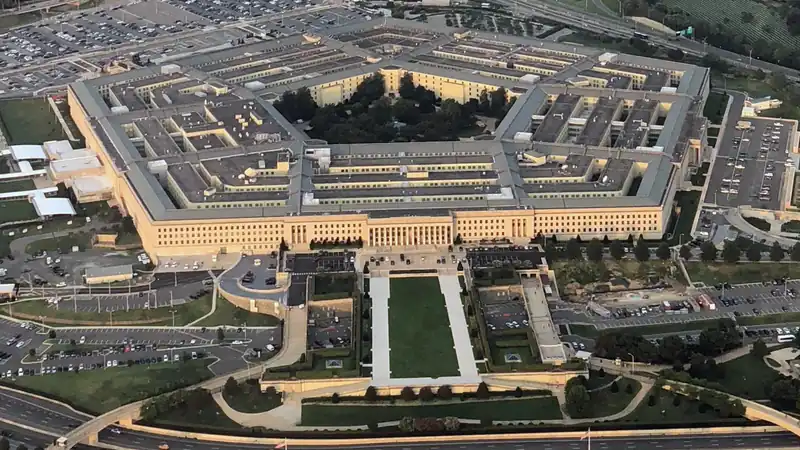
A federal appeals court handed Anthropic a major legal defeat on Friday, declining to block a Defense Department order that keeps the Claude maker blacklisted from military contracts and formally designated a national-security supply-chain risk.
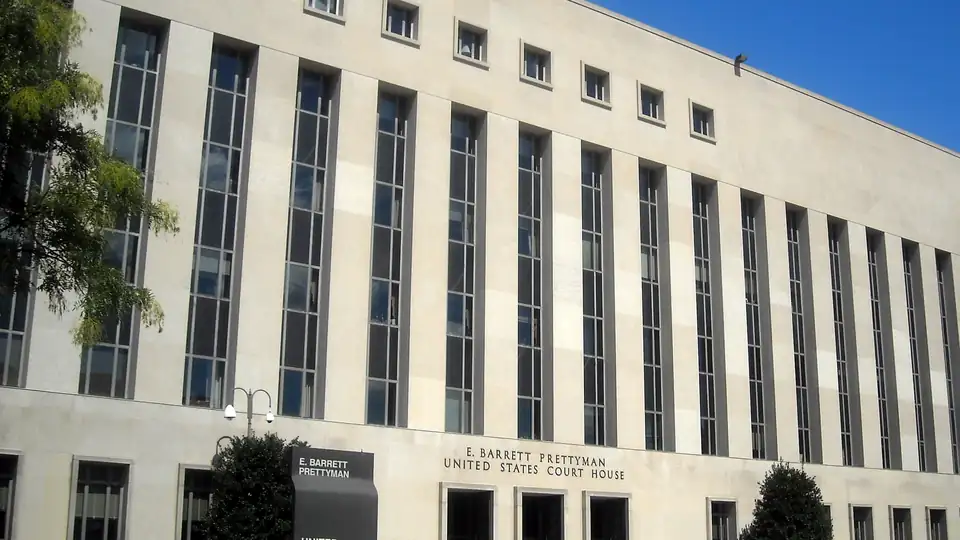
The ruling from the U.S. Court of Appeals for the D.C. Circuit, reported by Reuters, deepens a months-long standoff between Washington and one of the world's leading AI labs — a fight over who gets the final say on how the U.S. military uses frontier AI models.
What the court decided#
The D.C. Circuit declined to block the Pentagon's order, so Anthropic stays barred from military contracts while its lawsuit challenging the designation moves forward. The company had asked the court to freeze the order pending the case's outcome; the judges said no.
Anthropic said in a statement that it “respectfully disagrees” with the decision but remains confident in its position and is considering its options, “including further judicial review” — language that keeps a Supreme Court petition on the table.
It is worth being precise about what Friday did and did not do: this was a ruling on whether to block the order during litigation, not a final judgment on whether the designation itself is lawful. The blacklist stands for now; the underlying fight continues.
A legal split-screen#
Friday's ruling is the mirror image of a victory Anthropic won last month. A federal judge in San Francisco struck down a parallel designation issued under a different law, finding, per Reuters, that the administration had unlawfully retaliated against Anthropic for its views on AI safety.
So the company now lives in a two-track legal reality: one court says a version of this action was unlawful retaliation; another lets the Pentagon's version stand while the case proceeds. For a company trying to plan its government business around a coherent legal status, it does not get much messier than this.
The divergence matters beyond Anthropic. If the designation survives on the merits in D.C. while dying in California, the government and the labs could spend years litigating which version of the blacklist, under which statute, actually governs.
Billions of dollars — and an IPO — on the line#
Anthropic told the court the designation has cost it billions of dollars in lost business and damaged its reputation ahead of a highly anticipated initial public offering. Being formally branded a national security risk by the Pentagon is not just a contracting problem: it is the kind of label that walks into an IPO roadshow, where investors will ask exactly which government doors are closed — and for how long.
At the heart of the dispute, according to press accounts of the case, are the terms of military access to frontier AI. The Pentagon wants the labs' models available across lawful military use cases, while Anthropic has drawn red lines around applications such as lethal autonomous warfare without human oversight and mass surveillance of Americans — uses it says its models have not been tested enough to handle safely.
That is the collision the whole industry is watching: a government that wants frontier models on call for national security, and a lab that insists some uses must stay off-limits until the safety case is made.
What happens next#
Anthropic's mention of “further judicial review” is the tell. The company can seek rehearing before the full D.C. Circuit or take the case to the Supreme Court — a slow, expensive road, but one it can afford to walk while the IPO clock ticks. Its strongest card remains the California retaliation ruling, which gives it a favorable finding of fact to carry upward.
Watch three things. First, whether the Pentagon's pressure extends the same treatment to other labs with similar red lines. Second, how the legal overhang plays into IPO timing and pricing. And third, whether Congress steps in — a fight this sharp, over models this powerful, is exactly the kind of thing that eventually lands in a hearing room.
However it ends, Friday's ruling is a precedent in the making: the first appellate sign that courts may let the government condition military AI contracts on the labs' deployment terms. Every frontier lab will be reading it that way.