A vibe-coded Photoshop rival just crossed 20,000 users — and Reddit is arguing about what it really proves
A two-minute demo of Photon Studio — a desktop photo editor one developer says AI agents built for a few thousand dollars in tokens — hit r/singularity and pulled 1,349 upvotes in 16 hours. The top comments agree software will never be the same; the fine print is messier.

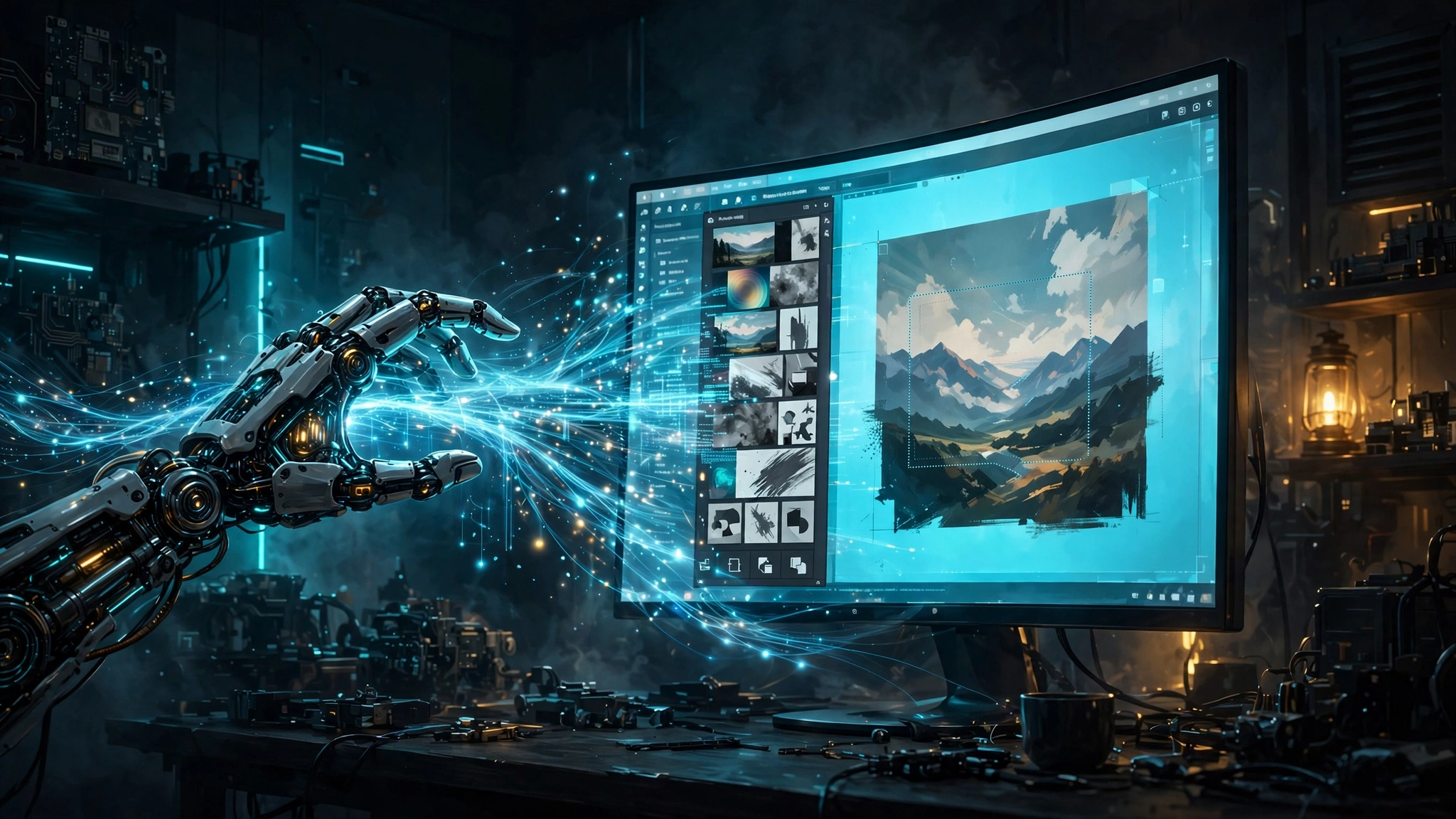
The claim is the kind that used to end careers: one developer says they replaced Adobe Photoshop — a product of three decades and thousands of engineers — with a tool an AI agent assembled in a few weeks, for a few thousand dollars in tokens. The video demo went up on Thursday night. By Friday afternoon it had 1,349 upvotes and 315 comments on r/singularity, and the most interesting part wasn't the software. It was the argument underneath it.
The app is called Photon Studio. Its builder, u/AsejereDaDeje, says it covers "99% of Photoshop's features," runs as a native desktop app with Photoshop's actual keyboard shortcuts, works fully offline, and has crossed 20,000 users with — per the headline — no bad reviews. The project's own site describes it as a free desktop image editor with layers, retouching, design tools and native PSD support for macOS, Windows 11 and Linux — no upload step, no account, no queue. The build cost, per the poster: $2,000 in tokens for the MVP, and "well over" that since.
What the video actually shows#
The 2-minute-18-second clip walks through the app's editing workflow — layers, retouching tools, the shortcut-driven interface — evidence the thing is real and usable, not a mockup. Per the poster's account, an AI coding agent did the building while users flooded in with feedback "through every possible channel" — and more tokens went into post-launch iteration than into the original build. The poster adds that they also used what they call GPT-6 Astra to record desktop demos and fold them into the product's website.
The original post on r/vibecoding pulled 1,942 points and 585 comments; the r/singularity crosspost kept climbing through Friday. The hook is personal: after months of YouTube tutorials learning Photoshop years ago, the poster canceled their Adobe subscription and replaced it with Photon in a few weeks.

The skeptics' case#
Then the fine print arrived. The second-highest comment (237 points): "Photopea existed long before this." Photopea — the free, browser-based Photoshop alternative with a decade-long head start — is the name that keeps surfacing, alongside GIMP. The poster's rebuttal: Photon is offline, carries zero ads, honors Photoshop's real shortcuts precisely because it isn't trapped in a browser, and runs much faster.
The sharper objections target the headline claims. One commenter (37 points) called the video's "full feature parity" framing "a literal lie." Another argued Photoshop's real feature was never a checklist — it is three decades of streamlined professional workflows, sensible defaults and polish, the hardest thing in software to copy. And then the trust question: Photon is closed source, with no public repository. As one commenter put it, that reproduces Photoshop's exact problem — one vendor holding the keys — except the vendor is now one person. They pointed to PhotoGIMP, the open-source Photoshop-skinned GIMP fork with dozens of contributors, as the counterexample. Even the "20k users, no bad reviews" line drew side-eye: one skeptic asked where all the corporate programmers burning through $2,000 of tokens every month were hiding, if custom Photoshops were this easy.
None of it landed as a kill shot. The thread's top comment — 437 points — reads: "Next year pretty much all software is going to be like this, and it won't cost $2000 tokens to generate." The mood is less "this app is a fraud" than "this app is early." A developer's half-joking lament that they can't ship a web app while someone else shipped a Photoshop (84 points) drew the poster's clarification that the famous $2,000 covered the MVP only — "even more tokens were spent on optimizing it, adding missing features and making it actually useful."

Why it still matters#
Strip away the marketing math and two durable signals remain. First, the cost curve: $2,000 for an MVP of a serious desktop application is real money but a rounding error against staffing costs the old way — and commenters are already pricing in that number falling. Second, the maintenance model is new: the poster describes an agent working "overtime" on a feedback firehose, with users reporting missing features and those features shipping the same day. That is a release cadence no traditional team matches — and also exactly what the skeptics flag: who debugs the system when the author never wrote the code?
A telling request sits at 85 points: "Now make me a Lightroom Classic clone that runs on Linux." Someone replied they're already working on one. The thread reads less like a product launch than a proof the audience now believes the trick is repeatable — the same week a coded-from-scratch video-game demo went viral on the same subreddit.
What to watch#
Three threads to follow:
- Whether the numbers hold. 20,000 users and "no bad reviews" are the poster's figures, and the thread's skeptics are already circling. Independent verification is the difference between a movement and a marketing line.
- Whether the parity claim gets walked back. If "recreate Photoshop" quietly becomes "Photoshop-like," the story shrinks from a revolution to a very good alternative — which is still a story, just a smaller one.
- The first serious audit. An AI-written desktop app that touches your files, from a closed-source one-person shop, is a security story waiting to happen. Who reviews the code nobody wrote?
Photon Studio didn't settle the vibe-coding debate on Friday. It just gave both sides their best evidence yet: a working app, real users, and a comment section asking all the right questions.