Bain says AI needs $6 trillion a year by 2031 to pay for its data centers — $4.2T of it from markets that barely exist
Bain & Company's annual technology report, released Tuesday, calculates that the AI industry must generate about $6 trillion in annual revenue by 2031 to justify the capital being poured into data centers — and today's consumer and enterprise AI applications can only plausibly supply $1.2 to $1.8 trillion of it.
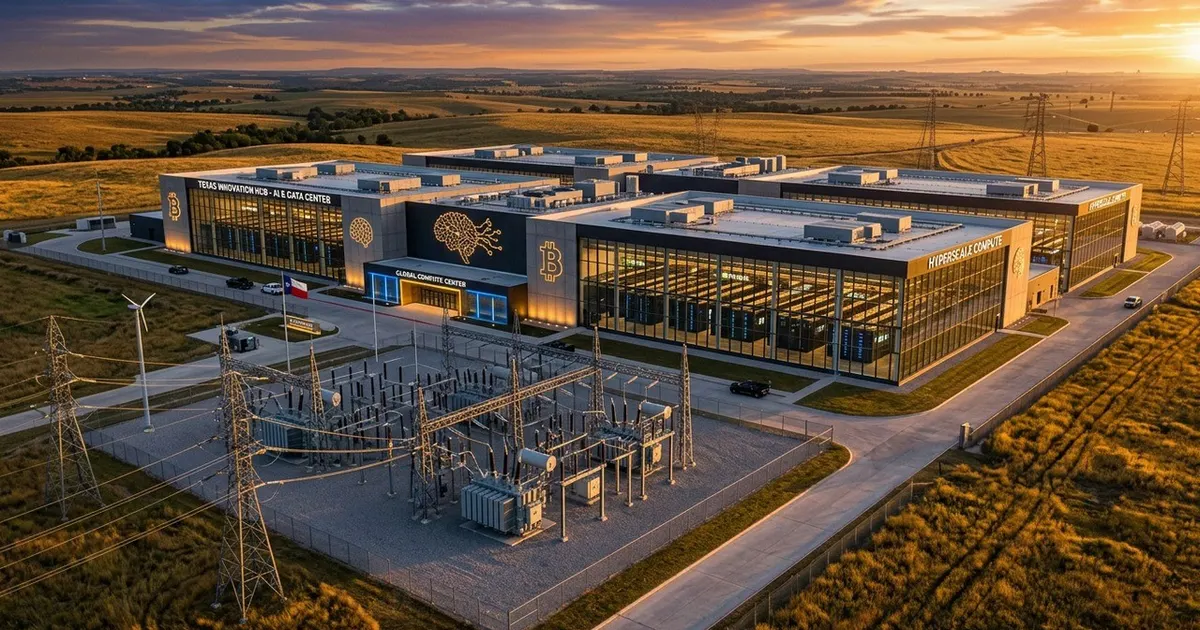
Bain & Company's 7th annual Global Technology Report, released Tuesday, puts the hardest number yet on the question hanging over the AI boom: funding the industry's compute demand will require roughly $6 trillion in annual revenue by 2031 — and existing AI applications can only plausibly supply $1.2 to $1.8 trillion of it. Bain's full analysis identifies four categories where the missing revenue would need to come from: model providers displacing search engines and folding in advertising; "autonomous everything" — cars, trucks, drones, and industrial automation; physical AI — simulations, digital twins, and robotics unlocking new R&D and manufacturing applications; and entirely new markets built on abundant machine intelligence, from drug discovery to mental health and energy generation.
That leaves a gap of about $4.2 trillion that has to be invented before the decade is out. "The debate today is fixated on employee productivity," said David Crawford, chairman of Bain's global Technology practice. "The economics of AI infrastructure demand trillions in new revenue beyond productivity gains. What the industry needs is a wave of innovation that will dwarf what mobile and cloud unlocked."
Built well ahead of the demand curve#
Bain describes AI infrastructure as "being built well ahead of the demand curve" — and estimates that funding it sustainably would require adding roughly 1% to annual global GDP growth. The spending behind that: hyperscalers Microsoft, Google, Amazon, Meta, and Oracle could spend as much as $780 billion in capital expenditures this year alone, nearly five times their combined level three years earlier, per Bloomberg's coverage of the report. Annual spending on AI infrastructure could reach $1.5 trillion by 2031.
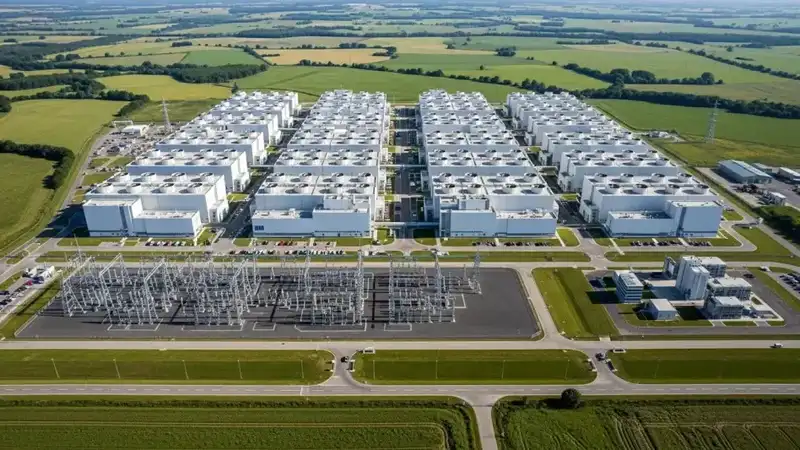
The fastest-growing pieces of the bill are hardware: high-bandwidth memory, advanced packaging, and custom silicon. Hardware and semiconductor stocks compounded at 24% annually from 2020 to 2026, versus 6% for software — a reversal driven entirely by AI's compute appetite. Custom chips are moving from niche to mainstream as hyperscalers and AI-native companies design silicon tuned to their own workloads, and the DRAM market is warping around AI memory: investment is concentrating on high-bandwidth memory while DDR and NAND get starved, which Bain warns could worsen shortages and raise smartphone and PC prices. "The old model where one vendor innovates and sells to everyone else is changing," said Anne Hoecker, global head of Bain's Technology practice, pointing to a wave of verticalization and semi-custom design.
The real bottleneck: absorption, not access#
Perhaps the report's most consequential reframe: "AI absorption" — the pace at which companies can actually put AI to work — has become the competitive variable, displacing raw access to models. Frontier labs are responding by investing upwards of $9.75 billion in forward-deployed engineering teams to help enterprises assimilate AI faster. And contrary to the commoditization narrative, Bain sees "a continuum of frontier and mature models": new, unproven use cases will favor frontier models, then migrate to cheaper alternatives as they mature — with frontier providers capturing value where superior intelligence matters most.

That absorption is not happening on its own. Bain's survey of 293 senior technology leaders found respondents expecting a 148% improvement in release-cycle speed and a 95% uplift in developer productivity within one to two years — against gains of only 20–27% captured today. AI speeds up coding, the report notes, but shifts the bottleneck into review, coordination, quality, and governance.
The security footnote is the scariest part#
Buried in the report is a data point that reframes the whole exercise: AI has compressed the timeline of a typical cyberattack from about four weeks to roughly 18 hours, while the proliferation of AI agents expands the attack surface. Security leaders are redirecting 20–25% of their cybersecurity human resources toward remediating alerts from AI-powered scans, and the lack of a vendor "silver bullet" is pushing firms toward build/buy/partner approaches to AI agent discovery and governance.
The report lands as the industry's financing question moves from academic to urgent: Anthropic's IPO filings and OpenAI's reported $30 billion bridge round are all bets that someone will invent the $4.2 trillion. Bain's answer is that the bet is on innovation — four new revenue engines that barely exist yet — not on today's apps simply scaling up. And the innovation has a deadline.
Sources
- "Global AI market could hit $6 trillion annually by 2031" — Bain & Company (PRNewswire, September 29, 2026)
- "AI industry faces $6 trillion infrastructure challenge" — Communications Today / Bloomberg (September 29, 2026)
- "AI must generate $6T in annual revenue by 2031 to justify infrastructure boom" — invezz (September 29, 2026)