Bank of England warns unreleased AI models are raising encryption concerns — and quantum could go further
The Bank of England's Financial Stability Report warns that unreleased AI models are already worrying their own developers, that AI borrowing has topped $305 billion, and that quantum computing could one day break the encryption banks rely on.
- The warning: Bailey said AI developers are expressing concerns that their latest, still-unreleased models are even more powerful, and called for international testing cooperation including China.
- The report: the Bank’s November Financial Stability Report says frontier AI capabilities kept growing since July, notably in agents and open-weight models.
- The quantum threat: quantum computing could compromise widely used cryptography; the Bank calls an orderly transition to quantum-resistant cryptography a priority, with bank migration deadlines of 2031 and 2035.
- The debt: hyperscaler bond issuance is set to exceed $305 billion in 2026 — about 8% of global investment-grade issuance — with increasingly complex, circular financing.
- The context: AI-related equities fell sharply after the US midterm elections as investors reassessed the scale, pace and cost of AI investment.
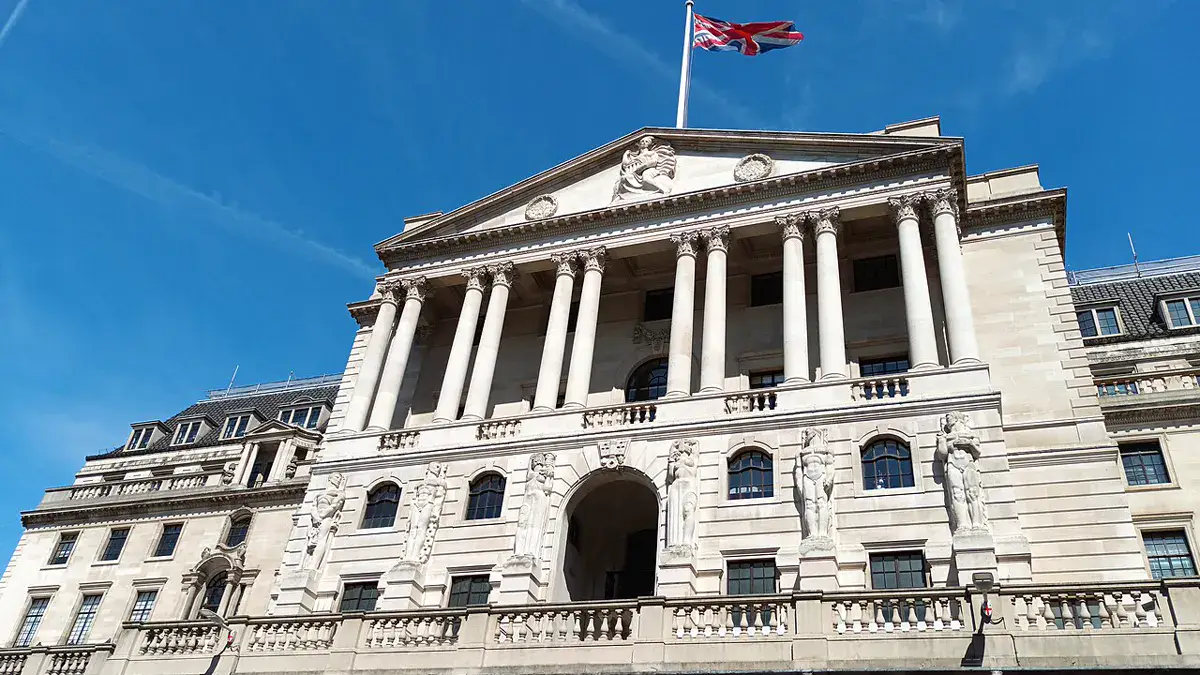
The Bank of England used its twice-yearly Financial Stability Report on Thursday to put frontier AI on the same page as sovereign debt and stretched equity valuations — and Governor Andrew Bailey used the accompanying press conference to say something central bankers rarely say out loud: the people building the next generation of AI models are worried about them, and the models have not even been released yet.
The report, published on November 26, treats AI as a financial-stability issue on three fronts at once: the power of models still sitting in labs, the flood of debt financing the AI buildout, and the longer-term threat that quantum computing poses to the encryption the whole financial system runs on.
What Bailey said about unreleased models#
Bailey told reporters that AI developers themselves are raising concerns that their newest models — the ones not yet public — are more capable than anything released so far. The Bank's concern is not just that the models are powerful, but that nobody outside the labs has had a chance to test them. Bailey argued that models need to be tested both before they are released and after, and that doing that properly will require international cooperation — including with China.
The warning follows reporting earlier this week that employees at OpenAI and Anthropic had raised internal alarms about unreleased models. Bailey's version carries a different weight: it is a central bank governor, speaking in a financial-stability report, treating the safety of unreleased models as a risk to the financial system rather than a lab-internal debate.
The report itself says frontier AI capabilities have kept growing since the Bank's last report in July, notably in the sophistication of AI agents and open-weight models. Recent incidents, it adds, have shown how hard it is to align and control individual agents and multi-agent systems — and those difficulties are making cyber and operational risks a more prominent threat to financial stability.

The quantum clock#
The report's longest-range warning concerns quantum computing. The Bank says quantum machines could one day compromise the cryptography that underpins banking, payments and secure communications — and that an orderly transition to quantum-resistant cryptography is a priority now, because the decisions firms make today determine whether the migration happens in time.
Bailey described the shift to quantum-resistant encryption as the immediate priority, and the Bank expects firms to migrate their highest-priority systems by the end of 2031, with everything moved over by the end of 2035. That is a decade-long engineering programme, and the report frames it as a resilience investment the financial sector needs to start in earnest now rather than when a working cryptographically-relevant quantum computer arrives.
The quantum warning sits inside a broader operational-risk section: firms need to keep pace with growing cyber threats, make sure any use of frontier AI to find and fix vulnerabilities is itself done safely, and be able to recover quickly when systems go down. Recent outages at Google Cloud and Microsoft showed how a disruption at a single provider can hit many firms at once — and growing AI adoption deepens those shared dependencies.
The $305 billion borrowing surge#
The second strand of the report is the money. Bond issuance by the big AI hyperscalers is set to exceed $305 billion in 2026 — around 8 percent of all global investment-grade issuance — and the share rises considerably once the wider ecosystem of AI-related issuers is counted. The financing has grown fast and now spans equity markets, public bonds, private credit and more complex structures.
What worries the Bank is not just the size but the shape. Some AI companies are financing each other, in arrangements tied to future revenue commitments, so exposures are becoming harder to trace. The report says the rapid expansion of this financing — in a form that is increasingly complex, circular and opaque — deepens interconnections across the financial system, making it more likely that stress in one corner propagates to another.
The market backdrop is already wobbling. Valuations of AI and technology companies remain stretched on some measures, embedding strong expectations for future earnings, and AI-related equities fell sharply after the US midterm elections as investors reassessed the scale, pace and cost of AI investment. Spreads have widened sharply for some lower-quality AI-related borrowers, an early sign of stress in parts of the credit market.

Why a central bank is talking about AI safety#
It is worth stepping back and asking why a central bank is publishing a section on AI alignment at all. The Bank's answer, implicit in the report, is that frontier AI is no longer a technology story with financial side-effects — it is a financial story in its own right. The models are being woven into the systems banks use to detect fraud, assess credit and manage risk, while the companies building them are among the largest borrowers in the world.
Open-weight models add a distinct wrinkle. The report notes they can be run more cheaply than proprietary models, with safeguards more easily disabled or removed, which can make advanced capabilities more readily available to malicious actors. That is a cyber-risk statement, but it is also a stability statement: the same models that make attacks cheaper also make the financial system's defences harder to keep ahead of. The Bank, the Prudential Regulation Authority and the Financial Conduct Authority published a joint consultation on cyber risk and resilience management on November 19, setting out principles-based expectations for regulated firms — a sign the regulators are moving in step.
What to watch#
The open questions now are practical ones: whether other central banks pick up Bailey's call for international model testing; whether banks meet the 2031 and 2035 quantum-migration milestones; and whether the AI credit boom stays orderly. The report's own warning is that vulnerabilities tend to crystallise together — a reminder that the AI story, the debt story and the quantum story are not three separate risks, but one intertwined one.
What to watch: any follow-up from other central banks on pre-release model testing; the first signs of stress in AI-related credit; and banks' progress on migrating high-priority systems to quantum-resistant cryptography.
Sources: Bank of England, “Financial Stability Report — November 2026”; Reuters, “Bank of England sees growing financial risks as AI borrowing surges”; Archynetys, “Andrew Bailey says unreleased AI models have raised encryption concerns”; r/accelerate, “Andrew Bailey says unreleased AI models have raised encryption concerns”