Steam's AI disclosure is backfiring: Big Walk's 0.1% chatbot assist sparked a review backlash
House House says large language models touched well under 0.1% of Big Walk's code. That disclosure — and a second from a solo developer this week — has turned Steam's AI transparency rule into a lightning rod.
- The disclosure: LLMs were used sparingly in the final stretch of Big Walk's development, mainly to research issues with third-party code through chatbots. The Unity shadow-casting fix came to about ten lines of code; the studio estimates well under 0.1% of the game's code was involved, with no generative AI used in any other context.
- The backlash: on November 10, the day the disclosure spread, Big Walk took 156 negative Steam reviews — up from one the day before — with 36% of that day's reviews positive. The game's overall rating still reads “Very Positive.”
- The jurors: 19 IGF jurors pledged on November 9 not to vote for any game using generative AI “in any capacity,” with AI-generated code explicitly no exception. There are roughly 50 jurors in total; the statement does not name Big Walk, and signatory Sam Barlow called the game a “tricky edge case.”
- Mend: a solo developer's fly-fishing game recreating real rivers in Alberta and British Columbia, built with Claude and due on Steam next week. Its disclosure covers AI voices, AI-assisted text and AI-composed menu music — but no AI image generation — and the developer says it is now “one of the main things people comment on.”
- The gap: Steam's disclosure form covers AI content that ships in a game, not coding assistants. House House made no Steam disclosure because the platform “does not request disclosure of code or chatbot usage.”
A chatbot helped fix about ten lines of code in Big Walk. The studio behind the game said so itself, in public, down to the percentage: large language models touched well under 0.1% of the game's code. The reward for that honesty was a wave of negative Steam reviews, a boycott pledge from festival jurors, and a week in which indie developers learned that disclosing AI use can cost more than staying quiet.
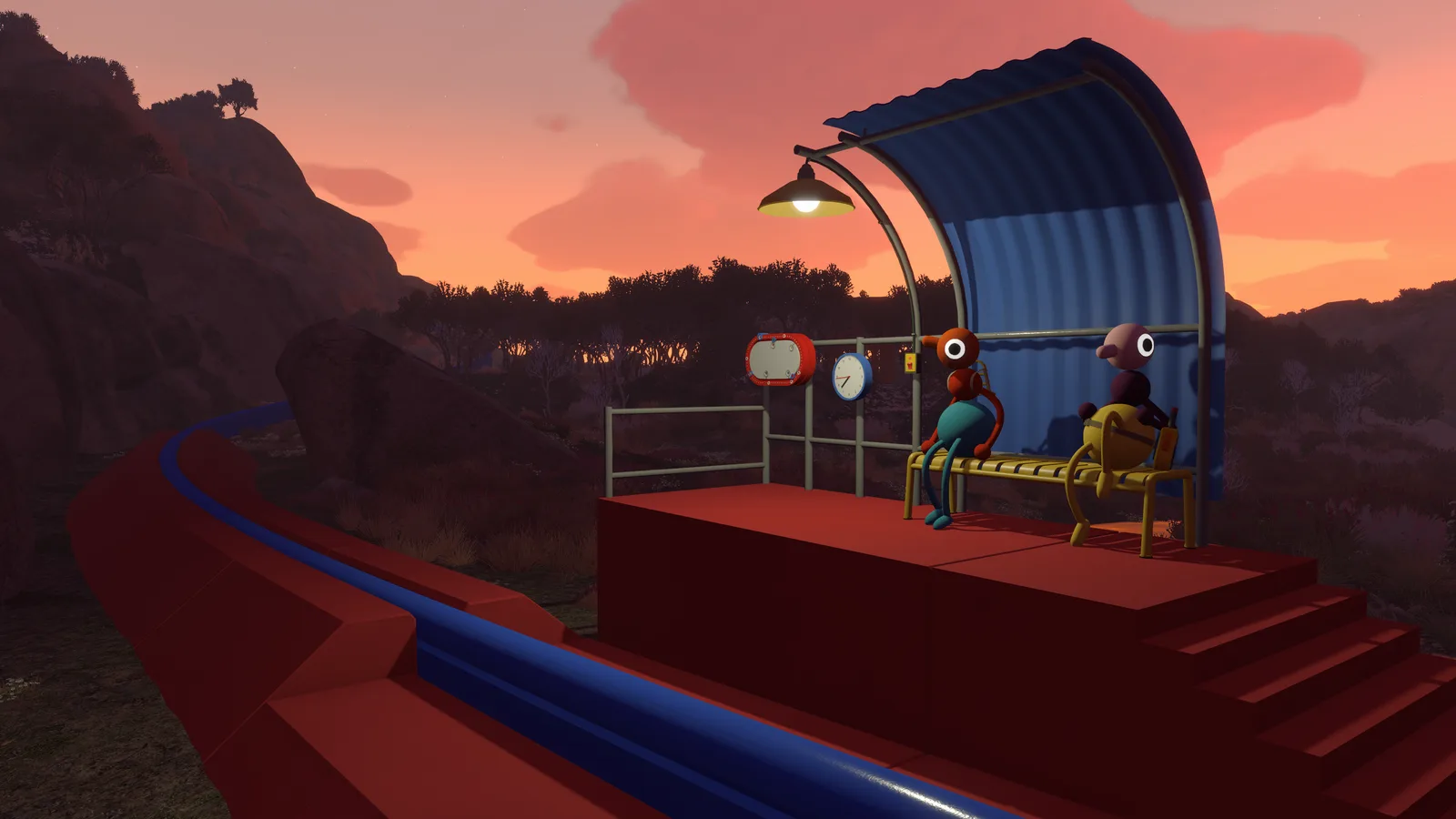
Big Walk is the new co-op game from House House, the Australian studio behind Untitled Goose Game. It launched on August 4, published by Panic, to strong reviews and a Metascore of 91. Then, on November 9, nineteen jurors for the Independent Games Festival said they would refuse to vote for any game that uses generative AI “in any capacity.” A day later House House published its numbers. The disclosure spread, the reviews turned, and by this week the story had jumped from the festival to Steam to Reddit, where another developer posted his own version of the same experience.
What House House actually disclosed#
The disclosure went up on November 10, as a new entry in the game's official FAQ answering “Was AI used to make Big Walk?” House House said large language models were used “sparingly” in the final stretch of development, to work through difficult technical challenges and bugs. The primary use, the studio wrote, was researching issues with third-party code through chatbots. Its example: a problem with Unity's culling of shadow casting that neither its own programmers nor a Unity engineer could solve. A chatbot suggested a possible fix; heavily modified, it worked. The fix came to about ten lines of code inside Unity's render pipeline.
The studio put a number on the whole thing: it estimates “well under 0.1%” of Big Walk's code had anything to do with its LLM use, and says generative AI was not used in any other context while making the game. It also acknowledges that, in some cases, snippets from LLM responses were copied as a starting point and modified into game code. The disclosure was first written as part of the studio's festival submission; there is no equivalent note on the game's Steam page because, as House House puts it, “the platform does not request disclosure of code or chatbot usage.” The studio also admitted Big Walk was developed without an internal AI usage policy — “we consider that lack of policy a failure” — and said the disclosure was not an endorsement of AI tools.
The jurors' statement does not name House House or Big Walk. Developer Sam Barlow, one of the signatories, said on Bluesky that the game “was not the impetus” for the pledge — that belonged to the “large number” of submissions making far heavier use of generative AI — but that Big Walk ended up a “tricky edge case.” The statement is explicit that AI-generated code is no exception: “programming is a creative discipline whose labor deserves the same respect we extend to any other part of making a game.”
The reviews turned first#
The numbers moved fast. On November 10, the day the disclosure spread, Big Walk took 156 negative reviews on Steam — up from a single negative review the day before — and just 36% of that day's reviews were positive. The game's overall rating still reads “Very Positive,” and the raw counts are small next to a hit game's lifetime reviews. But the direction of travel is the story: a disclosure the studio volunteered, about a use most players would struggle to notice, became the week's defining fact about the game.
House House accepted the situation gracefully. It said it supports “the work of those who are trying to limit the harm generative AI is doing to videogames and our world,” and promised a more comprehensive policy going forward. It also worried, in the FAQ itself, that voluntary disclosures like this “might contribute to the normalisation of this technology, or its treatment as ‘inevitable.’” That worry now looks prescient in the other direction: the disclosure normalized nothing, and punished the discloser.
It is not just Big Walk#
The same week, a solo developer posted his own version of the story on Reddit's r/ClaudeAI — and it shot to the top of the forum. Mend is a fly-fishing game that recreates real rivers in Alberta and British Columbia, built solo with Claude and due on Steam next week. Its developer filled in Steam's AI disclosure honestly: the narrator and characters' voices are AI text-to-speech — synthetic, imitating no real person, with characters speaking an invented gibberish language; much of the game's text was written with an AI assistant and then reviewed and edited; no AI image generators were used, with the 3D world, characters and store art generated procedurally from real elevation and river data; the bird calls and river sounds are real field recordings; the menu music was composed with an AI music tool.

He says the game is “getting mixed reviews” and the disclaimer has become “one of the main things people comment on” — including replies from fishing and indie-game communities saying they will not buy it because of the AI disclosure. Note what he does not claim: not a review-bomb, and not a removal. The game is not even out yet. The disclosure alone is doing the work.
The pattern is not new to this blog. In October, AFP covered a 19-year veteran whose farming game, Just Farm, was removed from game-development forums after he disclosed that Claude had built most of it. What is new is the scale: a festival boycott, a beloved studio, and a disclosure measured in tenths of a percent — and the same result.
The rule that created the trap#

Put the cases together and the shape of the problem is clear. Steam's disclosure form, rewritten in January, covers AI content that ships in a game — the art, audio and text players actually see and hear — not the coding assistants used to build it. Valve's own Steamworks documentation says the section is “concerned with the use of AI in creating content that ships with your game,” not efficiency gains from development tools. A studio can therefore comply fully with Steam's rules and still be accused of hiding AI use, because the disclosure players see says nothing about code.
The festival's standard is the opposite extreme: any generative AI use “in any capacity,” with AI-generated code explicitly not an exception. Between the two sits every developer who ever asked a chatbot to debug something — which is to say, nearly all of them. The honest ones disclose and take the hit; the quiet ones say nothing and take no risk at all. That is the trap, and this week showed it working exactly as designed: the studio that disclosed the least AI got the most grief for it.
What to watch#
Three things. First, the festival: the IGF Awards are on March 3, 2027, and nineteen jurors are a large bloc but not a majority of roughly fifty — whether the pledge holds, and whether other jurors join it, will decide how much it matters. Second, Mend's launch next week: its developer disclosed everything upfront, and the reception will test whether transparency protects a game or paints the target on it. Third, Valve: the gap between what its form asks for and what players expect it to ask for is now the argument, and the company has not closed it. Until someone does, the rational move for a developer who used a chatbot on ten lines of code is the one House House's week argues against: say nothing.
Sources: Gizmodo — A Tiny Bit of AI Has Created a Big Problem for an Indie Game Darling (Nov. 11, 2026); Game Informer — House House Discloses AI Use For 'Under 0.1%' Of Big Walk's Code Following IGF Voting Controversy (Nov. 10, 2026); WellPlayed — Big Walk dev House House admits AI use as Steam reviews sour (Nov. 11, 2026); r/ClaudeAI — I disclosed every AI-made part of my solo game on Steam (Nov. 12, 2026); Big Walk — official site and FAQ. Prior coverage: Kicked out of gamedev forums for using AI, a 19-year veteran showed exactly how Claude built his farming game (Oct. 28, 2026).