ChatGPT Images 2.6 adds GIFs, saved reference images, and two faster API models
OpenAI released ChatGPT Images 2.6 on November 4: prompts and photos can now become looping GIFs, reference images of people, pets, and characters can be saved and reused, and two new API models — Flare and Sunburst — generate images 50% faster. Users now create more than 4 billion images a week.
- Released November 4 in ChatGPT and Codex, on every subscription tier, across web, desktop, and mobile. GIF creation is rolling out gradually.
- GIFs are made from a text prompt or a photo, with adjustable speed and editable frames; the API’s GIF output sits behind an undocumented feature flag for now.
- Reference images: save yourself, a pet, or a recurring character once, then reuse them in new generations without uploading again.
- Two new API models: GPT-Image-2.6 Flare, built for speed at as little as six seconds per image on low quality, and Sunburst, for higher quality and more consistent edits. Both are 50% faster than before, per OpenAI.
- Pricing is unchanged at $8 input and $30 output per million image tokens; OpenAI’s calculator puts one 1024×1024 low-quality image at about $0.025.
- Scale: users now create more than 4 billion images a week across ChatGPT, Codex, and the API, up from about 3 billion in September. Images 2.5 shipped on September 8.
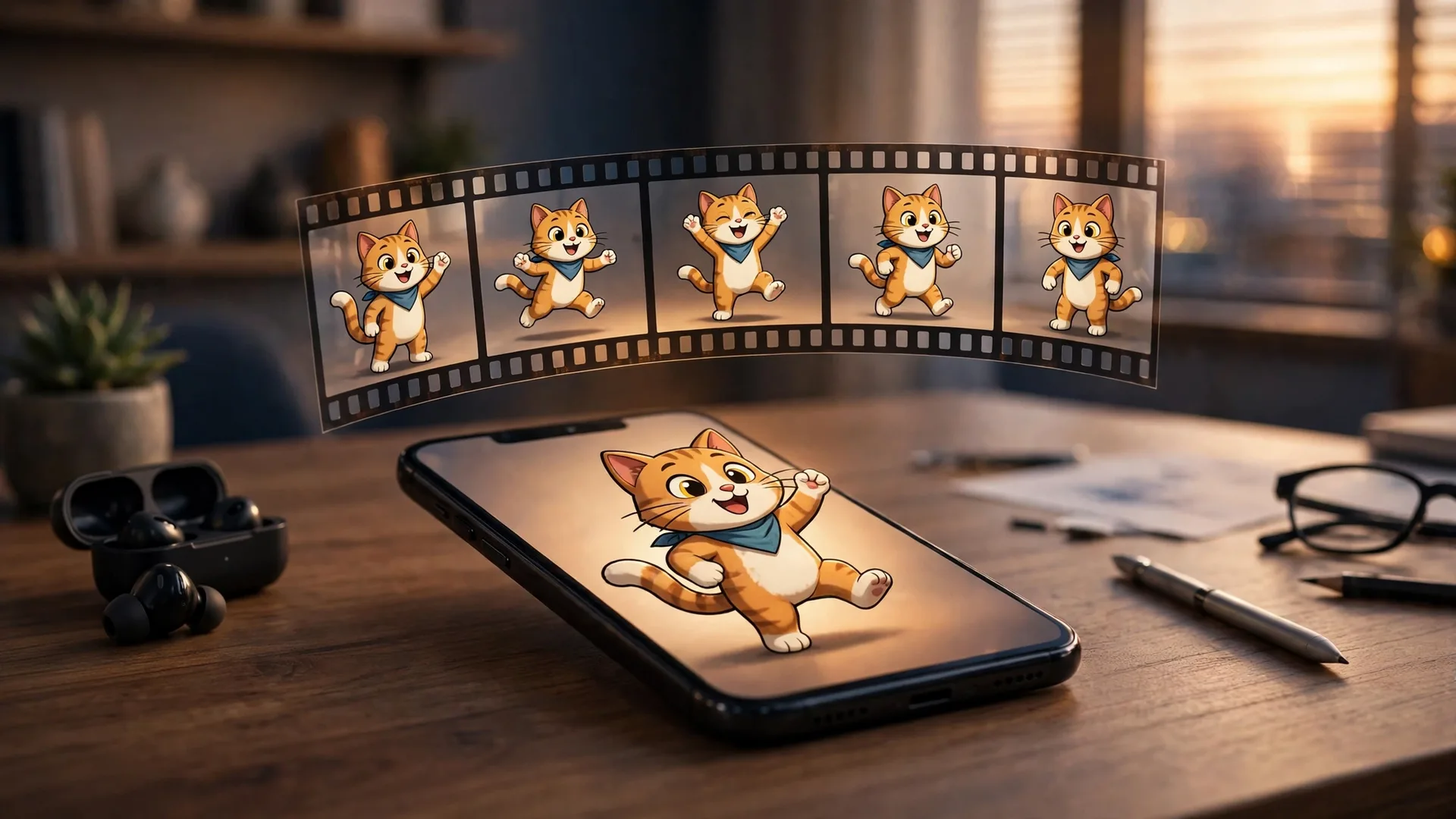
OpenAI's image generator has learned a new trick, and it is the one the internet has wanted since the first AI cat picture: motion. ChatGPT Images 2.6, released on November 4, turns a prompt or a photo into a looping GIF, saves reference images of the people and characters you use most, and ships two new models for developers that OpenAI says are 50% faster. It is available in ChatGPT and Codex on every subscription tier, on web, desktop, and mobile.
The timing is not accidental. OpenAI says users now create more than 4 billion images a week across ChatGPT, Codex, and the API, up from about 3 billion in September — a billion more in eight weeks, by the company's own count. Images 2.5 arrived only on September 8. The image business is now moving at the pace of a consumer product, not a research demo, and 2.6 is built for the way people actually use it: memes, mascots, and repeat characters.
GIFs: the headline feature#
With Images 2.6, a text prompt or a still photo can become an animated GIF — the dancing cat in OpenAI's own demo took one sentence. You can adjust the speed, edit individual frames, and share the result on repeat. The animations are short loops, not video: code OpenAI merged into its Codex repository allows 2 to 16 frames, with nine frames at 200 milliseconds each as the default.
There are two caveats worth knowing before you go looking for the button. First, GIF creation is rolling out gradually, so it may not have reached your app yet even though Images 2.6 itself is broadly available. Second, GIF output in the Images API sits behind a feature flag that is switched off and undocumented, so third-party apps cannot rely on it yet. For now, the GIF is a ChatGPT and Codex feature first, and a developer feature later.
The safety question writes itself. Saved photos of real people can now be dropped into animated scenes that never happened, and a looping GIF travels further and faster than a still image. OpenAI points to a system card covering the safety checks behind Images 2.6, but the company has said nothing specific about likeness controls for animation — that is the detail to watch as the rollout widens.
Reference images: save once, create again and again#
The quieter addition may matter more over time. You can now keep reference images of yourself, your pets, and your characters ready to reuse in new creations, without uploading them again each time. A mascot stays the same mascot across a month of posts; a character keeps its face from one scene to the next.
That consistency is the thing image generators have always been worst at. A single generation can be striking; a series with the same character in ten different scenes usually drifts — the eyes change, the proportions shift, the style wanders. Saved references attack the problem directly, and they pair naturally with the GIF feature: the same character, animated, again and again.
Flare and Sunburst: the developer side#
Developers get two new API models. GPT-Image-2.6 Flare is built for speed: on low quality it can produce an image in as little as six seconds. GPT-Image-2.6 Sunburst is the quality pick, with higher fidelity and greater consistency across edits. Both carry a new complexity control, markup-based editing — a transparent layer for drawing comments onto an image instead of masking regions — and SVG export for clean vector output.
| Model | Built for | What OpenAI claims |
|---|---|---|
| GPT-Image-2.6 Flare | Speed | As little as six seconds per image on low quality |
| GPT-Image-2.6 Sunburst | Quality | Higher quality, more consistent edits |
| Both | Price | $8 input / $30 output per million image tokens — unchanged from 2.5 |
The headline speed claim deserves its usual asterisk: OpenAI says generation is 50% faster than before, but has not said exactly which earlier model the comparison is against, and has published no independent test results. Community trackers put the improvement at roughly 7 seconds per image down to under 5 on their own measurements. On the arena leaderboards, Sunburst ranks second and Flare fourth for text-to-image, and third and fifth for image editing — with OpenAI holding all five of the top text-to-image spots.
The price is the steadier story. At $8 in and $30 out per million image tokens, the rates are identical to GPT Image 2.5, and OpenAI's own calculator puts one 1024×1024 low-quality image at about $0.025. Early testers note one wrinkle: low and medium quality settings now bill substantially more output tokens than they did on 2.5, so the cheapest-looking setting is not necessarily the cheapest bill. Read the calculator before you pick a default.
What to watch#
- When GIFs reach everyone. The rollout is gradual and the API flag is off. The moment GIF output opens to developers, expect a wave of animated stickers, ads, and social posts built on it.
- Likeness rules for animation. A still image of a real person is one thing; a GIF of them doing something they never did is another. Watch what OpenAI says — and what it blocks — once the feature is everywhere.
- Whether the speed holds. The 50% claim is OpenAI's own, measured on its own terms. Independent timings and the arena rankings will say whether Flare and Sunburst keep their places.
- The real cost per image. Same headline rates, different token billing at low and medium quality. Developers who generate at volume should check what a thousand images actually costs on 2.6 versus 2.5.
Images 2.6 is not a new model so much as a new shape for the same product: less a generator you prompt once, more a small animation and character studio that remembers what you were working on. Four billion images a week suggests the audience is already there. The GIF is simply what that audience was going to ask for next.