Observer turns your phone into a local AI watchdog — and Reddit is asking whether it needs an LLM at all
A video of Observer, an open-source agent that watches whatever your phone’s camera sees and pings you on WhatsApp when something moves, topped r/LocalLLaMA on Saturday. The thread likes the idea — and immediately asked why a language model is doing a job plain computer vision could do faster.
- The clip: a Reddit-hosted video, 2 minutes 47 seconds, posted to r/LocalLLaMA on November 7 by u/Roy3838 — more than 450 upvotes and 60 comments by Sunday morning.
- The app: Observer, an open-source local-first agent by Roy Medina. A Decision Model watches the scene and an Action Model acts on it; alerts go out over WhatsApp, Telegram or email, with MCP support and Android and iOS apps.
- The catch: the demo runs local models, but the app also lets users pick cloud models for either role — and the thread’s sharpest critique is that object detection would be faster and cheaper for pure monitoring.
- The nitpick: in the chair demo, the watcher was still verifying at 58 seconds (model confidence 0.064, then 0.990 when the poster was fully seated); the poster explained the skipped iteration in the comments.
- The context: the repo has 1,735 GitHub stars and dates to February 2025 — the viral moment is the phone demo, not a launch.
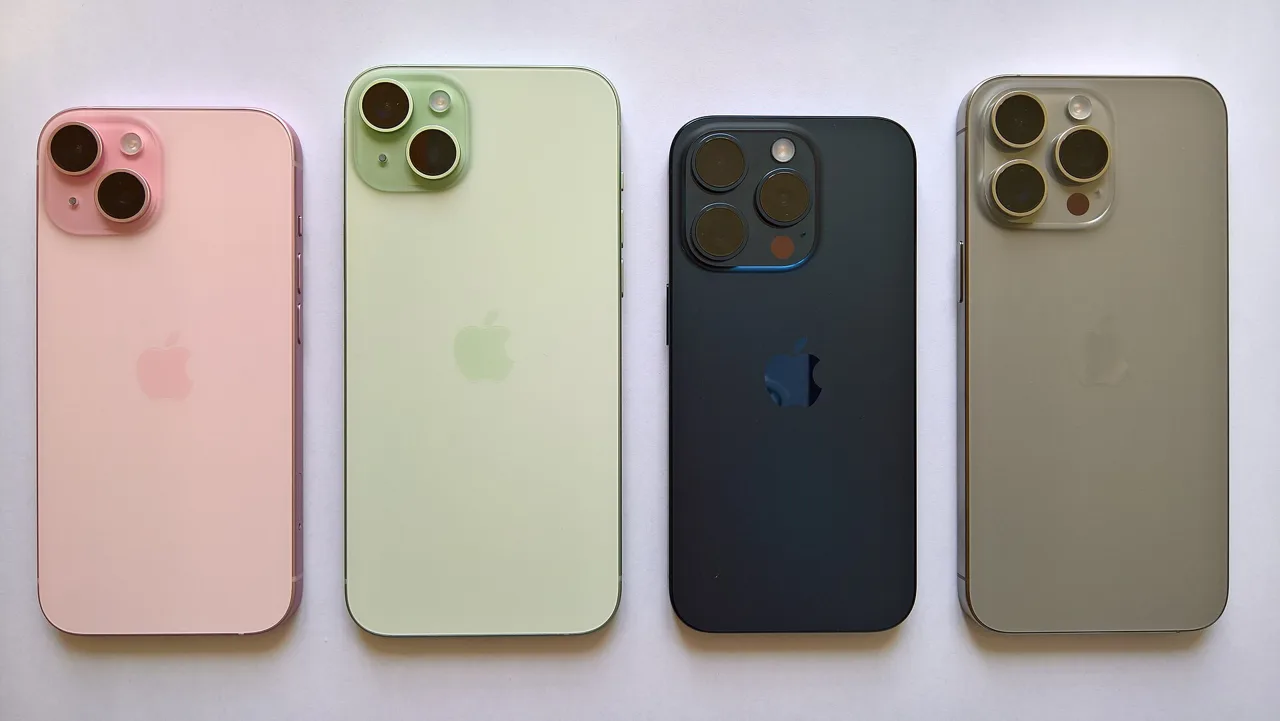
On Saturday afternoon, r/LocalLLaMA got a use for the drawer full of old phones. A video posted by u/Roy3838 shows Observer, an open-source agent that watches whatever a phone’s camera sees and reacts when conditions change — in the demo, it sends a WhatsApp message the moment any of three items on a table moves. By Sunday morning the post had passed 450 upvotes and 60 comments, the fastest-moving video in the subreddit’s weekend. The idea landed immediately. So did the objection.
The poster is Roy Medina, who says he spent a year building Observer.
What the video actually shows#
The clip runs 2 minutes 47 seconds and is split-screen: on the left, Medina talks to camera in a room, with a phone on the table in front of the three items; on the right, a screen recording of the Observer app. The app shows a watcher called “Three Items Move Watcher” and a chat-style log as it checks the scene, ending with the verdict — it is watching the three items and will send a WhatsApp the instant any of them moves. A caption near the end has Medina saying he gets the notification right away when one of the items moves.
The video also includes a second demo, and it is the one the comments spent the most time on. Medina sits down in a chair while the watcher verifies whether he is seated, finishing its check at around 58 seconds. One commenter noticed the watcher was not fully operational while Medina was still standing in front of the chair — it was still verifying the view — and called it a nitpick rather than a flaw. Medina replied with the numbers: 0.064 on the first pass, 0.990 on the second, once he was fully seated. An iteration was skipped because the model had not finished responding, which put the app into a “Still Thinking…” state and missed the mid-seating frame. The watcher was connected to WhatsApp throughout, he said; it simply did not message because he was not fully seated yet.
How Observer works#
Observer runs a two-model loop. A Decision Model analyses the scene — a camera frame, a screenshot, a microphone transcript — and an Action Model carries out whatever the user asked for when a condition is met. The project’s own description is “when X then Y”: when a training run crashes, call me. Sensors cover screen, camera, clipboard and audio; tools cover WhatsApp, Telegram, email, SMS and calls, with MCP support for custom actions. It ships as a desktop app, a web app and, per the post, Android and iOS apps, and the desktop build bundles llama.cpp for local GGUF models.
The privacy claim is the point of the design: the models run on the device, so the camera feed never has to leave the phone. The repository is public under the AGPL-3.0 licence, with 1,735 stars, 148 forks and 57 releases, and it dates to February 2025. Observer is not a new launch — the news is the mobile demo catching fire on r/LocalLLaMA, pitched as a use for old phones: “Better to have them monitoring something than collecting dust,” as Medina put it.
One caveat belongs in the open. The post’s title calls Observer a “100% local agent,” and the demo runs local models — but in the comments Medina confirmed users can choose local or cloud models for both the Decision Model and the Action Model. His recommendation is local Decision Models with a loop time of around minutes. The “100% local” label describes the configuration he recommends and demonstrates, not the only way the app can run.
The YOLO question#
The thread’s sharpest exchange is not about whether the demo works. It is about whether a language model should be doing this job at all. “This seems like the wrong tool for that use case to me,” one commenter wrote. “You could do something much faster with just standard computer vision.” Another was blunter: this is just object detection, it does not need LLMs at all, and YOLO already does this.
Medina’s answer is not a technical rebuttal; it is a statement of purpose. “The objective is not being the most computationally sound option,” he replied. “The objective is making local AI useful and accessible to everyone.” His practical defence: Observer lets users describe what to watch for in natural language and get notified anywhere, which plain object detection does not offer in the same package. The critic conceded part of the point in return: YOLO can classify and trigger events, and can even take natural-language descriptions, but “if you want it to do things with what it sees, then you need an LLM.” Medina agreed: “that’s the point of Observer.”
The thread’s verdict, in effect: Observer is not competing with YOLO on detection. It is competing on who gets to describe the condition.
What the thread wants next#
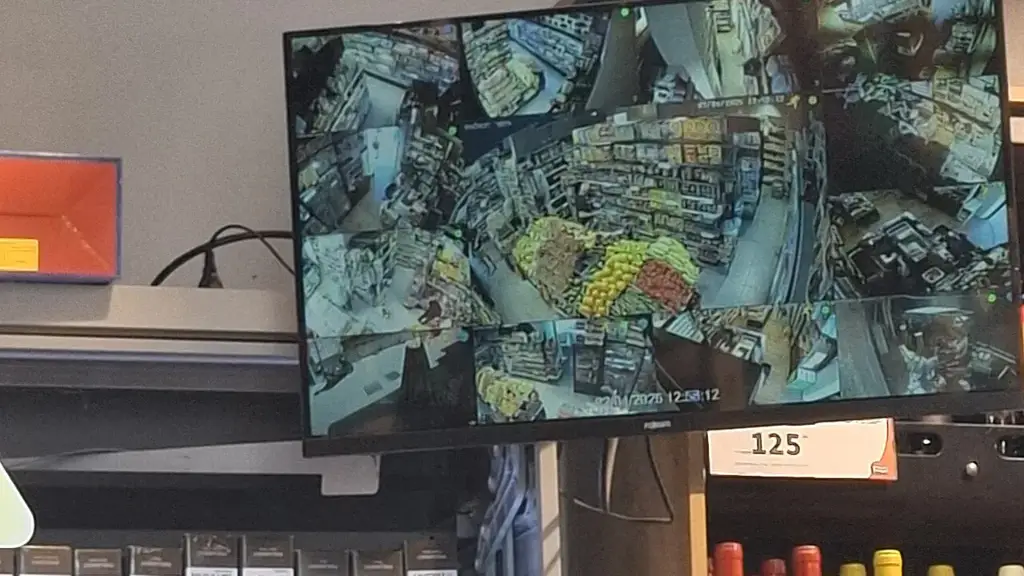
The most-liked comment is a feature request, not a critique. A commenter asked for webcam support, so spare cameras could monitor cats and act as a notification centre; Medina replied that he would add it immediately. The second most-liked asked for an app version that locks the phone until it observes twenty press-ups or twenty minutes of reading; Medina said he would look into adding a “lock phone” tool. Others asked about monitoring multiple feeds at once, like a CCTV grid, and RTSP streams — Medina said sharing the whole screen and cropping each stream should work, with RTSP support about one line of code with OpenCV. Plants that need watering, a parking spot watched for break-ins, a washing machine, a dog: the thread spent the evening inventing jobs for the watchdog, and Medina answered each one, including a suggestion for a community prompt library so users can share their conditions.
Nobody in the thread credibly claimed the footage was fake, that the code was not open source, or that the demo secretly ran in the cloud — the shape of a community kicking the tyres, not tearing the project down. One commenter called it, admiringly, a “CCTV AI Agent.”
Why it matters#
Observer sits at the intersection of two trends that are both easy to miss because neither is flashy. The first is small local models doing real jobs on consumer hardware: a phone watching a table is the same direction of travel as a 4B model fetching a netherite ingot in Minecraft from a single sentence — capability that once needed a data centre. The second is the phone as agent hardware: it already has the camera, microphone, battery and connectivity, and the missing piece was software that treats it as a sensor with a brain rather than a screen with apps. Phone-first agent tooling has been gathering pace all year, and Observer’s contribution is to make the setup a sentence instead of a script.
There is also a quiet privacy argument here. A camera that watches your home and sends its feed to a cloud is a product most people understand and many distrust. A camera that watches your home and never sends anything anywhere — because the model runs on the phone in the room — is a different proposition, and it is the one Medina is selling. The trade-off is the one the thread identified: local models are slower and less certain, the loop runs on a timescale of minutes, and the 0.064-to-0.990 wobble in the chair demo is what that uncertainty looks like in practice.
What to watch#
Three things will decide whether Observer stays a viral demo or becomes a tool people keep running: the features Medina promised in the thread — webcam support, a lock-phone tool, multi-feed and RTSP handling. Second, the loop-time reality: loop times measured in minutes suit a parcel on a doorstep, not anything needing a second-by-second answer. Third, the local-only claim: if growth comes from users picking cloud models, the “100% local” framing will need to change.
Until then, the fair description stands: a phone watching three items on a table, a WhatsApp message when one moves, and one hard question about whether it needs a language model to do it.
Sources: the original post by u/Roy3838 on r/LocalLLaMA; the Observer repository on GitHub, including its README and repository statistics. Commenter claims about use cases and model behaviour are reported as thread claims, not independently verified. The photographs are CC-licensed via Wikimedia Commons.