
Cognizant commits more than 25,000 professionals to OpenAI delivery with a new Frontier Capability Group
Cognizant announced on October 30, 2026 that it has formed an OpenAI Frontier Capability Group of more than 25,000 professionals to deliver Codex and ChatGPT into enterprise software, modernization, and customer operations — starting with methods it tested inside its own sales teams.
- Who and when: Cognizant (Nasdaq: CTSH) announced the OpenAI Frontier Capability Group on October 30, 2026, from Teaneck, New Jersey.
- The group: more than 25,000 professionals aligned to delivering OpenAI products, including Codex and ChatGPT, for clients.
- Readiness claimed: more than 21,000 Cognizant associates have earned 40,000+ OpenAI badges for completing learning tracks on OpenAI technologies.
- Initial focus: AI-native software engineering with Codex; application modernization; and agentic customer operations.
- Proof point cited: an OpenAI-powered enterprise assistant at a global biopharmaceutical company has handled more than 5 million conversations and cut content creation time by 60%.
- Standing: Cognizant is one of a select group of Advanced partners in the OpenAI Partner Network; its Codex hackathons in India and the Americas drew more than 12,000 participants.
Cognizant announced on October 30, 2026 that it has formed an OpenAI Frontier Capability Group, bringing together more than 25,000 professionals to deliver OpenAI products, including Codex and ChatGPT, for enterprise clients. The group is designed to help enterprises apply OpenAI models to how they write software, serve customers, and run day-to-day operations. It is a staffing statement as much as a product one: Cognizant is betting that the scarce resource in enterprise AI is no longer model access, but people who know how to build with frontier models inside the systems a business already depends on.
That framing comes straight from the announcement. Cognizant says access to frontier models is no longer what holds many enterprises back; what they lack is skilled professionals who know how to build with those models inside the systems their business depends on. The new group, the company says, adds an organization focused on building and supporting the operation of OpenAI-powered systems for clients, on top of capability it has been building across the company — more than 21,000 associates have earned 40,000+ OpenAI badges, each awarded for completing learning tracks on OpenAI technologies.
Three jobs, one group
The group will initially focus on three areas. The first is AI-native software engineering with Codex, which Cognizant describes as supporting engineers as they write, test, and ship new code. The second is application modernization, using Cognizant Application Modernizer, powered by OpenAI models, across the full lifecycle — from reverse engineering legacy mainframe code to generating cloud-native code. Engineers review every consequential decision in that work, Cognizant says, backed by its experience modernizing mainframe systems for more than 500 clients. The third is agentic customer operations, applying OpenAI models to sales, service, and support.
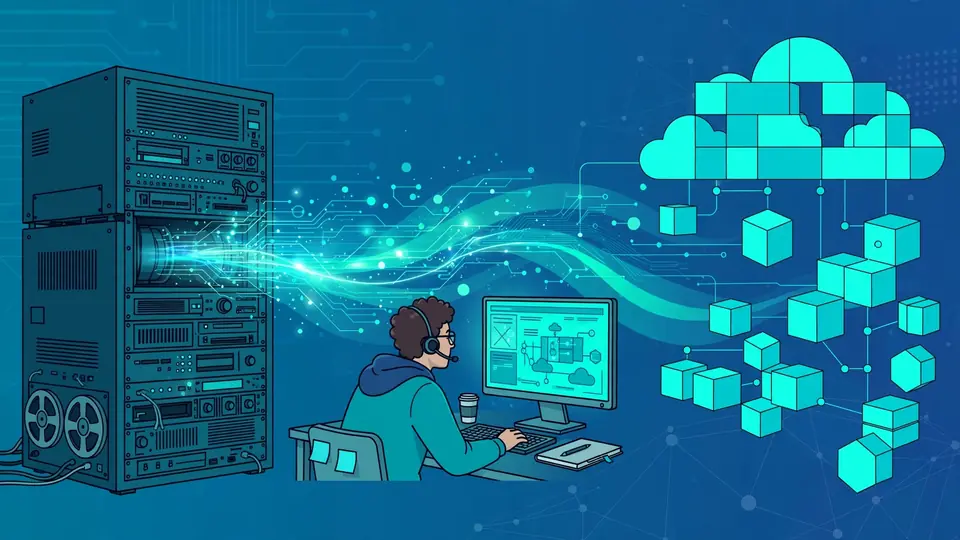
The modernization pitch is the most concrete of the three, because it names a tool, a starting point, and a human checkpoint. Legacy mainframes still run core processes at large enterprises, and rewriting them is slow, risky work where a wrong translation can break something nobody fully documented. Cognizant’s claim is not that the model does it alone — it is that the model accelerates the reverse engineering and code generation while engineers keep the consequential calls. Whether that division of labour holds up at client scale is the question the group will now have to answer in public, one migration at a time.
Tested inside Cognizant first
Cognizant says it often tests new approaches in its own business before taking them to clients, and this group follows that pattern. Its sales and customer success teams already use a solution built on OpenAI models to find and pursue new opportunities, so the group’s client work can start, in the company’s words, from methods tested at scale inside a global enterprise. “Over the last 50 years, every shift in enterprise technology has changed who builds the systems and how,” said Ravi Kumar S, CEO of Cognizant. “With Codex and ChatGPT, OpenAI is changing both at once. We are committing more than 25,000 of our people to bring that change inside our clients’ businesses. We started with our own, and OpenAI is beginning to reshape how we sell.”

The client example Cognizant chose to highlight follows the same inside-out logic. At a global biopharmaceutical company, Cognizant co-engineered an OpenAI-powered enterprise assistant that brings search, content creation, translation, and approvals into one place. The company says the assistant has handled more than 5 million conversations and cut content creation time by 60%. It is one example, unnamed, and it is the only client outcome the announcement quantifies — which makes it both the strongest evidence in the release and a reminder of how much of the group’s record is still to be built.
Behind the group sits a workforce pipeline Cognizant calls its Frontier workforce model, developing Frontier Certified Engineers and Frontier Business Operators credentialed directly by frontier-model companies. In July 2026, Cognizant committed to scaling that workforce to 5,000 Frontier Certified Engineers and 10,000 Frontier Business Operators, with the first cohort Frontier-assessed and deployment-ready by the fourth quarter of 2026. OpenAI’s chief revenue officer, Dali Rajic, framed the partnership in similar delivery terms: “OpenAI is helping businesses fundamentally rethink how they operate, from the way they serve customers to how they get work done. By bringing together more than 25,000 professionals in a dedicated OpenAI practice and putting our technology to work across its own operations, Cognizant is helping more enterprises turn AI into meaningful business impact.” Cognizant is one of a select group of Advanced partners in the OpenAI Partner Network, and its Codex hackathons in India and the Americas brought together more than 12,000 participants.
What to watch: a reorganization, not a hiring announcement
Read the release literally, and the most important word is “bringing together.” The group consolidates professionals already aligned to OpenAI delivery; the announcement describes no new hiring, no price, no revenue target, and no client beyond the unnamed biopharmaceutical company. That restraint is honest, and it sets the test. A 25,000-person practice is easy to announce and hard to keep busy: its value will show up in whether enterprises buy Codex-led engineering and mainframe modernization from Cognizant at a pace that justifies keeping that many people aligned to one vendor’s stack, and whether the human-review checkpoint in modernization survives deadline pressure.
The other thing to watch is concentration. A dedicated OpenAI practice of this size is a bet that OpenAI’s models stay the default enterprise choice while Cognizant’s Frontier workforce model is explicitly credentialed across frontier-model companies. If clients’ stacks diversify, the group’s OpenAI depth is an asset only as long as it travels. For now, Cognizant has made its bet visible in headcount — the delivery record is the next announcement that matters.
Sources: the Cognizant announcement via PR Newswire, republished by Morningstar; Unite.AI’s coverage of the announcement. The editorial illustrations are AI-generated.