Prophecy's DataGPT turns ChatGPT, Claude and Copilot chats into verifiable data workflows
Prophecy launched DataGPT on October 28, 2026, letting business analysts do full data work inside ChatGPT, Claude and Microsoft Copilot — with a visual workflow behind every answer that teams can inspect, approve, and ship as governed code on Snowflake, Databricks or BigQuery.
- Who: Prophecy, a Palo Alto AI platform for business data work founded in 2017, with more than 130 employees and more than $100 million raised.
- What: Prophecy DataGPT, launched October 28, 2026 — full data work inside ChatGPT, Claude and Microsoft Copilot, or in the Prophecy app, with a visual workflow behind every result.
- How it works: analysts describe the outcome they need; DataGPT builds the workflow in the conversation (onboard, prepare, analyze, output), backed by a knowledge graph and open code in Git.
- To production: approved workflows run as governed, repeatable code on Snowflake, Databricks or BigQuery, on a schedule, rerunning exactly the same way with no new AI generation and no added AI cost.
- Availability: available today, starting with a free account and centralized deployment options for administrators; the announcement gives no other pricing.

Prophecy, the Palo Alto company that builds an AI platform for business data work, announced Prophecy DataGPT on October 28, 2026. It lets business data analysts do complete data work — from onboarding messy files to publishing finished reports — inside ChatGPT, Claude and Microsoft Copilot, or in the Prophecy app. Every result comes with a visual data workflow that can be inspected and validated, and approved work ships as repeatable code on the data platform the organization already owns.
The pitch is aimed at a specific frustration. Analysts already paste spreadsheets into AI chat tools, and the chatbot writes and runs a script behind the scenes to produce the answer. Because analysts cannot read that code, Prophecy argues, they cannot validate it, refine it, or stand behind it — and once the chat session ends, the workflow vanishes with it, along with the business rules, revenue definitions and approved exceptions the user supplied along the way.
What DataGPT does#
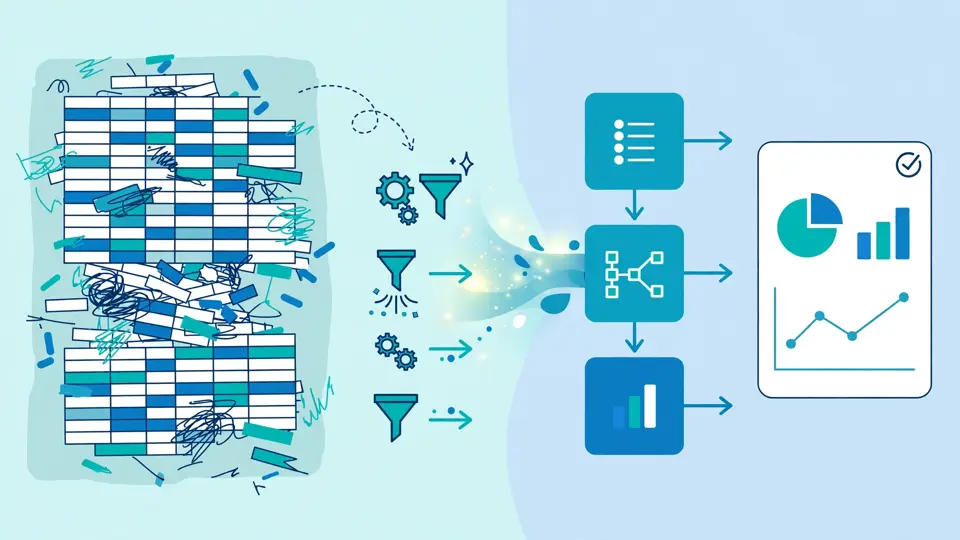
With DataGPT, an analyst describes the outcome they need without leaving the chat tool, and DataGPT builds the whole workflow right in the conversation: onboard, prepare, analyze and output. Every answer brings in the visual workflow behind it, so business data teams can inspect and approve each step. Prophecy uses a knowledge graph to connect business context with data workflows, helping teams apply relevant definitions and business rules across their data work.
The release walks through a finance-style example: in a single conversation, an analyst uploads a messy Excel file, checks it against an audit list and data in SharePoint, Snowflake and Databricks, applies a pricing rule for discounted product bundles, reviews the results and schedules the workflow to rerun every month. DataGPT connects to files, SharePoint, data warehouses, ERP and CRM systems, and every workflow is backed by open code in Git, so the logic stays transparent and auditable.
From answer to production#
The part Prophecy stresses most is what happens after approval. Approved workflows ship as data products and run as governed, repeatable code on Snowflake, Databricks or BigQuery, on a schedule. They then rerun exactly the same way every time, with no new AI generation and no added AI cost, Prophecy says — the point being that the work worth keeping stops being a one-off chat answer and becomes a production asset.
"Coders got AI that changed the way they work, collaborating with them on code all the way from development to production, unlocking tremendous productivity. Business data analysts got question answering, and nothing else changed," said Raj Bains, founder and CEO of Prophecy. "We are closing that gap. Business analysts now get what coders got — the visual workflow behind every result, in a form they can verify and change, built on governed knowledge. The work worth keeping moves to production on their data platform."
The shadow-AI angle#
There is also a governance argument aimed at IT leaders. Many business analysts already paste company spreadsheets into AI chat tools without IT's knowledge or approval — one of the most common forms of shadow AI, Prophecy says. With DataGPT, uploaded files go through Prophecy to the organization's own data platform, not into an AI chat, and data platform leaders and IT can see every workflow and govern it on the platform they already own, without adding another silo.
That framing echoes a Gartner prediction cited in the release: that by 2028, 50% of organizations will adopt zero-trust data governance as unverified AI-generated data grows. "Enterprise AI is moving from answering questions to doing repeatable work," said Michael Ni, VP and Principal Analyst at Constellation Research, in the announcement. "Generating an answer has gotten simpler. The challenge now is making the underlying data verifiable, governed, and reusable."

Availability and caveats#
Prophecy says DataGPT is available today, and organizations can get started with a free account, with centralized deployment options for administrators. The announcement gives no other pricing, no performance benchmarks, and no customer names attached to DataGPT itself — the customer list in the release (SAP, HSBC, JP Morgan Chase and Pfizer) describes Prophecy's existing business. Prophecy, founded in 2017 and headquartered in Palo Alto, California, says it has more than 130 employees across the U.S., India, the U.K. and Australia and has raised more than $100 million.
What is genuinely new here is the packaging, not any single capability: chatbots that write data code, visual workflow builders, and governed data platforms all existed before. DataGPT's bet is that combining them — the chat interface analysts already use, a workflow they can actually check, and a governed path to production — is what turns AI-assisted data work from a demo into something a finance team will sign off on. Whether analysts trust the visual workflow enough to approve it, and whether IT teams accept one more layer between their staff and their data platform, is the test the launch now has to pass.