Dayforce launches an agentic workforce planner: start with the work, then decide who — person or AI — does it
Dayforce announced its Strategic Workforce Planning Agent on October 27, 2026, a conversational agent that models skills, capacity and cost — including AI token costs — so leaders can decide what people, agents, or both should do, ahead of its expected availability in the first quarter of 2027.
- Who: Dayforce, Inc., a global human capital management (HCM) company based in Minneapolis.
- What: the Dayforce Strategic Workforce Planning Agent, a conversational agent on the Dayforce Agentic HCM Platform.
- When and where: announced October 27, 2026, at Dayforce Discover, the company’s flagship customer conference; expected to become available in the first quarter of 2027.
- What it models: skills, capacity, cost and impact of people and AI agents together, via an organizational health diagnostic that surfaces workforce hotspots and measures both headcount and AI token costs.
- What leaders can change: positions, organizational structure and productivity assumptions, with second- and third-order effects shown in real time.
- How it divides work: a single data model combining people, skills, structure and costs shows where an AI agent can augment work, what should stay with a person, and what can be shared.
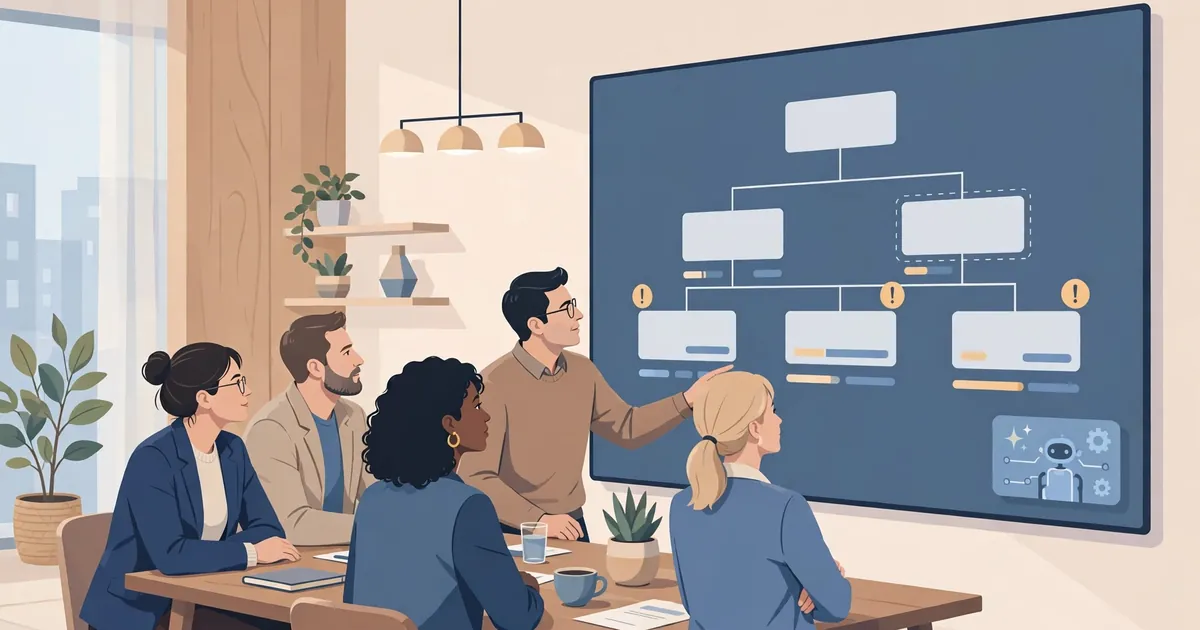
Dayforce has launched a conversational AI agent that plans the workforce starting from the work itself, not the headcount. The company announced the Strategic Workforce Planning Agent on October 27, 2026, at Dayforce Discover, its flagship customer conference, where it also unveiled its Agentic HCM Platform. The agent is built to help leaders decide how people and AI agents should share the work their organization needs to do.
The pitch reverses the usual order of workforce planning. Instead of starting with how many people the organization has and working backward, leaders start with the business question in front of them. Through natural-language conversation, they run workforce scenario models, assess different options with stakeholders, and see the impact of a decision before committing resources to it.
What the agent does#
The agent runs an organizational health diagnostic that surfaces workforce hotspots and measures the cost of potential changes — including both headcount costs and AI token costs, a line item that would not have appeared in a workforce plan a few years ago. Leaders can then add or change positions, update organizational structure and productivity assumptions, and watch the second- and third-order effects play out in real time.
It works from a single data model that brings people, skills, organizational structure and costs into one view. Leaders can see the skills their organization has today, the skills each position requires, how well the person in that position matches those requirements, and where the gaps sit. From there, the agent helps draw the line the whole product is organized around: which work an AI agent can augment, which work should remain with a person, and which work can be shared between people and agents.
Why the timing matters#
“For decades, workforce planning has started with headcount and worked backward. That model breaks when some of the work can be augmented by an AI agent,” said Jake Varghese, Dayforce’s Chief Product and Technology Officer. “Leaders need to plan the work first: what has to get done, which skills it takes, and whether people or agents should do it.”
The argument lands because planning and execution happen on the same Dayforce platform. A workforce-planning conversation does not end as a slide deck that someone else must turn into action; the organization can move from the conversation to the change with, in the company’s words, greater confidence. That is the practical difference between an AI feature that answers questions about the workforce and an agent meant to reshape it.
What to watch#
The first thing to watch is the calendar. The Strategic Workforce Planning Agent itself is expected to become available in the first quarter of 2027; the release notes that select other Dayforce AI Agent capabilities are available now, so the agent announced today is not yet in customers’ hands. The second is whether token-cost modeling changes real decisions: once AI usage sits next to salary in the same planning view, the trade-off between hiring, augmenting and automating stops being theoretical.
The announcement names no price and no launch customers, so the commercial test is still ahead of it. What it does show is where enterprise AI is heading: away from chatbots that answer HR questions and toward agents that sit inside the system of record and help decide who — person, agent, or both — does the work. Dayforce unveiled the agent alongside other agentic announcements at Discover, including its Agentic HCM Platform, Dayforce Build, agentic talent experiences, and agentic innovations from schedule to pay, suggesting the workforce planner is one piece of a broader bet that planning, hiring and scheduling all become agentic work.
Frequently asked questions
What did Dayforce announce?
Dayforce announced its Strategic Workforce Planning Agent on October 27, 2026, at Dayforce Discover, a conversational agent that helps leaders plan the work their organization needs to do and decide how people and AI agents can perform it.
How is it different from traditional workforce planning?
Instead of starting with headcount and working backward, leaders start with the business question, model scenarios in natural-language conversation, and weigh people and AI agents together — including AI token costs alongside headcount costs.
When will the Strategic Workforce Planning Agent be available?
Dayforce says the agent is expected to become available in the first quarter of 2027, while select other Dayforce AI Agent capabilities are available now.