Everpure's play for the agentic enterprise: MCP-native storage, 20x faster inference, and an open-weights cost escape
Everpure (NYSE: P) unveiled new platform capabilities aimed at the bottleneck it says is stalling enterprise AI: not the models, but data that isn't ready for real-time, autonomous agents. Native MCP integration for live data catalogs, a key-value accelerator claiming up to 20x faster time to first token, and an open-weights reference architecture to cut API token bills. Ships this October.
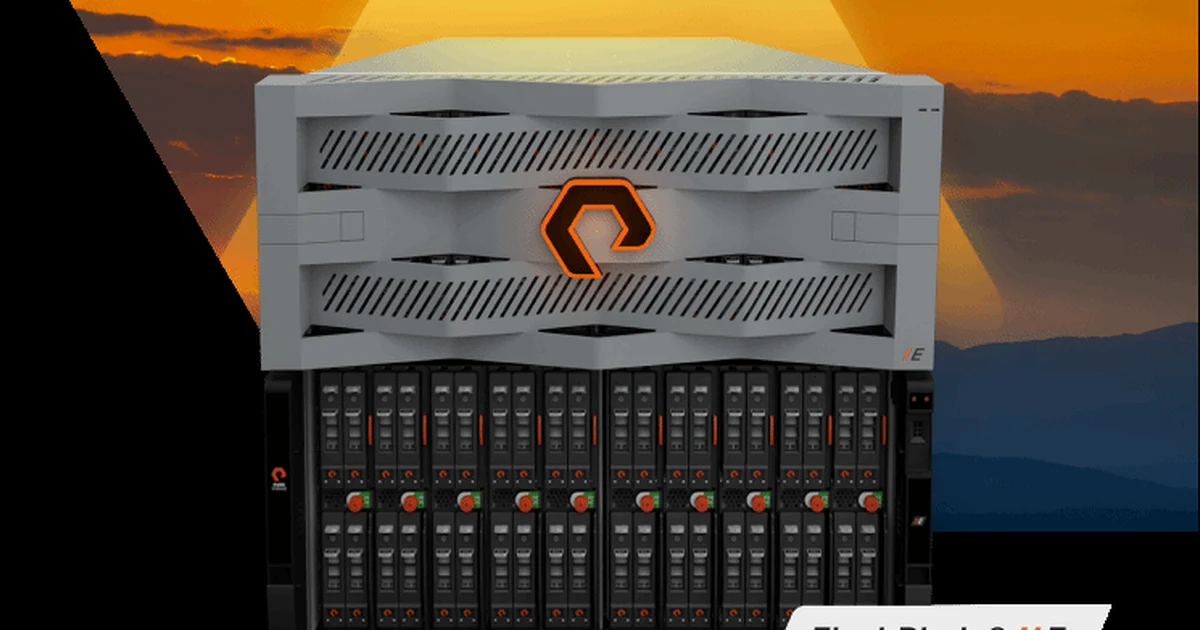
Everpure (NYSE: P) today unveiled a set of platform capabilities aimed at the bottleneck it says is stalling enterprise AI: not the models, but data that isn't ready for real-time, autonomous agents. The headline items are native MCP integration so agents can query live data catalogs in natural language, a key-value accelerator claiming up to 20x faster time to first token, and an open-weights reference architecture meant to cut API token bills. The features ship this October.
The thesis: data primacy
The announcement builds on Everpure's "Data Primacy" vision, introduced at its Pure//Accelerate event in June. The principle, as the company states it: data — not applications — must be the core driver of enterprise architecture in the AI era. Today's release is the second act, targeting three problems the company says keep enterprise AI stuck in pilot: fragmented context, unpredictable inference costs, and slow, complex deployments.
"Enterprise AI is hitting a wall not because the models are lacking, but because data is not ready for real-time, autonomous agents," said Prakash Darji, General Manager of Data & Digital Experience at Everpure, in the announcement. "By making enterprise data continuously governed, automated, and instantly accessible, we're giving organizations the foundation to move AI out of the lab and into production with the necessary confidence."
What agents get: MCP and governed access
The most agent-facing addition is native MCP integration. Everpure's platform implements the open Model Context Protocol so AI agents and security tools can query live data catalogs using natural language — finding relevant data and understanding its sensitivity classification as an input to AI workflows and analytics, without custom API work.
That sits on Everpure Data Intelligence, which discovers, classifies and contextualizes enterprise information at its source across the Everpure Platform, public clouds, SaaS applications and third-party storage. Two companion capabilities round out the governance story: turn-key deployment through the existing Pure1 console (no separate management servers or professional-services engagement), and privacy-first file intelligence that shows who can access each file share and how stale it is — without ever reading file content — so teams can fix exposure and reclaim capacity before opening shares to agents.
What the GPUs get: 20x faster time to first token
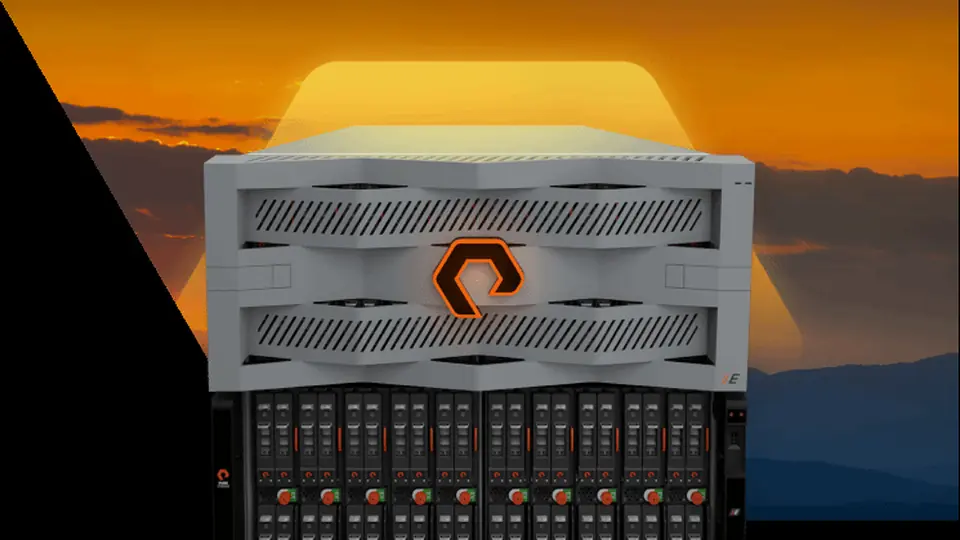
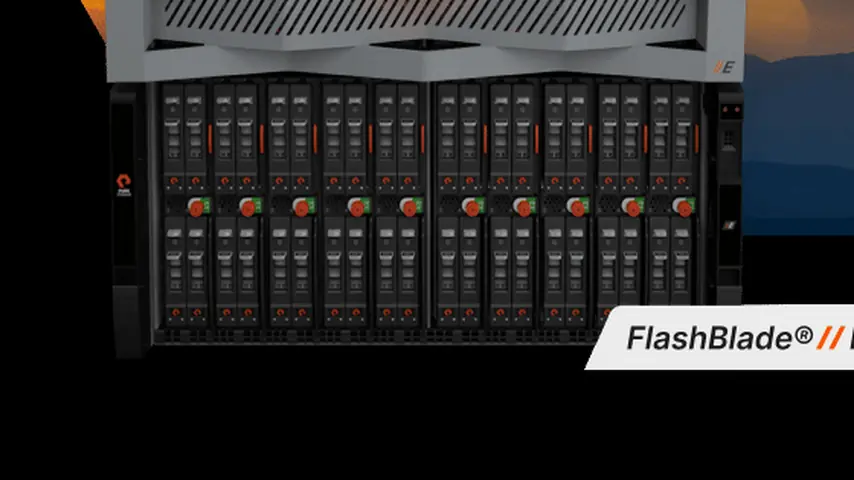
On the performance side, the centerpiece is PureKVA, a key-value accelerator for the company's FlashBlade systems. FlashBlade now pre-stages context directly into GPU memory, which Everpure says delivers up to 20x faster time to first token. It supports enterprise multi-tenancy with zero dataset relocation — the pitch is eliminating GPU idle time, increasing token throughput and decreasing response lag for real-time applications, with inference executing directly at the data's system of record.
Alongside it comes Always-On DeepReduce, a data compression capability that scans storage blocks continuously across FlashBlade systems to find sub-block similarities that traditional deduplication misses — even on pre-compressed content. Usable capacity expands automatically without impacting write performance or requiring manual scheduling, which the company says significantly reduces hardware footprint and cross-cloud expenses.
The money angle: an open-weights escape hatch
The most strategically interesting item may be the Intelligent Token Optimization Reference Architecture. With enterprises increasingly anxious about unpredictable API token spending, Everpure now ships a reference architecture built on open-weight models — more control over data and predictable AI costs, explicitly aimed at cutting overall API token usage from external providers. It is the storage vendor's answer to the question every CIO is asking: how much of the AI budget should keep flowing to model providers versus infrastructure you own.
The context: fresh out of the S&P 500 gate
The timing is notable. Everpure joined the S&P 500 in August, weeks after landing a design win with a second top-five hyperscaler and reporting second-quarter fiscal 2027 results. The company is using its newly large-cap weight to plant a flag: if agentic AI becomes the enterprise default, the winners won't just be model labs — they'll be whoever owns the data layer the agents run on.
The usual caveat applies: the release carries the standard forward-looking-statements disclaimer, and the company explicitly notes the performance metrics are informational, not promises — results will vary with deployed environments and datasets. Still, the direction is unambiguous: Everpure wants to be the plumbing between your data and your agents, with MCP as the interface and KV-cache acceleration as the speed pitch.