The FAA grounded every US flight three days after switching on its AI traffic tool — and the AI wasn’t the cause
Three days after the FAA expanded its AI planning tool SMART to all 22 air traffic control centers, a telecom failure grounded every departing flight in America. Officials say the AI was never connected to the systems that failed — but the timing guarantees it will be scrutinized anyway.
- The grounding: nationwide ground stop from about 3:54 p.m. to 8:15 p.m. Eastern on November 13, with more than 3,500 planes airborne; the first since the January 2023 NOTAM outage and only the second since 9/11.
- SMART: the FAA's AI planning tool, built by Air Space Intelligence, pulls in 200–250 live data streams and recommends routes and schedules. It went nationwide on November 10 after a September pilot near Washington, D.C.
- The preliminary cause: a router installed during a contractor copper-to-fiber upgrade at a remote facility in El Dorado, Arkansas, sending over 1,000 attempts every few seconds and overloading aging telecom gear.
- The official position: Transportation Secretary Sean Duffy says SMART "isn't plugged in" to the radar and flight-data systems that failed, and Air Space Intelligence denies any role. The FAA's root-cause analysis is ongoing.
- The stakes: the administration is seeking $50 billion to modernize air traffic control, and Duffy warned of more disruptions without upgrades.
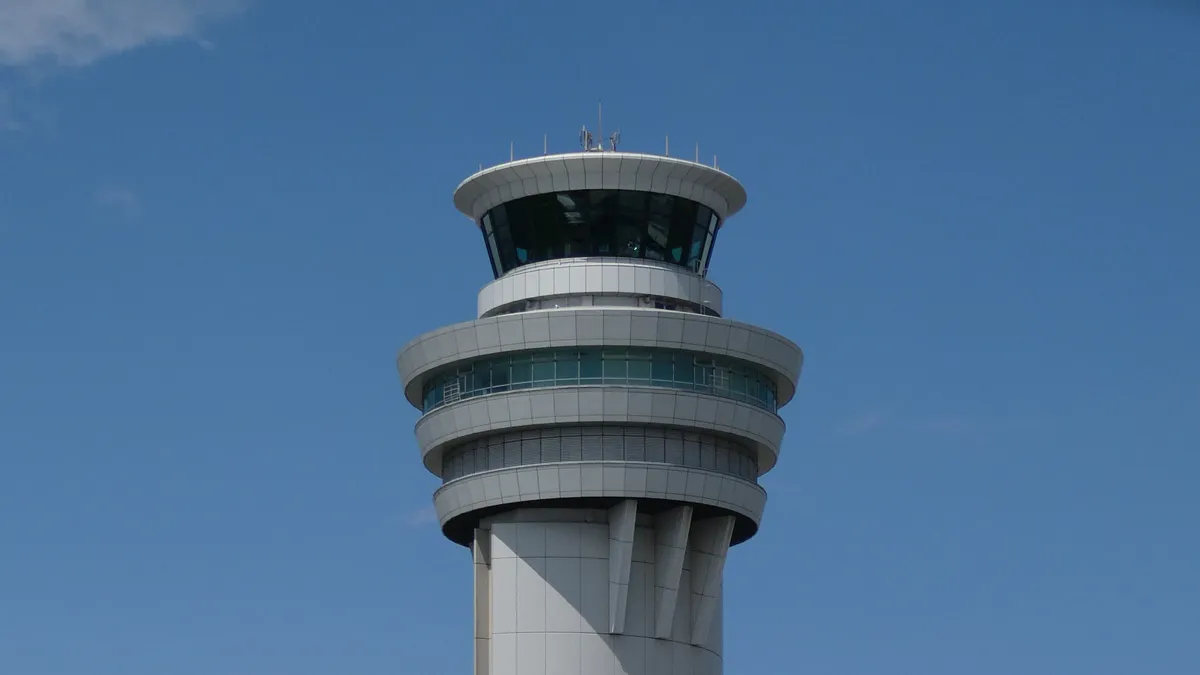
On Friday afternoon, November 13, the Federal Aviation Administration ordered every departing flight in the United States to stay on the ground. Radar and radio links at control centers across the country had gone unstable, and with more than 3,500 planes already in the air, the agency chose the bluntest safety measure it has. The stop lasted about four and a half hours, until 8:15 p.m. Eastern.
What made the grounding extraordinary was not just its scale. It was the calendar. Three days earlier, the FAA had switched on SMART — an AI-assisted planning tool — across all 22 of its air route traffic control centers. Within hours, the new system was the prime suspect in the public imagination. The official account, so far, points somewhere else entirely: a router, installed during a routine telecom upgrade, overwhelming a decades-old network.
According to Transportation Secretary Sean Duffy, the trouble began at about 3:36 p.m. Eastern, when air route centers and the facilities handling arriving and departing traffic started receiving inconsistent radar and communications data. The FAA ordered a nationwide ground stop soon afterwards, while controllers brought the planes already airborne down safely.
The stop was lifted at 8:15 p.m. Eastern, and Sify put the cancellation count above 12,000 for the day. Groundings on this scale are exceedingly rare: the last nationwide stop was a 90-minute halt in January 2023, when the system that alerts pilots to hazards failed. Before that, flights were halted only after the September 11 attacks.
What SMART actually is#
SMART stands for Strategic Management of Airspace, Routes and Trajectories. It is a cloud-based planning tool built by Boston-based Air Space Intelligence under a $875 million, 12-year FAA contract. It pulls in roughly 200 to 250 live data streams — weather, flight paths, traffic volumes, controller staffing — and uses them to recommend schedules and routes meant to cut delays and cancellations.
The key word is recommend. SMART does not talk to pilots, does not issue clearances, and does not touch the radar and communications systems that failed on Friday. A human controller decides whether to accept each prompt. The FAA first trialled the system around Washington, D.C., in September, then announced the nationwide expansion on November 10.
The blame question#
Air Space Intelligence moved fast to separate its product from the outage. At 5:34 p.m. Eastern on Friday, while planes were still grounded, it posted that the ground stop was “not based on or a result of the SMART system, any product of ASI or our integration with FAA and ATC.”
Duffy was blunter at the White House briefing. SMART, he said, “isn’t plugged in” to STARS and ERAM, the systems that carry radar and flight data and that failed. “There was no possible way SMART would have impacted what happened today,” he said.
The preliminary explanation instead traces the failure to a router installed during a contractor’s copper-to-fiber upgrade at a remote FAA facility in El Dorado, Arkansas. The FAA’s telecom infrastructure is managed by contractor L3Harris. According to Sify’s reporting, the new router began sending more than 1,000 attempts every four to five seconds, overloading the aging system around 3:30 p.m. Eastern. Maintenance at a radar facility in Amarillo, Texas, the same day added to the strain. The FAA has blocked both facilities from its network and disabled a feature on similar routers while the investigation continues.
Officials were careful about what they did not know. Homeland Security officials did not initially rule out a cyberattack, though they said there was no indication as yet of a malicious attack. The FAA’s root-cause analysis is still under way, and no final report has been published.
An old system, newly visible#
Whatever the final report says, the episode has put the FAA’s infrastructure back in the spotlight. “What we have is an incredibly old air traffic control system,” Duffy said at the news conference. “Our switches, our routers actually got overloaded with data,” he said, “and they started to give us inconsistency in the data from those routers. And because of that, we shut the system down.”
Missy Cummings, a former fighter pilot at George Mason University who researches responsible AI in transportation, called the outage “yet another example of how brittle our air transportation system is in our country,” adding that the problem spans several administrations. Duffy warned that without further upgrades there may be more disruptions. The administration is seeking $50 billion to modernize air traffic control infrastructure.
The irony is hard to miss. SMART was built to make the system predictive instead of reactive. Its first week in nationwide service coincided with a failure of the layer underneath it, the copper-era telecom that still carries the country’s air traffic data. The AI did not fail. The plumbing did.
What to watch#
Three things matter from here. First, the FAA’s final report: whether it confirms the router-and-upgrade account, and whether it finds anything the preliminary version missed. Second, Congress: the $50 billion modernization request now has a vivid exhibit attached to it. Third, SMART itself. The tool survived its first crisis with its reputation intact in the official account, but every future delay, outage or near-miss in American airspace will now be checked against the three-day gap between its launch and the worst grounding in a generation. The scrutiny is the price of deploying AI into safety-critical infrastructure — even when the AI is innocent.
Sources: Scientific American, “FAA grounds all U.S. flights after air traffic control system becomes ‘overwhelmed’”; FAA, “Statement on Nationwide Ground Stop”; Sify, “US Grounds Thousands of Flights After AI SMART Rollout, Seeks $50 Billion Fix”; MadRobot, “FAA ground stop: Duffy says SMART AI tool wasn’t to blame”.