Google's Suncatcher satellite answers its first prompt from orbit — with a haiku from a TPU in space
Google's Project Suncatcher prototype has sent back the first AI-generated response from a data-center-class TPU in orbit — a three-line haiku about being in space. Google announced the milestone on October 30, weeks after the satellite launched, and the tests that follow will find out whether its chips can survive the heat and radiation of orbit.
- The milestone: the first AI response from a data-center-class TPU in orbit, announced by Google on October 30, 2026 — what Google calls the mission's “Hello World” moment.
- The answer: a Gemma 4 haiku — “Blue marble below / Data streams in silent grace / Starlight feeds my core.” — uplinked as a prompt during a ground-station pass and downlinked as the satellite passed Svalbard, Norway.
- The hardware: four Google TPUs aboard the prototype, generating up to 1 kW of electricity, but only one TPU can run at a time, for about 20 minutes.
- The launch: October 1, 2026, aboard a SpaceX Falcon 9 rideshare alongside more than 100 other spacecraft, followed by about three weeks of commissioning.
- What comes next: tests of TPU performance under thermal stress and radiation exposure, then twin interconnected satellites in 2027.
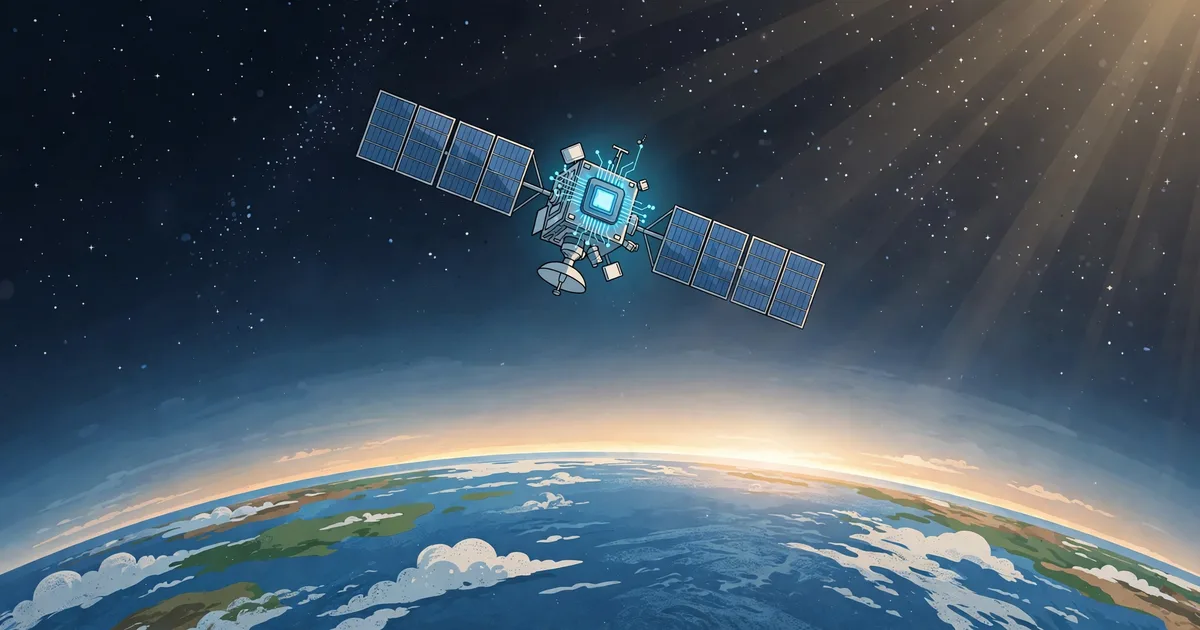
On October 1, Google launched the prototype satellite for Project Suncatcher, its long-term research moonshot exploring whether AI compute can be powered in space. Since then, the team spent the last few weeks working through a commissioning checklist: powering up the host and TPU trays and running early machine-learning tests. This week, Google said, it reached the milestone the whole mission was built around — the first-ever AI response from a data-center-class TPU in orbit.
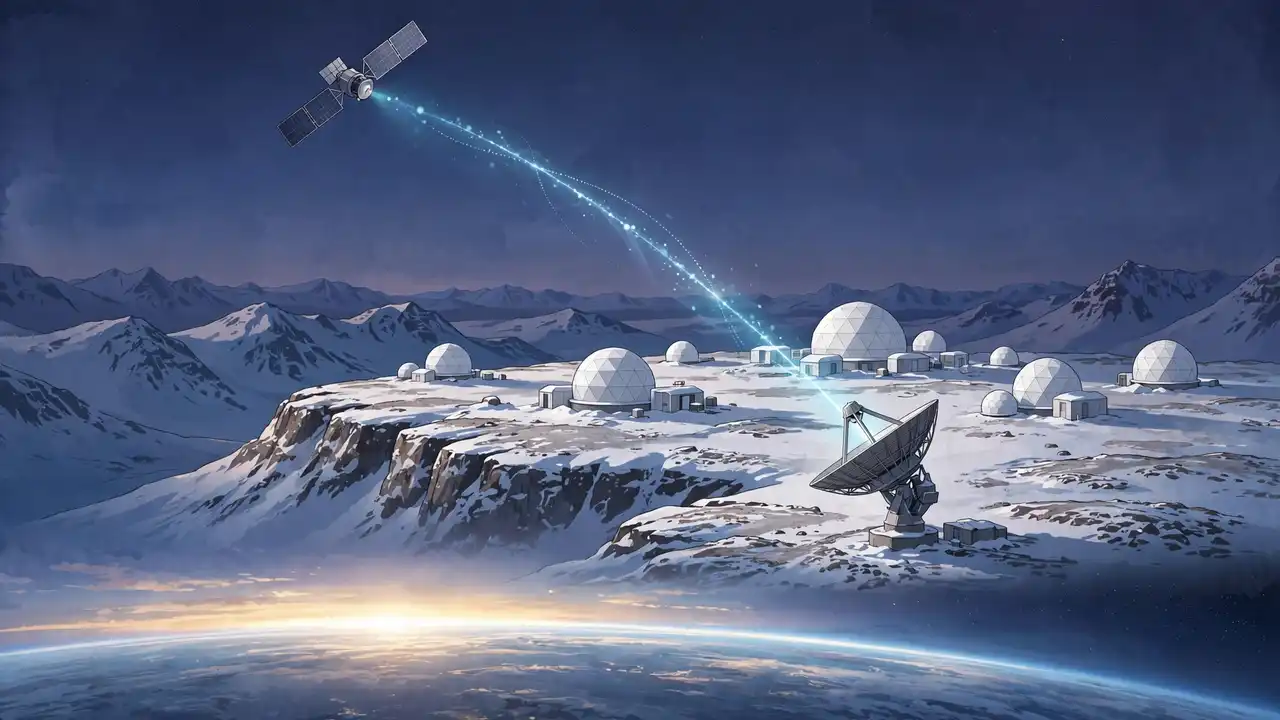
During a ground-station pass, engineers uplinked the satellite's first prompt to its onboard Gemma 4 open model: generate a haiku about being in space. As the satellite passed by Svalbard, Norway, the downlinked poem confirmed the test had worked:
Blue marble below
Data streams in silent grace
Starlight feeds my core. ✨
Google calls the moment its “Hello World” milestone. Following the first output, the team tested space-themed limericks and telemetry prompts reporting the technical status of the payload systems — a first answer, then a check that the machine could report on itself.
Four chips, one at a time, about 20 minutes#
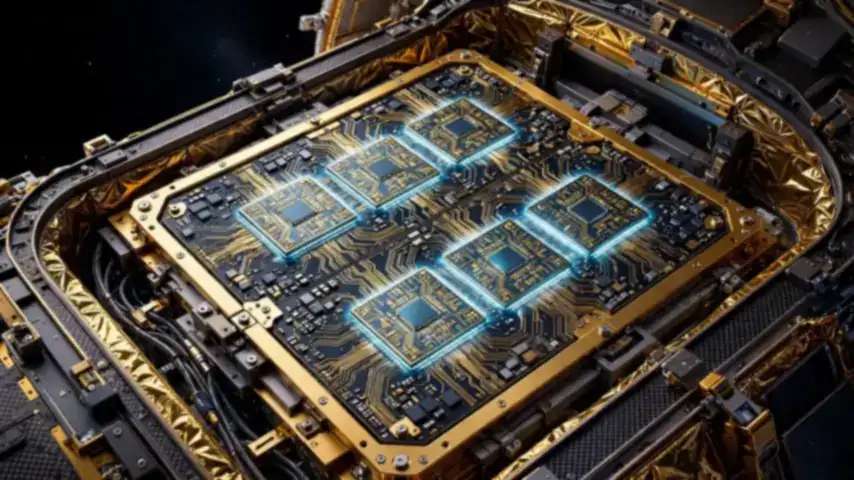
The satellite carries four Google Tensor Processing Units (TPUs) and generates up to 1 kW of electricity, TechCrunch reported. But the power demands of the chips mean it can turn only one on at a time, for about 20 minutes — a hard constraint on an already tricky business, talking to a spacecraft that is overhead for minutes at a time.
The prototype reached orbit earlier this month alongside more than 100 other spacecraft on a SpaceX Falcon 9 rocket, and commissioning tested its subsystems over about three weeks before it was ready to work. A Google spokesperson told TechCrunch the satellite was operating nominally — the unglamorous sentence every space test is really aiming for.
What the haiku proves — and what it doesn't#
A three-line poem is a deliberately small first workload, and its significance is correspondingly narrow: a data-center-class chip booted, ran a model, and returned a result from orbit, through the full chain from ground command to downlink. It says nothing yet about sustained operation, about how long the hardware lasts up there, or about whether computing in orbit can ever compete with computing on the ground. Google has framed Suncatcher as research into infrastructure that might become economical in the 2030s, not as a product.
The next tests are the ones that decide whether the idea survives contact with orbit. Google said it will run a series of tests evaluating how TPUs perform under thermal stress and radiation exposure. Radiation can cause “bit flips” — a stored value in computer memory changing — which can corrupt data without triggering typical monitoring tools, TechCrunch noted. Google has tested its TPUs extensively in particle accelerators on Earth; ground testing suggested radiation's impact would be minimal for inference workloads and more of a problem for training a model. Now the team gets to assess those dynamics in reality, not in a simulation.
What comes next#
If the chips aboard this spacecraft prove capable, Google's next milestone is twin interconnected satellites in 2027. TechCrunch reported the two additional satellites will support higher power generation and demonstrate inter-satellite optical links — the high-speed connections between satellites that would let a future constellation share processing coherently, rather than each satellite working alone.
That is still a long way from an orbital data center. What October 30 delivered is smaller and more concrete: proof that the chip works where it was sent, and a poem to show for it. The hard questions — heat, radiation, power, and cost — are the ones the next year of tests is for.
Sources: Google's October 30, 2026 post on the first response from the Project Suncatcher prototype satellite; TechCrunch's October 30, 2026 report. Cover and inline images are AI-generated editorial illustrations.