Meta Muse Ember: a $0.10-per-million-token model built for the agent grunt work
Meta announced Muse Ember about 40 minutes ago — its smallest and most cost-efficient model yet, priced at $0.10 per million input tokens and built for the repetitive work AI agents do all day. The pitch is blunt: intelligence per dollar, not intelligence per parameter.
What we checked: Meta’s own announcement — Mark Zuckerberg’s post on X and the AI at Meta update — cross-checked against TechCrunch’s report, published at 1:00 p.m. ET. The price and availability figures below come from Meta’s announcement; the benchmark comparisons are Meta’s framing of Artificial Analysis data, not independent results.
- What: Muse Ember, Meta’s smallest and most cost-efficient Muse model, released November 9, 2026 by Meta Superintelligence Lab.
- Price: $0.10 per million input tokens and $0.50 per million output tokens.
- Comparison: Meta says Ember performs comparably to Claude Haiku 5.5 at roughly one-third the cost per task, and scores higher than OpenAI’s GPT-6 Luna across all of Luna’s reasoning settings, on Artificial Analysis’s composite benchmark.
- Sibling gap: Muse Spark 1.3 costs about $1.25 per million input tokens — roughly 12.5 times Ember’s input price.
- Availability: available today on the Meta Model API and in Muse Code.
- Family: the fourth Muse model — Spark (April 2026), Glimmer (August 2026), Wonder (October 2026). Ember is multimodal: text, images and audio.

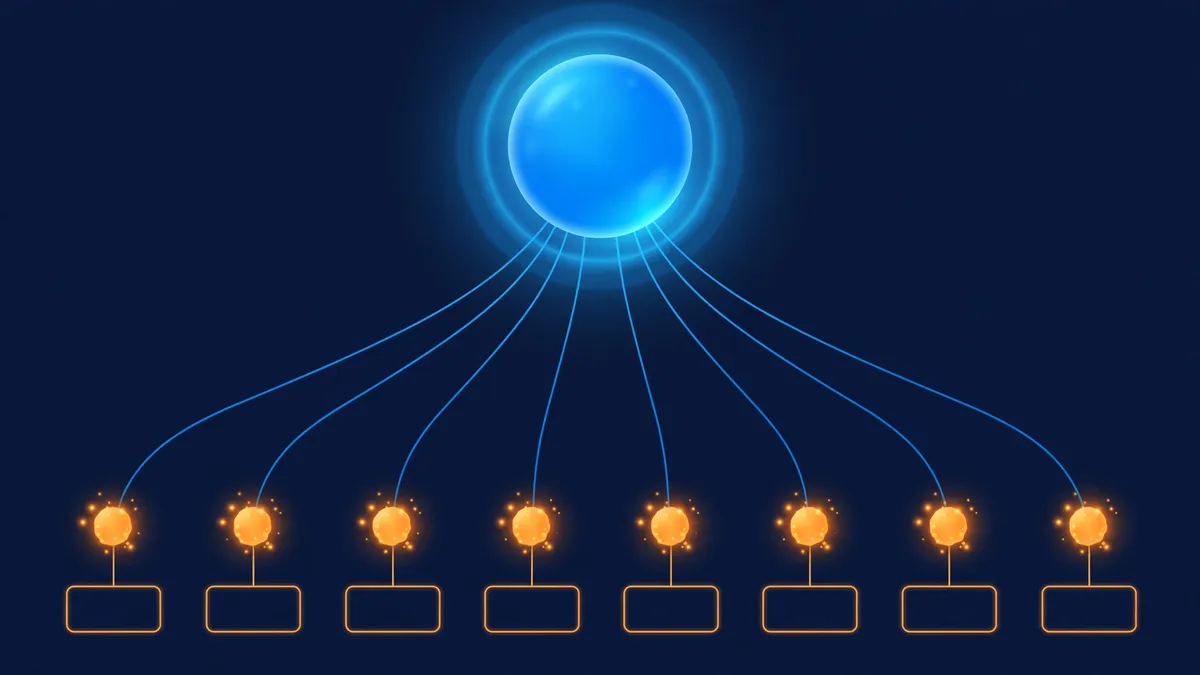
The idea behind Muse Ember is a split shift. One model plans; another executes. Meta puts it in a single line: “Muse Wonder plans, Muse Ember handles the volume.” Ember is the second half of that sentence — the model that does the work agents repeat all day, at a price where repeating it ten thousand times stops being a budget line.
How the two-model harness works#
Ember is not meant to be the smartest model in the room. It is meant to be the cheapest one you can trust with the routine. Here is the harness Meta is describing, step by step.
Step 1: the big model sets the rules. A frontier model like Muse Wonder works out how a job should be handled — the policy for a support ticket, the shape of a code change, which documents matter for a question.
Step 2: Ember applies the rules at volume. The small model takes those rules and runs them across tens of thousands of cases: the tool calls, the coding subtasks, the routing, the extraction, the long-document parsing. This is the work agents repeat all day, and it is what Ember was trained for.
Step 3: Ember reads whatever shows up. Meta trained the model across text, images and audio, so the same call can handle a screenshot, a chart, a scanned document, a voice memo, a meeting recording or a video — without handing off to a separate model for each input type.
Take the example Meta itself uses: a customer-support agent. The heavier model establishes the rules for handling a particular issue; the lighter model applies those rules across tens of thousands of cases. The planning happens once. The execution happens at scale, and the execution is where the bill used to explode.
What Meta actually announced#
Muse Ember is the fourth model under Meta’s Muse brand, and the smallest of the four. It is available today on the Meta Model API and in Muse Code. The headline number is the price: $0.10 per million input tokens in, $0.50 per million out.
| Model | Role | Input price per 1M tokens | Released |
|---|---|---|---|
| Muse Ember | Lightest; high-volume agent execution | $0.10 | November 9, 2026 |
| Muse Spark | Mid-weight | ~$1.25 (Spark 1.3) | April 2026 |
| Muse Glimmer | Open-source twin of Spark | Open weights | August 2026 |
| Muse Wonder | Frontier | Not disclosed | October 2026 |
The pricing gap inside Meta’s own lineup is the story: Ember’s input token costs about one-twelfth of Spark 1.3’s $1.25. Meta is also pitching Ember against rivals on cost per task, using Artificial Analysis’s composite benchmark to argue it is cheaper and smarter than Anthropic’s Haiku and OpenAI’s Luna — and cost-competitive with open-source models like DeepSeek V4.1 Flash and GLM 5.3 Flash. The company says Ember performs comparably to Claude Haiku 5.5 at roughly one-third of the cost per task, and scores higher than GPT-6 Luna across all of Luna’s reasoning settings.

Why a cheap model matters more than a smart one#
Agents rarely fail on one hard question. They fail on ten thousand easy ones, each billed by the token. A model that costs a dime per million input tokens changes which jobs are worth automating at all — document triage, ticket routing, log parsing, the unglamorous bulk that used to cost more in tokens than it saved in time. That is the bet behind Ember, and it is the same bet open-weight labs are making: Ricursive’s Ripple-65B arrived last week arguing that a 65-billion-parameter model built for $32 million could out-code models eight times its size.
Two caveats travel with the announcement. First, no independent benchmarks or technical specifications for Ember have appeared publicly yet, so the Haiku and Luna comparisons are Meta’s framing of third-party composite data — worth watching when independent evaluations land. Second, Ember is a volume worker by design: on its own it executes; the planning still belongs to a bigger model like Muse Wonder, or to the open-weights Spark Open setup developers are already running locally. The harness is the product as much as the model.
What to watch next: independent evals of Ember against Haiku and Luna, whether the $0.10 price holds once real volume arrives, and how quickly the two-model pattern — planner plus cheap executor — becomes the default way agents are built.
Frequently asked questions
What is Muse Ember?
Meta’s smallest and cheapest Muse model, released November 9, 2026 by Meta Superintelligence Lab. It is built for the high-volume, repetitive work inside AI agents: tool calls, coding subtasks, routing, extraction and long-document parsing.
How much does Muse Ember cost?
$0.10 per million input tokens and $0.50 per million output tokens. That is about 12.5 times cheaper per input token than Muse Spark 1.3, which costs about $1.25 per million input tokens.
Where can I use Muse Ember?
It is available today on the Meta Model API and in Muse Code. Meta positions it as the volume worker in a two-model agentic harness: Muse Wonder plans, Muse Ember handles the volume.