Musk opens Grok Bot to rival models: Claude Opus 5.5, Midjourney and Suno will power SpaceX's agent
Elon Musk announced on October 7 that Grok Bot — SpaceX’s persistent AI agent — will route each task to whichever backend model or API performs best, naming rival Anthropic’s Claude Opus 5.5 alongside Midjourney and Suno. For a lab that trains its own frontier models, it is a striking admission: the agent layer now sits above the model wars.
The announcement came in an X post on October 7 that has since passed 3.8 million views, according to coverage by explainx.ai. Musk said SpaceX will “use the best back end model for any given task” in Grok Bot, explicitly naming Claude Opus 5.5, Midjourney and Suno “and other leading APIs.” His summary of the policy: “We’ll go with whichever delivers the best results.”
What Grok Bot is
Grok Bot is the persistent AI agent SpaceXAI launched this summer: each bot runs on its own cloud computer, signs into web pages and applications, and works ongoing tasks — emails, spreadsheets, customer service, programming — reporting back rather than waiting to be asked. It began as an internal SpaceXAI prototype used for everything from outbound sales to bug fixes before being productized, and SpaceXAI even trained Grok 4.7 specifically to understand Grok Bot’s operational framework. Now the same system will reach past Grok for the best tool on each job — image generation to Midjourney, audio to Suno, frontier reasoning to Claude Opus 5.5.
The agent becomes the orchestrator
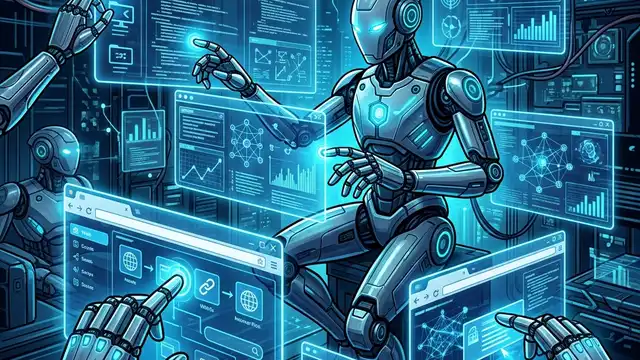
The shift reframes Grok Bot from a showcase for Grok into an upper-layer agent doing task decomposition, model orchestration and execution. It is the multi-model bet the industry has been drifting toward — agents as routers over increasingly commoditized models — made conspicuous by who is making it. A lab selling Grok 4.7 API calls at $2/$6 per million tokens is now willing to pay a rival’s rate card when the rival wins the task: Claude Opus 5.5 lists at $4 input and $20 output per million tokens.

The Anthropic irony
There is a piquancy in the choice of Claude. Anthropic and Musk’s companies are on opposite sides of the Pentagon’s AI fight: the Department of Defense put ChatGPT Mil and Grok for Government on its GenAI.mil portal while Claude stayed locked out, after Anthropic refused unrestricted-use terms covering mass surveillance and autonomous weapons, as AIWeekly reported. Now Musk’s flagship agent will happily call Anthropic’s best model when the job calls for it. Capability, it turns out, routes around politics.
Open questions
explainx.ai’s coverage flags what the post didn’t say: the routing criteria (benchmark scores? cost? latency?), what data flows to third-party APIs when a task is handed off, and how the economics work when a SpaceX agent resells a competitor’s tokens. Until those land, “whichever works better” is a strategy statement, not a spec sheet. But the direction of travel is unmistakable: the agent is becoming the product, and the model is becoming the supplier.
Sources: explainx.ai, lookonchain, CXO Today, AIWeekly, PowerDrill.