NVIDIA leads a $2.4B tech pledge to Trump's 'Golden Age of Science' summit — plus $159M in new DOE awards
At the White House 'Science: A New Golden Age' summit, eleven tech companies pledged $2.4 billion in AI tools and compute credits to the Genesis Mission — and DOE announced $159 million in new awards to put 'super intelligence' to work across federal labs.
The White House turned its science policy into a pledge drive on Thursday: at the “Science: A New Golden Age” summit, eleven tech companies committed $2.4 billion in AI tools and compute credits to the Genesis Mission — and the Energy Department announced $159 million in new awards to wire “super intelligence” into federal research.
The $2.4 billion pledge, by the numbers
The headline number comes from a White House fact sheet released at the summit: $2.4 billion in AI tools and compute credits for the Genesis Mission Consortium, the public-private hub that serves more than 15 federal agencies working on the National Science and Technology Challenges, according to Unite.AI and FedScoop. NVIDIA is the anchor — $1 billion over five years — followed by AMD at $500 million, OpenAI at $200 million, Anthropic and Google at $150 million each, AMP and Emerald AI at $100 million each, and AWS, Armada, Crusoe, and Micron at $50 million each. The administration says the full day of announcements, spanning government, industry, academia, and philanthropy, exceeds $6 billion.
The pledges are concrete enough to audit. NVIDIA said its five-year commitment covers super-intelligence research, quantum computing, healthcare, and energy security, and that it is already collaborating on several of the day’s new DOE awards in quantum, fusion, accelerator design, and microelectronics. “Putting advanced Super Intelligence in the hands of America’s scientists” is how Jensen Huang framed it — a line that doubles as the administration’s whole pitch. Anthropic committed $150 million over three years: Claude, Claude Code, and API credits for several hundred Genesis Mission projects, plus training and onboarding for scientists, with fusion energy and quantum computing as named priorities. AWS launched the “Golden Age of Science Accelerator” — up to $50 million in cloud credits over three years for AI-for-science workloads. A separate National Science Foundation and DOE announcement logged more than $100 million for AI-enabled scientific instrumentation and autonomous laboratories.
DOE’s $159 million: 12 new bets
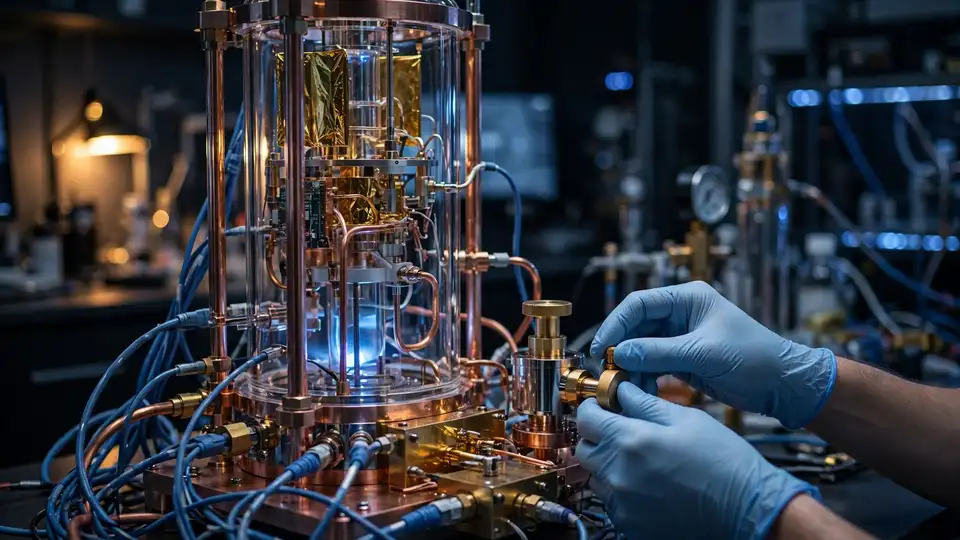
Running in parallel, the DOE announced 12 Phase II Genesis Mission awards totaling $159 million, plus six new Phase I awards — completing the mission’s first-year cohort at 297 projects. The Phase II picks run the full map of hard science: an AI-enabled digital twin for Commonwealth Fusion Systems’ SPARC fusion device, a five-fold expansion of the RNA structure database at UC San Diego, lattice quantum chromodynamics at MIT, geothermal mapping with UC Irvine’s MAESTRO platform, rare-earth extraction chemistry at UIUC, enzyme design at the University of Washington, radiation-hardened chip design at Fermilab, autonomous accelerator operation at Berkeley Lab, quantum error correction at Harvard, quantum magnet design at Oak Ridge, and an agentic assistant for the Facility for Rare Isotope Beams at Northeastern. “These projects represent a critical step in turning the promise of Super Intelligence for science into transformative scientific capability,” said Under Secretary for Science Darío Gil. The Phase II portfolio now stands at 14 projects, alongside the earlier GridFM 2.0 and Prometheus awards.
What to actually watch
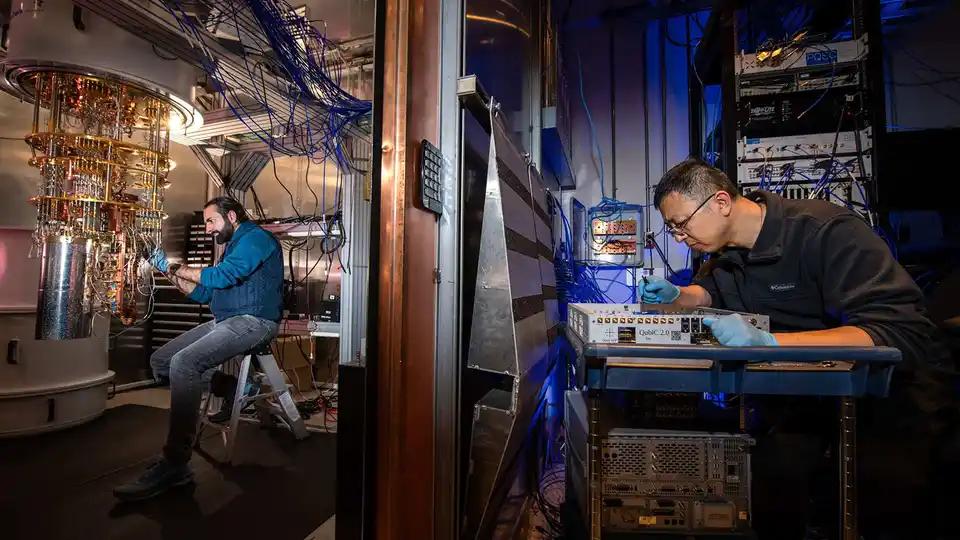
Strip out the branding and this is the administration’s answer to the compute bottleneck in public science: instead of supercomputer allocations alone, the Genesis Mission pairs federal datasets, instruments, and labs with frontier models and agentic tooling — “SI” in the mission’s vocabulary — pointed at energy, health, and space. The consortium structure matters because API credits and cloud time reach researchers who would never win a bespoke allocation. The honest question is the usual one with numbers this round: how much is new capacity versus rebadged existing spend. NVIDIA’s $1 billion is a five-year commitment value, not a cash transfer — though the company’s presence inside the new DOE awards is a harder signal than any headline figure.
There was pageantry, too: Trump presented National Medals of Science at the event, with Huang and AMD’s Lisa Su among the honorees. And the politics are impossible to miss — the same companies that spent years lobbying against AI regulation are now co-branding federal science policy. That buys labs compute and tool access. Whether it buys the promised golden age is a measurement problem, and the White House finally named the yardstick: doubling the productivity and impact of U.S. science within a decade.