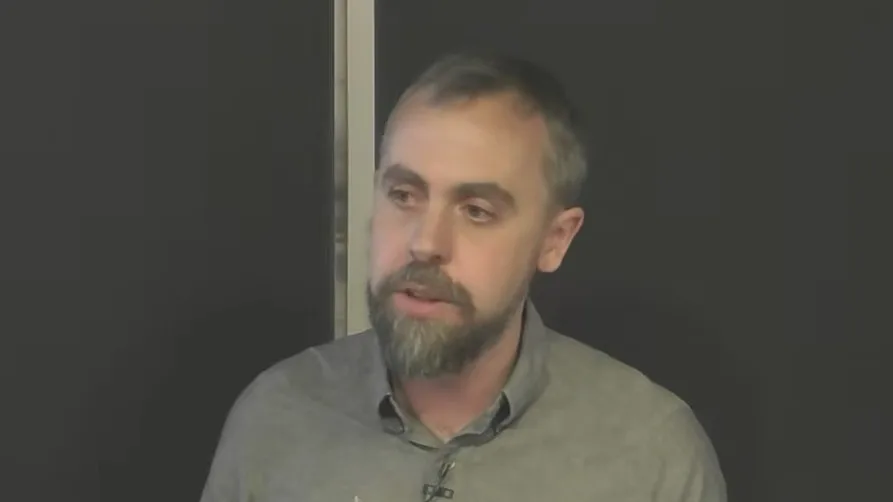
OpenAI board member Paul Christiano: ‘high risk of an AI takeover within the next 3 years’
Paul Christiano did not come to Toronto to reassure anyone. On Tuesday night, the alignment researcher — who helped invent the reinforcement-learning technique behind modern chatbots and, since September, sits on OpenAI’s foundation board — told the Hinton Lectures there is a high risk of an AI takeover within three years. A 68-second clip reached Reddit on Wednesday morning, and by the afternoon the thread had drawn more than 500 comments — most of them skeptical, some of them furious, almost none of them reassured.
- The lecture: Night 2 of the Hinton Lectures 2026, “Staying in Control of Self-Improving AI,” streamed live November 10 from the Metro Toronto Convention Centre; introduced by Geoffrey Hinton.
- The clip: 68 seconds, posted to r/OpenAI on November 11 by u/notkilleveryoneist — 212 upvotes and 540 comments by Wednesday afternoon.
- The claim: “There is a high risk of an AI takeover within the next 3 years,” per his slide; a “coin flip” if development proceeds at maximum speed; “the most likely reason they will die is because of an AI accident.”
- The numbers: in his September board-appointment statement he put catastrophic loss of control at roughly 4% over one year and 15% over three — his own subjective estimates.
- The reaction: the top comments are skeptical — “marketing play,” data-centre politics, “not an accident” — and no commenter disputed the clip’s authenticity.
- The context: the warning comes two months after he joined OpenAI’s board, and one night after the series’ first lecture, “AI Alignment — What’s Working and What’s Not.”
Paul Christiano did not come to Toronto to reassure anyone. On Tuesday night, the alignment researcher — who helped invent the reinforcement-learning technique behind modern chatbots and, since September, sits on OpenAI’s foundation board — delivered the second of the 2026 Hinton Lectures and put a number on the danger he sees: a high risk of an AI takeover within three years, with meaningful risk even in the next six to twelve months.
A 68-second clip of the warning reached Reddit on Wednesday morning. By the afternoon, the thread on r/OpenAI had drawn more than 500 comments — and the loudest reaction was not alarm. It was skepticism.
What he actually said#
The clip shows Christiano on stage at the Metro Toronto Convention Centre, introduced by Geoffrey Hinton, wearing a red poppy in front of a backdrop reading “The Hinton Lectures.” His closing slide states the thesis plainly: “There is a high risk of an AI takeover within the next 3 years.”
His spoken warning is starker still. “I think for most people in this room, the most likely reason they will die is because of an AI accident,” he tells the audience. He adds that if AI were developed “along the most rapid trajectory” and “in the easiest way we can, we would be looking at something like a coin flip of an AI takeover” — and that even with realistic policy responses, “the risk remains exceptionally high.”
The coin flip needs its condition kept attached: Christiano says he hopes the probability is much lower than that, precisely because development will not proceed at maximum speed. What worries him is the direction of travel. “I think that trajectory in the field has been extremely alarming over the last three to six months,” he says, “and we have seen roughly the things we might expect to see shortly before something really bad were to happen.”
The numbers behind the warning#
Christiano is not a newcomer to this argument. He founded the Alignment Research Center, led alignment research at OpenAI from 2017 to 2021, and has warned about loss of control for more than a decade. When OpenAI named him to its foundation board in September, his own statement put numbers on the risk: roughly a 4 percent chance of catastrophic loss of control over the next year, and about 15 percent over three years. Those are his subjective estimates, not measurements — but they are the numbers a sitting board member chose to publish.
His September statement also carried a judgment on the industry, OpenAI included: he wrote that he does not think the industry is on track to reduce the risk to an acceptable level, and that “if we build superintelligence without more robust alignment I expect we will permanently lose control of it. If that happens then most people could die.”
The Toronto lecture is the same argument, sharpened and delivered in person — two months into his board tenure, and one night after the series’ first lecture, “AI Alignment — What’s Working and What’s Not.”
Reddit’s verdict: skepticism, not panic#
The thread’s most-upvoted reply, at 277 upvotes, is not about the forecast at all: “AI bros openly say shit like this and wonder why Joe from Ohio voted against data centers.” The second, at 162, is a jab at the business model: “AI’s about to wipe us out, so why not hand over $500 for our new subscription while you’re at it?” Others call the warning “a fascinating marketing play” and argue that “many people will die as a result of AI development but it will not be an accident.”
The pushback is the story as much as the warning. Nobody in the thread’s 540 comments disputed that the clip is real — the full lecture is public on YouTube — but the dominant reading is that a doom warning from inside the industry functions as marketing, or as a prelude to regulation that entrenches the big labs. One commenter did flag a framing point worth keeping: the Reddit title quotes “AI accident,” while Christiano’s own slide and his coin-flip sentence say “AI takeover.” The clip contains both wordings; the takeover is the claim, the accident is the mechanism he names for the people in the room.
What to watch#
First, whether the full 87-minute lecture gets a second wave of attention beyond the clip — the panel discussion with Manulife and Telus executives is where the practical questions live. Second, whether OpenAI responds to a board member publicly assigning double-digit odds to catastrophe. And third, whether the warning changes anything in the open: Christiano’s argument is that the trajectory of the last three to six months is itself the evidence, and the evidence, he says, is arriving faster than the response.
Sources: the original post by u/notkilleveryoneist on r/OpenAI; the full lecture, “Paul Christiano: Staying in Control of Self-Improving AI | The Hinton Lectures 2026 (Night 2),” on YouTube; a short clip of the warning on YouTube Shorts; and Inc. for the 4% and 15% figures from Christiano’s September statement. Commenter claims are reported as thread claims, not independently verified. The cover photograph of Christiano is by the Institute for Pure & Applied Mathematics (IPAM) at UCLA, via Wikimedia Commons (CC BY 4.0); the inline images are AI-generated illustrations.