Helsing unveils Clarity: AI that recommends military targets, with a human's name on every decision
Helsing unveiled Clarity in Berlin on Wednesday: hundreds of AI agents fuse sensor feeds and intelligence into target recommendations — but nothing reaches a weapon system until a named human officer authorises it. It is Europe's answer to Palantir's Maven, and the sovereignty pitch is the point.
What we checked: Helsing's announcement and Berlin presentation, as reported by Reuters (November 10 preview), The Decoder, Oossa, and CryptoBriefing (November 11). The platform's capabilities, the human-authorisation design, and the sovereignty claims come from Helsing's own statements; no customers were disclosed, and the company has not published independent testing of Clarity.
- What it does: hundreds of specialised AI agents fuse sensor feeds, open-source intelligence, written reports, and existing military systems. A shared military ontology lets them identify forces, facilities, and positions, then rank and recommend targets for human review.
- The human rule: a target is recommended only when independent sources agree and the assessment can be made with high confidence. Nothing is forwarded to a weapon platform until a named officer authorises it, and every decision is logged with that name.
- The sovereignty pitch: Clarity runs on the customer's own infrastructure, its models and interfaces were developed in Europe, and data stays under the armed forces' sole control. It follows NATO's Modular Open Systems Approach and can connect to effectors from any manufacturer.
- The market: Palantir's Maven is the incumbent, embedded in Pentagon and NATO workflows. Germany has decided against buying Maven for now and plans its own AI targeting system from 2027, fully implemented by 2028.
- The unknowns: Helsing did not say whether any customer is already using Clarity, and has not detailed verification procedures or independent testing of the system.

The pitch is simple: a modern battlefield produces more data than any staff can read. Drones, satellites, sensors, and reports pour in faster than officers can triage them, and the side that turns that flood into decisions first wins the tempo. Clarity is Helsing's answer — let software do the reading, and keep a human on the decision.
German defence-tech firm Helsing presented the platform at a press event in Berlin on Wednesday, November 11, calling it an 'agentic intelligence platform'. It arrives as European governments grow wary of depending on American defence software, and as Germany prepares to build its own AI targeting capability rather than buy Palantir's.
What Clarity actually does#
The workflow, as Helsing describes it, starts with everything a military unit can access: sensor feeds, open-source intelligence, written reports, and systems already in use. Hundreds of specialised AI agents link those sources, match objects to a shared military ontology, identify forces, facilities, and positions, and prepare information on adversary assets for human review — before Clarity packages the data for the appropriate weapons system.
The agents are trained on real operational data, synthetic AI-generated data, and simulated environments, according to the company, and the shared ontology and evidence base let them work in parallel and deploy analytical tools. Helsing describes the platform as 'AI-native' and not built on legacy architectures.
What Clarity does not do, on Helsing's telling, is decide. A target is only recommended when independent sources agree and the assessment can be made with high confidence, and the recommendation then waits for a person. That is the design's centrepiece — and, as the record of similar systems shows, its hardest promise to keep.
The human in the loop#
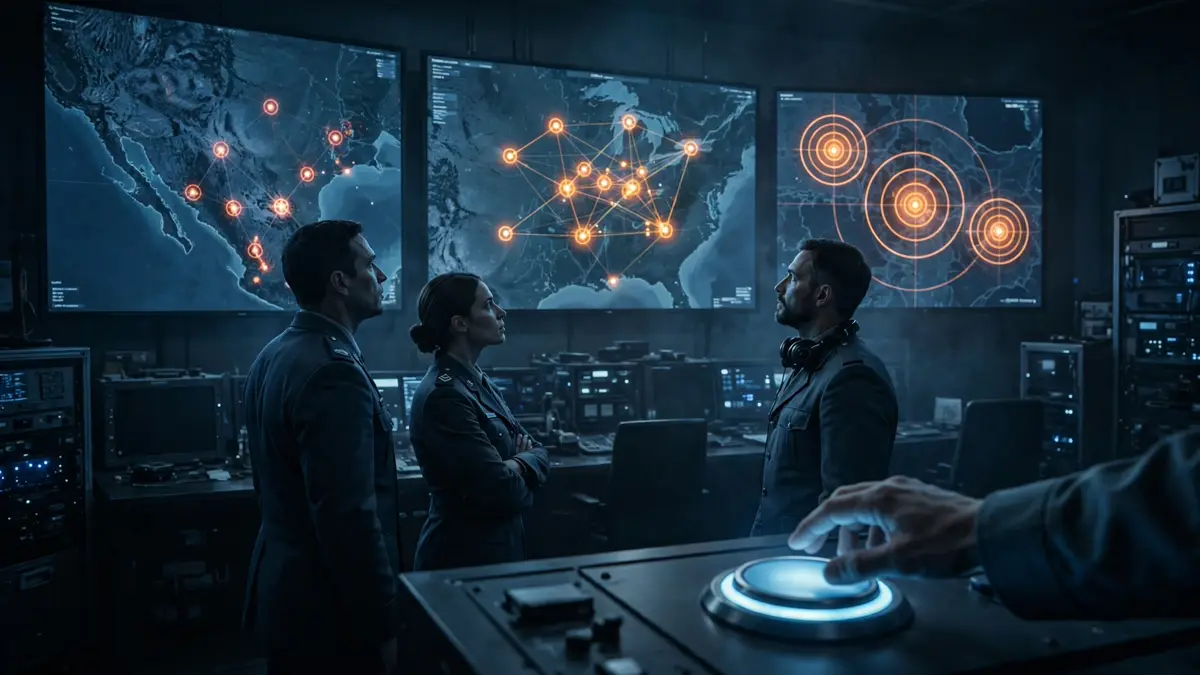
Every handoff to a weapons system must be authorised by a named human officer, Helsing says, and each recommendation is logged with the name of the person who approved it. The idea is accountability by name: no anonymous machine output, no decision without a person attached to it.
The cautionary record is what makes that promise load-bearing. In the Iran war, the US military reportedly used Palantir's Maven with Anthropic's Claude to suggest hundreds of targets, prioritise them, and recommend ordnance — about 1,000 targets were struck in the first 24 hours, and within days the number topped 3,000, according to the Wall Street Journal, which also reports military officials warning of an attitude described internally as 'the computer said to do this'. In Gaza, investigations by +972 Magazine and Local Call found that Israel's Lavender system flagged up to 37,000 Palestinians as potential targets, with human review often lasting only about 20 seconds per target.
And in spring 2026, a chatbot falsely claimed in an intelligence report that a Chinese ship was carrying nuclear weapons programme components, after combining open and classified data and misidentifying the cargo. According to CNN, armed troops were preparing to board and aircraft were already in the air when the error was caught shortly before the operation. None of these cases involved Clarity — but they are the reason Helsing's named-accountability design will be judged on practice, not presentation. The company has not detailed verification procedures or independent testing of the system.
Sovereignty is the sales pitch#
The second pitch is geography. Clarity runs on the customer's own infrastructure, its models and interfaces were developed in Europe, and data and operations stay under the armed forces' sole control, Helsing says. The platform follows NATO's Modular Open Systems Approach, implements NATO standards, and can connect to effectors from any manufacturer — a deliberate contrast with systems that tie a buyer to one vendor's stack.
The anxiety behind that pitch is concrete. After President Donald Trump's repeated threats to quit NATO, concerns over dependence on Washington have fuelled resistance to US defence software in parts of Europe. Palantir has insisted its customers are in full operational control of the software they buy and that it has no 'kill switch' to deactivate it remotely — but last month, speed restrictions on Ukraine's Starlink terminals hampered Kyiv's efforts to intercept Russian drones and forced some operations to be cancelled. And in June, the Trump administration moved to block non-US residents from Anthropic's most advanced models, Mythos and Fable, on national security grounds, prompting the company to abruptly suspend access globally; the ban was lifted later the same month, but European lawmakers warned the episode showed Washington holds a kill switch over essential technologies that it is more than willing to use.
Germany's decision sharpens the opening. Berlin has made clear that, for now at least, it will not buy Palantir's Maven for its forces, and is aiming to deploy its own AI-powered system from 2027, with full implementation expected in 2028. A week before Clarity's debut, on November 4, Helsing transferred ownership of the MissionOSBw source code to the Bundeswehr — a down payment on the trust it is now selling. Helsing is also one of the few European vendors that can point to experience from the war in Ukraine, where it supplies drones, though it did not say whether any customer is already using Clarity.

What to watch#
Five things to track from here:
- Whether Germany's 2027 national targeting system incorporates Clarity — or relies on other suppliers. That is the contract this launch is really aimed at.
- Whether Helsing names a first customer — or a first deployment. A launch without a buyer is a pitch, not a programme.
- Any independent testing or verification standards for the recommendation pipeline — the missing piece in Helsing's accountability story.
- How the named-accountability promise holds up in practice: review times, override rates, and audit trails, once the system is in real hands.
- Whether other European governments follow Germany's lead away from Maven — and whether Palantir answers with a sovereignty offer of its own.
Sources#
- Reuters (via 102.7 WBOW): Germany's Helsing to unveil AI-based military software as a rival to Palantir (November 10, 2026)
- The Decoder: Helsing built an AI system that prepares targets for weapons systems and says every decision will carry a human name (November 11, 2026)
- Oossa: Helsing launches Clarity AI platform for target selection (November 11, 2026)
- CryptoBriefing: Helsing unveils Clarity, a European rival to Palantir's Maven AI system (November 11, 2026)