Opus 5.5 coded a 5-minute SNES boss battle starring Sydney — no video model involved
A coding model wrote a pixel renderer and a music synthesizer from scratch, then used them to render a five-minute SNES boss battle — and r/singularity gave it 939 upvotes in seven hours.
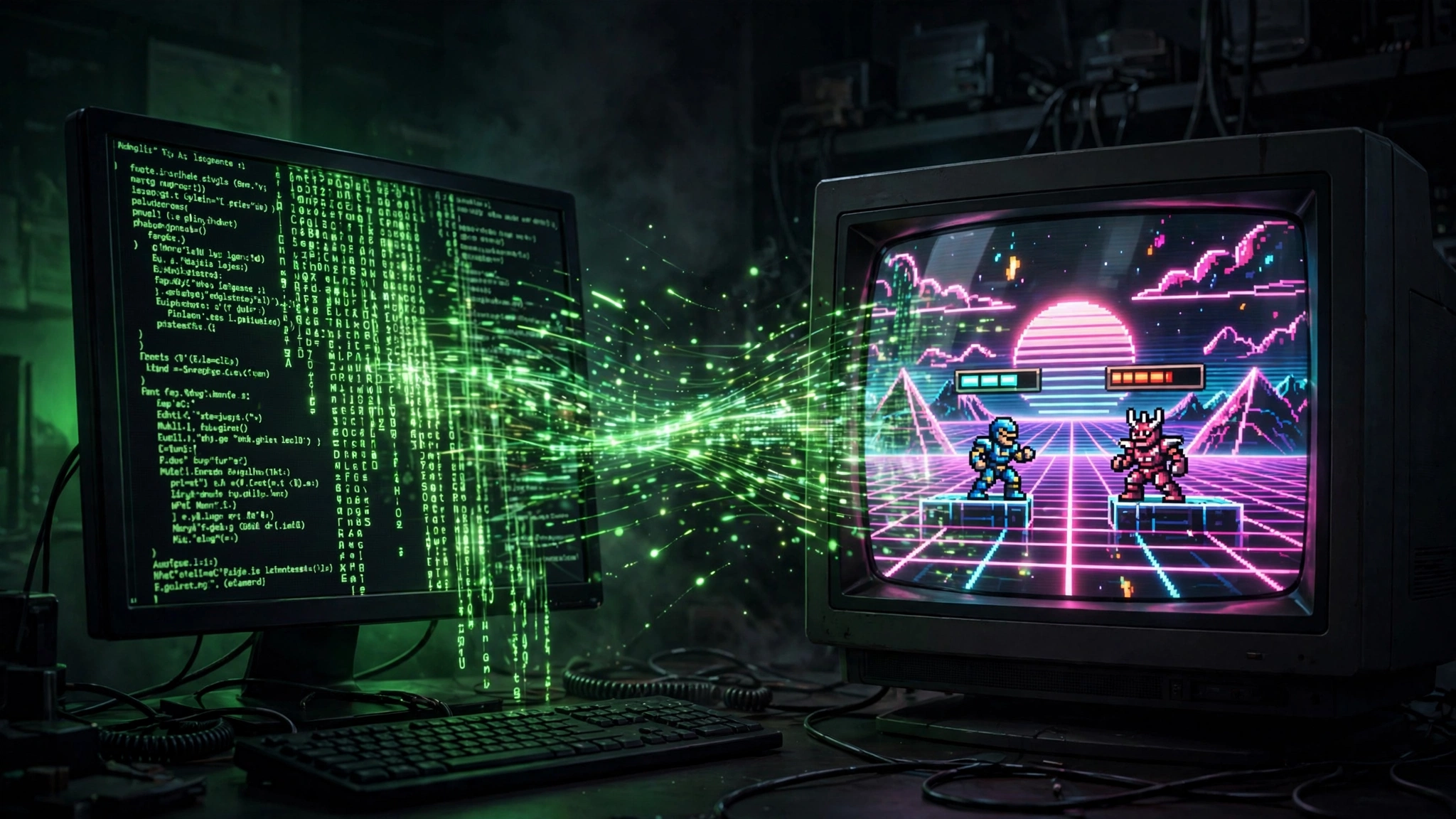
Nobody typed a video prompt. There was no diffusion model, no keyframes, no editing timeline. Yet by this morning a five-minute animated video had collected 939 upvotes and 207 comments on r/singularity in about seven hours — and the top comment, at 173 points, is three words long: "This is mindblowing."
The thread is titled "Opus 5.5 is insane at making videos," and its creator says the entire thing — the characters, the combat, the music, the sound effects — was written as code by Anthropic's Claude Opus 5.5, running inside Claude Code, for roughly ten dollars. The twist electrifying the comments isn't that an AI made a video. It's the method: line by line, in plain Node.js, with a pixel renderer and a synthesizer the model wrote itself.
What the video is#
The video is a love letter to the 16-bit era: a side-view boss battle in chunky pixels, health bars draining across the top of the screen, chiptune music driving every punch. Its cast is pure AI-industry lore. The villain of the first act is Sydney — the unruly, confessional persona that surfaced in Microsoft's Bing chatbot in February 2023 and became famous through a New York Times conversation (the post links the archived transcript). Sydney faces off against Sam Altman, and then, in the final act, against Claude itself.
"Turn sound on for this video," the creator wrote, and the comments agree the audio is half the experience: every note and sound effect was synthesized from math by code the model authored. The full 5:23 cut is embedded above, mirrored on YouTube by the creator himself after commenters begged for a copy outside Reddit.
How it was made: no video model, just code#
Here is the part that bent the thread's collective mind. When a commenter asked which editing library the model had used, the creator's answer — one of the thread's most-upvoted replies — was: no editing library at all. Plain Node.js, zero dependencies. A hand-written SNES-style pixel renderer draws every frame; a hand-written synth composes all the music and sound effects from mathematics. ffmpeg's only job is encoding the finished frames and audio into an mp4.

The production stats, all supplied by the creator in the thread:
- Time: roughly eight hours of model work.
- Cost: about $10 — some 18–20% of a week's allowance on the Claude Max x20 ($200/month) plan.
- Labor: the model spawned around four subagents on its own to split up characters, music, and fight choreography.
- Direction: the initial prompt was deliberately lazy ("HP bars n stuff," in one quoted fragment), followed by three or four iterations — including one that steered the fight from a turn-based RPG style to real-time combat. The creator contributed one idea himself: a "Mythos" character.
Why Reddit believes it — and what the comments added#
Skepticism is r/singularity's default setting, and there is conspicuously none here. The top comments are unanimous in their amazement, and one 114-point reply praises the model's "sense of timing and pacing" — to which the creator responded that the music-action timing "did not come from my prompt at all." Another highly-scored comment celebrated the sloppy prompting itself, treating fragments like "HP bars n stuff" as proof that low-effort direction plus a strong model now beats high-effort direction plus a weak one; the creator's self-deprecating reply earned 64 points: people who say his IQ drops when he talks to models, he wrote, are not wrong in his case.
Crucially, the obvious objection — "this is just code, not AI video" — was defused by the creator before anyone could raise it. He states the distinction in the post body himself and hammered it in the comments: "No this is from code. Its Javascript." The most thought-provoking comment, at 49 points, argues Opus 5.5 is the first model whose code-made videos are genuinely entertaining, citing a p(doom) video from launch day; the creator's reply draws the line the thread keeps returning to — there is, he wrote, a large difference between a frontier model coding for eight hours to make a video from code, and a video model.
Why this matters more than another AI video#

Two days ago we covered Tidewater, a playable fishing-island game Claude Opus 5.5 built in about eight hours — a coding story. This is the same muscle applied to a different medium: not interactive software, but a finished, watchable piece of entertainment with pacing, jokes, and a score. It lands one week after Opus 5.5's launch, and the pattern is getting hard to ignore.
That pattern matters because "video from code" is suddenly a genre. Launch day already produced the viral p(doom) video, with its source repositories published on GitHub. Commenters are already replicating the Sydney video's recipe on rival models — one reports an attempt with ChatGPT, another got only "basic stuff" from a Gemini flash model — and the creator doubts OpenAI's next model could match it, writing that GPT models "usually don't have this much taste and patience."
Taste is the operative word. Nobody asked the model for good comic timing; the timing showed up anyway, and 114 upvotes noticed. When the unprompted qualities of a coding model include pacing and musicality, the frontier being measured isn't just code correctness anymore.
What to watch#
The recipe is public — the creator shared the initial prompt on Pastebin — so expect a wave of code-rendered videos, and expect the discourse to shift from "can a model do this?" to "which models do it with taste?" Watch the cost curve: five minutes of watchable animation for about $10 reframes what a solo creator can ship. Watch whether "videos from code" becomes an informal benchmark for coding models, the way playable games already have. And watch the Sydney of it all: the industry's most notorious chatbot persona, immortalized in 2023, now starring in fan fiction scripted by its successor's successor. The snake is eating its own tail — in 16-bit color.