Axios: Nvidia-backed Reflection is about to release its first open-weight model — America’s answer to Chinese open weights
Axios reported Sunday that Reflection — the startup founded by DeepMind alumni, valued at $8B with Nvidia as its biggest backer — is preparing its first open-weight model, aimed squarely at China’s open-weight leaders, and has been pitching its ‘AI factory’ vision in Washington.

Axios reported on Sunday that Reflection AI, the Nvidia-backed startup positioning itself as America’s open-weight frontier lab, is preparing to release its first open-weight model soon — one it expects to compete with the top open-weight models from China. The company declined to comment, and no release date, model name, or performance figures have been disclosed.
The scoop matters because of where the open-weights game stands right now. Per the Axios reporting, Chinese companies make nearly all the leading open-weight models today, while other Western companies are expected to release their own models this month. Reflection wants to be the American entry in that race — and it has the money and the compute to make a serious run at it.
The scoop
Axios reports Reflection’s first model is expected to trail the most advanced U.S. models at first but rival the best open-weight models from China. That is a modest bar on paper, but it is exactly the lane where the market is moving: downloadable, inspectable, self-hostable models that banks, governments, and enterprises can run on their own infrastructure rather than renting through a closed lab’s API.
The report’s “why it matters” framing, as summarized by AIStockWire’s recap of the Axios scoop, is blunt: a powerful open-weight model married to Nvidia GPUs could threaten Chinese upstarts and U.S. AI giants alike. Axios’s story went up Sunday afternoon; Reflection declined to comment.
The AI factory bet
The model is the entry ticket. Reflection’s bigger idea is what it calls an “AI factory”: a company or government combines its own data, Reflection’s models, and its own computing power to build a cheap, customized AI system. The pitch lands where Chinese models can’t go — banks and the Pentagon are among the big AI users wary of Chinese models on security grounds, and Reflection is trying to fill exactly that gap.
The company has already put the idea into practice once. In March it signed a memorandum of understanding with South Korea’s Shinsegae Group to build a 250-megawatt AI factory in Korea that will run on Reflection’s models and Nvidia chips. And ahead of the model launch, Axios reports Reflection has been meeting with interested parties in Washington and elsewhere to explain the release and how the AI factory will work.
The compute war chest
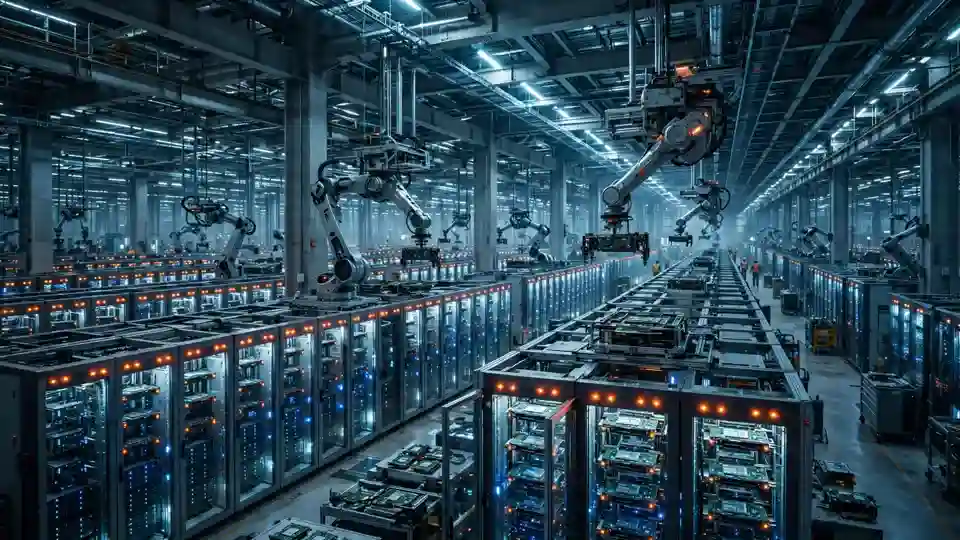
Reflection has been buying the means of production instead of building them. In June it agreed to pay SpaceX $150 million a month — after an initial ramp, from July 1, 2026 through 2029 — for access to Nvidia GB300 chips at the Colossus 2 data center, with a 90-day termination clause after the first three months. In July, Nebius agreed to sell it more than $1 billion in computing capacity through 2029. And Nvidia itself invested $800 million in the startup.
The alignment runs deeper than money. Nvidia CEO Jensen Huang has been pushing the “AI factory” concept for years, and in July Nvidia joined other tech companies in signing a letter urging Washington not to restrict open-weight AI. Reflection’s launch is, in a sense, Nvidia’s open-weights strategy taking physical form: American weights, trained and served on American chips.
Who Reflection is
Reflection was founded in 2024 by former Google DeepMind researchers Misha Laskin — who led reward modeling for DeepMind’s Gemini project — and Ioannis Antonoglou, a co-creator of AlphaGo. In October 2025 the company raised $2 billion at an $8 billion valuation, as TechCrunch reported, with Nvidia leading the round and Eric Schmidt, Citi, 1789 Capital, Lightspeed and Sequoia participating.
Its first product, the Asimov code-comprehension agent, launched in July 2025; the team numbers around 60 researchers and engineers. The Wall Street Journal has called it the “DeepSeek of the West” — a label the startup seems happy to wear.
What is still unknown
Everything about the model itself: name, size, benchmarks, license terms. “Set to shake up the AI race” is Axios’s framing, not a shipped fact — and the Western open-weights field is about to get crowded, with more models expected this month. But a funded, compute-rich American open-weight lab, stamped by Nvidia and briefed in Washington, is the most serious challenge yet to China’s dominance of downloadable models — and to the closed labs whose valuations assume frontier AI stays scarce.