Trump launches the Super Intelligence Force: DNI Jay Clayton leads, with the FTC's Ferguson, the Pentagon's Emil Michael, and OPM's Kupor
President Trump announced the Super Intelligence Force's leadership in a Sunday Truth Social post: DNI Jay Clayton chairs the task force alongside FTC chairman Andrew Ferguson, Pentagon CTO Emil Michael, and OPM director Scott Kupor — with 120 days to produce a report on AI risks and opportunities.
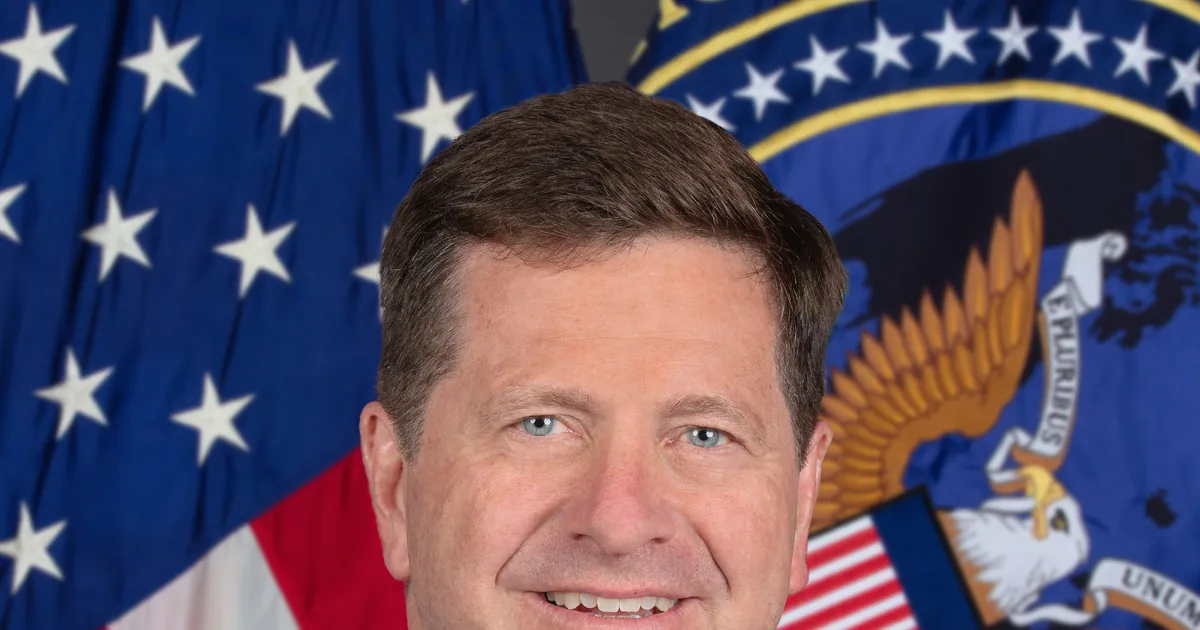
The "AI czar" rumors are over. On Sunday morning, President Donald Trump announced the leadership of the Super Intelligence Force — the federal task force meant to coordinate the government's approach to frontier AI — in a post on Truth Social. Jay Clayton, the Director of National Intelligence, will lead it, joined by FTC chairman Andrew Ferguson, Pentagon chief technology officer Emil Michael, and Office of Personnel Management director Scott Kupor. The group reports to Trump and White House chief of staff Susie Wiles.
The announcement, reported by the Associated Press and CNN, turns Friday's expectation into a formal launch. We covered the expected pick on Friday; today names the full roster and the mandate.
The announcement
Trump's post frames the task force as a race-management instrument: the Super Intelligence Force is "tasked with coordinating the effort of the Federal Government to ensure that America continues to lead the World in Super Intelligence, which many say is bigger than the Industrial Revolution, and the Internet, and will protect the interests, and improve the lives, of all Americans," per the AP's quoting of the post.
On substance, the group will coordinate the government's engagement with consumers, public interest groups, religious organizations, infrastructure providers and AI companies, CNN reported. That is a wide aperture — it puts the Force at the intersection of industry policy, public outreach, and national-security infrastructure in a single body.

Why an intelligence chief runs it
The lineup is the signal. The Director of National Intelligence does not chair a technology-coordination body by accident: it says the administration treats frontier AI as a national-security asset first and an industrial policy second. Clayton called AI a "game changer" during his confirmation hearing to lead the intelligence community, telling senators that "when something’s both an opportunity and a threat, you better get your arms around it," CNN reported.
The Wall Street Journal, via TechCrunch's coverage, reports Clayton will chair the Force with Ferguson, Michael, and Kupor as vice chairs — effectively making Clayton the AI czar Trump had promised. The DoD Research & Engineering seat, held by Emil Michael, closes the triangle: intelligence, competition policy, and military R&D, plus OPM for the federal workforce angle.
The 120-day clock
The first concrete deliverable: a report on the risks and opportunities presented by AI, due in 120 days, per the Journal's reporting via TechCrunch. That puts the deadline in early February 2027 — a document the industry will parse for hints about compute allocation, export controls, and audit requirements.
The timing is not neutral. The announcement lands days after Trump hosted the heads of OpenAI, Anthropic, Google, Meta, Nvidia, and SpaceXAI at the White House, where they signed a voluntary self-policing accord with no penalties and no deadlines. The Force gives the administration its own vehicle alongside the industry's pledge — and its own people in charge.
The direction of travel is clear from the messaging. Trump has made outpacing China and preserving AI-driven economic gains a higher priority than addressing public concern, CNN noted, and has previously referred to fears over AI as a "hoax." At the same time, the FTC — whose chairman now sits on the Force — is running the first US enforcement probe aimed squarely at rogue AI agents. Light-touch rhetoric, hard-edged enforcement: the two are going to collide somewhere inside this task force, and the 120-day report is where the collision will show.