Shield AI buys Echodyne for $5.3B — and raises $2.5B at a $28.8B valuation
Shield AI has agreed to acquire Echodyne, the Kirkland, Washington maker of compact counter-drone radars, in a $5.3 billion deal — and is raising $2.5 billion to pay for it, including a $1 billion Series H round that values the defense AI company at $28.8 billion, more than double where it stood in March.
- Who: Shield AI, the defense technology company behind the Hivemind autonomy software and the V-BAT and X-BAT autonomous aircraft, is acquiring Echodyne Corp., a Kirkland, Washington radar maker.
- What: A definitive agreement to acquire Echodyne in a transaction valued at $5.3 billion — Shield's fifth acquisition and its largest.
- When: Announced November 5, 2026; expected to close in early 2027, subject to regulatory approvals and customary closing conditions.
- The price: $4.8 billion paid and issued at closing, plus up to $500 million contingent on Echodyne meeting agreed performance targets.
- The financing: $2.5 billion in total — a $1 billion Series H at a $28.8 billion post-money valuation, $1 billion in structured equity from funds managed by Blackstone, and $500 million in debt led by JPMorgan Chase Bank.
- The prize: Echodyne's MESA radars are built into hundreds of counter-drone and security systems in more than 40 countries; in September it won a $250 million-ceiling counter-drone contract from Joint Interagency Task Force 401.
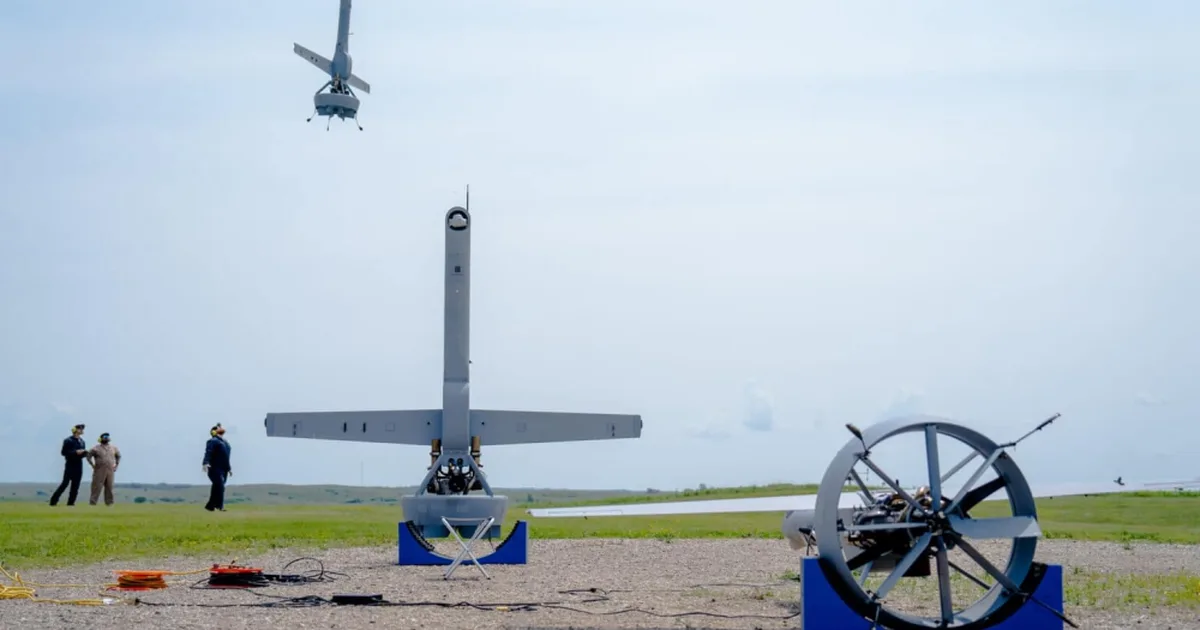
Shield AI has agreed to acquire Echodyne, the Kirkland, Washington maker of compact counter-drone radars, in a $5.3 billion deal — and is raising $2.5 billion to pay for it, including a $1 billion Series H round that values the defense AI company at $28.8 billion, more than double where it stood in March.
The deal, announced November 5, is a definitive agreement: Shield will pay $4.8 billion at closing, with up to $500 million more contingent on Echodyne hitting agreed performance targets. Closing is expected in early 2027, subject to regulatory approvals. Both companies say they expect triple-digit revenue growth this fiscal year.
The $2.5 billion raise behind it
The financing has three parts. The $1 billion Series H, at a $28.8 billion post-money valuation, is co-led by Disruptive and Innovation X Capital, with participation from Advent, the Strategic Investment Group of JPMorganChase's Security and Resiliency Initiative, Snowpoint Ventures, Apandion and Center15 Capital. A second $1 billion comes as structured equity from funds managed by Blackstone, and $500 million as debt financing led by JPMorgan Chase Bank as sole arranger. The Series H proceeds will principally fund the acquisition — and the financing will not go through if the deal falls apart.
The $28.8 billion valuation is more than double the $12.7 billion Shield reached in March, according to GeekWire. It is also, by one measure, a landmark exit for the Seattle region: the deal is believed to be the second-largest acquisition of a private venture-backed company in Washington state history, behind Okta's $6.5 billion acquisition of Auth0 in 2021, venture firm Madrona's Tim Porter wrote.
What Shield gets: the eyes for its autonomous aircraft
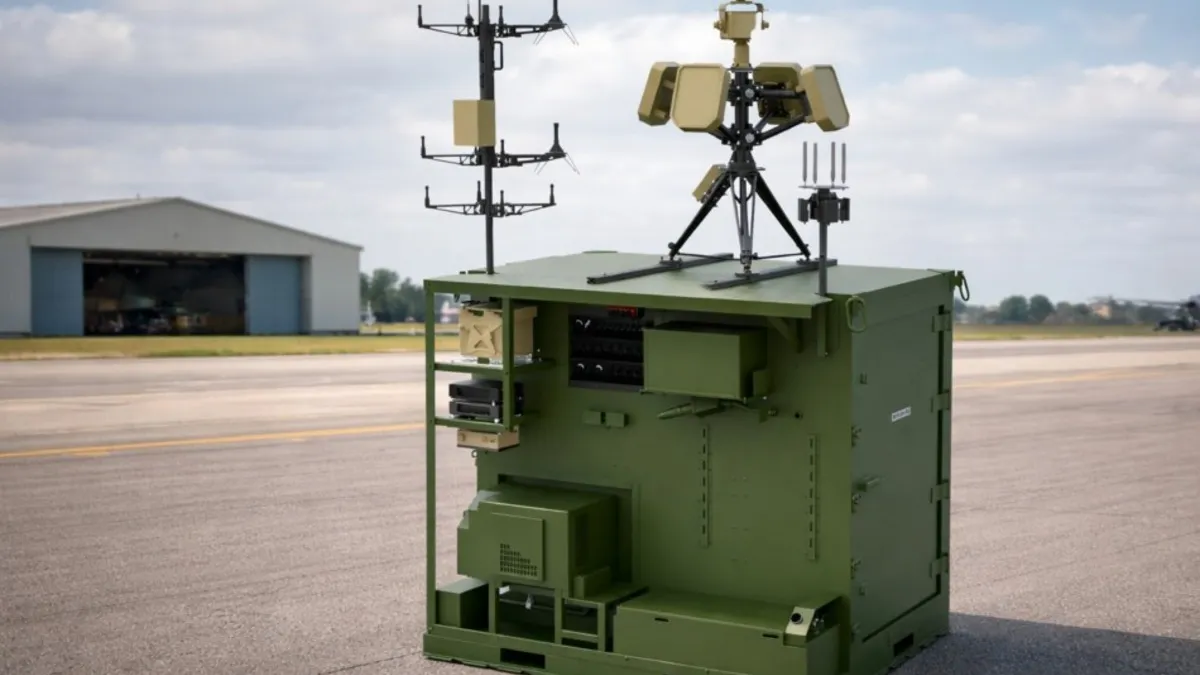
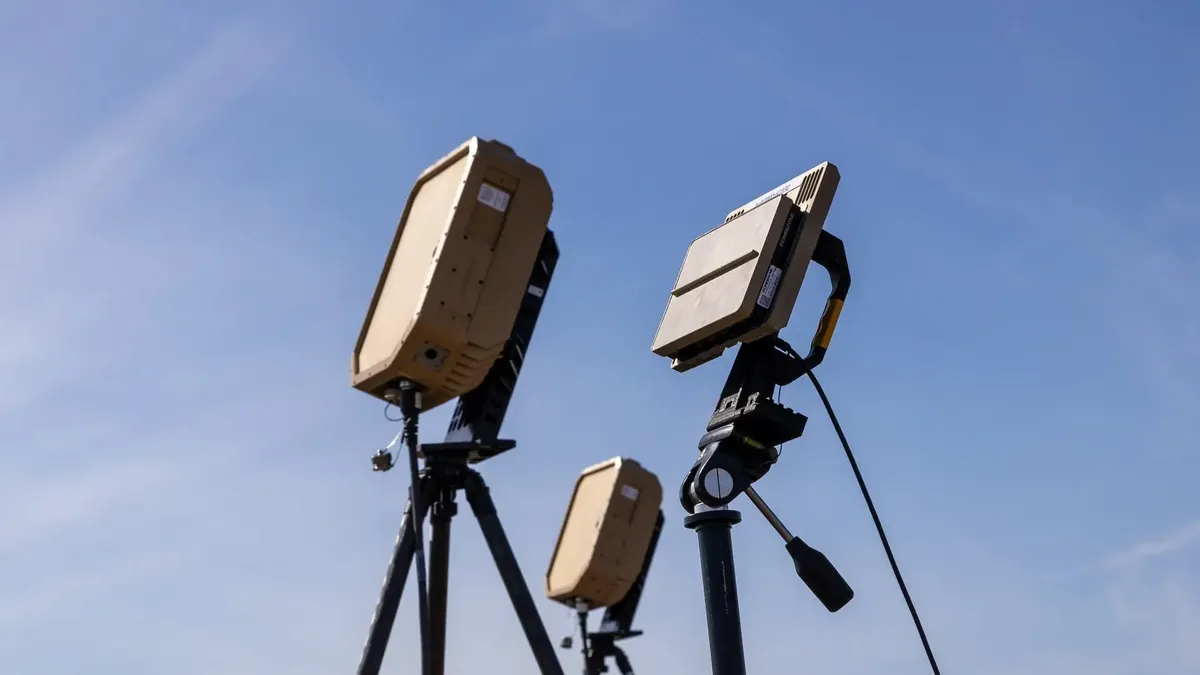
Echodyne designs and manufactures compact, solid-state radars using its patented Metamaterials Electronically Scanned Array (MESA) technology. Its radars are built into hundreds of counter-drone and security systems used by defense, government and commercial customers in more than 40 countries. They detect, track and help defeat drones — integrated onto remote weapon stations, high-energy lasers and high-power microwave systems, and cueing interceptors toward incoming drones. Civilian operators use the same radars to protect stadiums and airports from unauthorized drones and to let police and fire departments fly drones safely in shared airspace.
In September, Echodyne won a contract with a $250 million ceiling from Joint Interagency Task Force 401, the Defense Department's counter-drone task force, to supply counter-drone radar to U.S. and allied forces. It recently opened an 86,350-square-foot manufacturing facility in Woodinville, Washington — a $40 million investment able to produce about 30,000 radars a year.
Three business units, one defense company
Shield CEO Gary Steele framed the deal as the shape of the company he is building: “We are building a new-generation defense technology company consisting of three fast-growing, high-margin, mutually supporting business units: autonomy software, autonomous systems, and mission systems.” The acquisition, he said, “dramatically accelerates our efforts to meet growing customer demand for multi-mission capabilities, provides increased access to a rapidly expanding counter-drone industry, and further diversifies our revenue streams.”
Echodyne becomes the mission-systems unit, alongside Shield's Hivemind autonomy software, its V-BAT and X-BAT autonomous aircraft, and its Aechelon simulation business. Echodyne CEO Eben Frankenberg stays in charge of its products, manufacturing and customer relationships, reporting directly to Steele. No layoffs are planned, and Echodyne's roughly 400 employees will not be required to relocate; the combined company will have about 2,700 employees. MESA radars will remain available as standalone products.
Frankenberg put the logic in one line: “Autonomous systems can only act on what they can sense, and superior sensors lead to superior systems and outcomes.”
Why now
This is Shield's fifth acquisition and its largest. The others were Heron Systems and Martin UAV in 2021, Sentient Vision Systems in 2024 and Aechelon Technology in June. The timing follows a year in which Shield unveiled its second aircraft design, the AI-piloted X-BAT fighter jet, and named Washington the production home for the program in September — with plans to employ about 4,000 people in the Seattle region by the early 2030s.
For Echodyne, the deal caps a long climb. It spun out of Intellectual Ventures, the Bellevue invention lab, in 2014 with a $15 million round led by Bill Gates and Madrona, has raised about $200 million in total, and was valued at $485 million by PitchBook after its last priced round in 2022. Porter notes Echodyne is profitable — and that Madrona and other Echodyne investors will become significant Shield shareholders.
The counter-drone market is the through-line. Drones are now a fixture of modern battlefields and a growing headache for airports, stadiums and critical infrastructure — and the radar that sees them is the bottleneck every autonomous system shares. Shield is betting that owning the sensor, not just the software that flies the aircraft, is what turns a defense AI startup into a prime contractor. The defense AI race is consolidating fast: OpenAI launched GPT-6 Cyber today, and smaller radar startups are raising seed rounds to chase the same counter-drone demand. Shield just bought its way to the front of the line.
Shield's full announcement is on PR Newswire, and GeekWire has the Seattle angle, including the jobs picture and Madrona's take on the exit.
Frequently asked questions
What did Shield AI agree to buy, and for how much?
Shield AI has entered into a definitive agreement to acquire Echodyne Corp., a maker of compact counter-drone radars, in a transaction valued at $5.3 billion. Shield will pay $4.8 billion at closing, with up to $500 million more contingent on Echodyne meeting agreed performance targets. The deal is expected to close in early 2027, subject to regulatory approvals.
How is Shield AI paying for the acquisition?
Shield is raising $2.5 billion: a $1 billion Series H round at a $28.8 billion post-money valuation, a $1 billion structured equity investment from funds managed by Blackstone, and $500 million in debt financing led by JPMorgan Chase Bank. The Series H is co-led by Disruptive and Innovation X Capital, and its proceeds will principally fund the acquisition.
What does Echodyne bring to Shield AI?
Echodyne's patented MESA radars are built into hundreds of counter-drone and security systems used in more than 40 countries. Its radars detect, track and help defeat drones, are integrated onto remote weapon stations, high-energy lasers and high-power microwave systems, and are also used by civilian operators to protect stadiums and airports. Echodyne becomes Shield's Mission Systems business unit.