UK Autumn Budget confirms the AI package: a Sovereign AI Unit, a data-centre covenant, and £500M for safety and security
Chancellor John Healey used his Autumn Budget speech on Wednesday to turn Britain's trailed AI spending plan into a formal commitment: about £500 million for AI safety and security, a new Sovereign AI Unit backed by £140 million, and a data-centre covenant that trades faster grid connections for community and environmental pledges.
- The banner number: an extra £500 million for AI safety and security, itemised in the Budget document as £120 million for the AI Security Institute, £165 million for a biosecurity initiative, £154 million for cyber defences and £40 million for a unit investigating rogue agentic incidents.
- The sovereignty bet: a first-of-its-kind Sovereign AI Unit, with £140 million to back strategic British AI firms so sensitive data stays under British control.
- The infrastructure bargain: a British data-centre covenant — strict tests on community investment, local jobs and water protection, repaid with grid connections and permission to build on-site generation while waiting.
- The context: Saturday's pre-announcement put the package at £600 million-plus, including a £100 million AI Biosecurity Lab and up to £200 million in OpenAI and Anthropic model credits — credits, not cash.
- The gap: the UK still has no AI-specific statute and no single AI regulator, according to an October 14 House of Commons Library briefing.
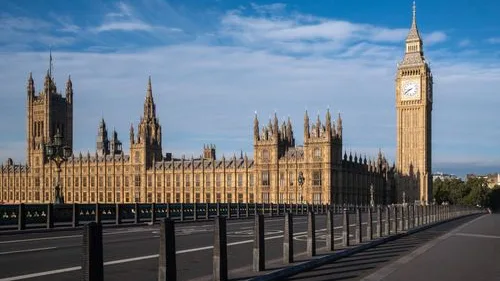
Britain's AI spending plan is now a Budget commitment rather than a preview. About half an hour into his Autumn Budget speech on Wednesday, Chancellor John Healey set out the government's approach: the state, he argued, has a clear role in seizing AI's opportunities while guarding against its risks, with security as the foundation. The safety money, the Sovereign AI Unit and the data-centre covenant are the spending expression of that argument.
What Healey actually announced#
The largest figure is the safety and security banner: an extra £500 million for the UK's position as a world leader in AI safety and security. The Budget document breaks most of it down — £120 million more for the AI Security Institute, the frontier-model testing body; £165 million for a National AI Biosecurity Initiative; £154 million for cyber defences; and £40 million for a new National Agentic Security Unit to investigate autonomous agents that act on their own, what the Budget calls rogue agentic incidents. Those four lines sum to £479 million, close to the banner — but the Budget document, not the speech, is the authority.
The second pillar is sovereignty: a first-of-its-kind Sovereign AI Unit, backed by £140 million, to channel government investment into strategic domestic AI firms. Healey's argument was about control of sensitive data — when the health service uses AI to treat patients, and the armed forces use AI to stay safe, the data should remain in Britain. Which firms count as strategic, and how the Unit relates to Saturday's Sovereign AI Fund, is not yet spelled out.
The wider programme, put at roughly £700 million in total by one trade publication citing Treasury documents, adds £30 million for locally led AI partnerships, an AI Challenge Prize, a Union Learning Fund, Founders Relief, and visa and non-compete reforms.
The data-centre bargain#
The most consequential structural measure may be the least glamorous: a British data-centre covenant. Data centres would have to pass strict tests on community investment, local jobs and water protection; in return, critical sites would receive grid connections and, where necessary, permission to build on-site generation while they wait. Grid queues bind AI infrastructure everywhere, so the covenant uses power access as leverage for local benefits and security assurances.
Reaction split tellingly. The chief executive of sovereign cloud provider Civo, Mark Boost, welcomed the ambition but warned that public spending still defaults to foreign providers — if procurement habits do not change, the value created will keep flowing overseas.

Reading the headline numbers#
Three totals have circulated — £500 million, £600 million-plus and £700 million — and they are not contradictions. They bundle different things: the speech's safety banner, Saturday's pre-announced package, and the full programme including sovereignty and adoption lines. Treat any single total as a statement of scope, and check which lines it includes.
| Total | What it counts |
|---|---|
| About £500 million | The Budget speech's extra funding for AI safety and security |
| About £700 million | The full AI package including sovereign capability and adoption, per Treasury documents |
| £600 million-plus | Saturday's pre-announced package, per advance reporting |
| £140 million | The Sovereign AI Unit's backing for strategic British AI firms |
| £120m / £165m / £154m / £40m | AI Security Institute / biosecurity initiative / cyber defences / agentic incidents unit |
One more caution: up to £200 million of Saturday's package is not government cash but credits from OpenAI and Anthropic for use of their own models, pledged to the new biosecurity lab. Credits are a real research input, but not spending — and they tie a public institution to two private providers' products. The £40 million agentic-incidents unit is likewise an admission that agent proliferation is now an operational risk: one identity-security vendor estimates British enterprises add as many as 10,000 autonomous agents a month, most without oversight. Whether £40 million buys investigation capacity at that scale is an open question.
What the money does not buy#
Notably absent is legislation. A House of Commons Library briefing published on October 14 recorded that the UK has no AI-specific legislation and no single AI regulator, and that the AI Security Institute has no statutory powers. The only AI-specific statutory power in force sits in the Online Safety Act, is unused, and faces a progress report to Parliament by December 31, 2026. The Budget's approach is procurement-led: standards set through contracts, grants and grid access, not an act of Parliament.
Delivery dates are still missing for the chip-design academy, the Manchester cyber centre and the local partnerships, and the Unit's relationship to Saturday's £60 million Sovereign AI Fund is unclear. Adoption is the other weak link: the head of Zoom's UK and Ireland business argued Britain's AI ambitions will be won in town halls and small businesses, not just boardrooms. The £30 million local partnerships are the bridge, and they are small next to the safety lines.
What to watch#
Four things to track: Budget and Treasury documents, which may revise the speech figures; the Unit's first investments and which firms qualify as strategic; the covenant's first tests — a delayed or refused project would prove they have teeth; and the December 31 progress report on the unused Online Safety Act power, a marker for whether legislation ever follows the money. If procurement shifts toward British providers, the sovereignty argument gains substance; otherwise the Budget reads, in retrospect, as a well-funded statement of intent.
Sources: Computer Weekly — Autumn Budget 2026: Chancellor sets aside funds for UK tech (October 28, 2026); Technology Magazine — Budget 2026: UK unveils £700m fund for sovereign AI (October 28, 2026); The Bridgwater Brief — What the 2026 Budget actually spends on AI (October 28, 2026); AI & GPP — Britain prices its AI security state (October 26, 2026); Pollar — UK funds AI Biosecurity Lab with £600m security package (October 24, 2026).