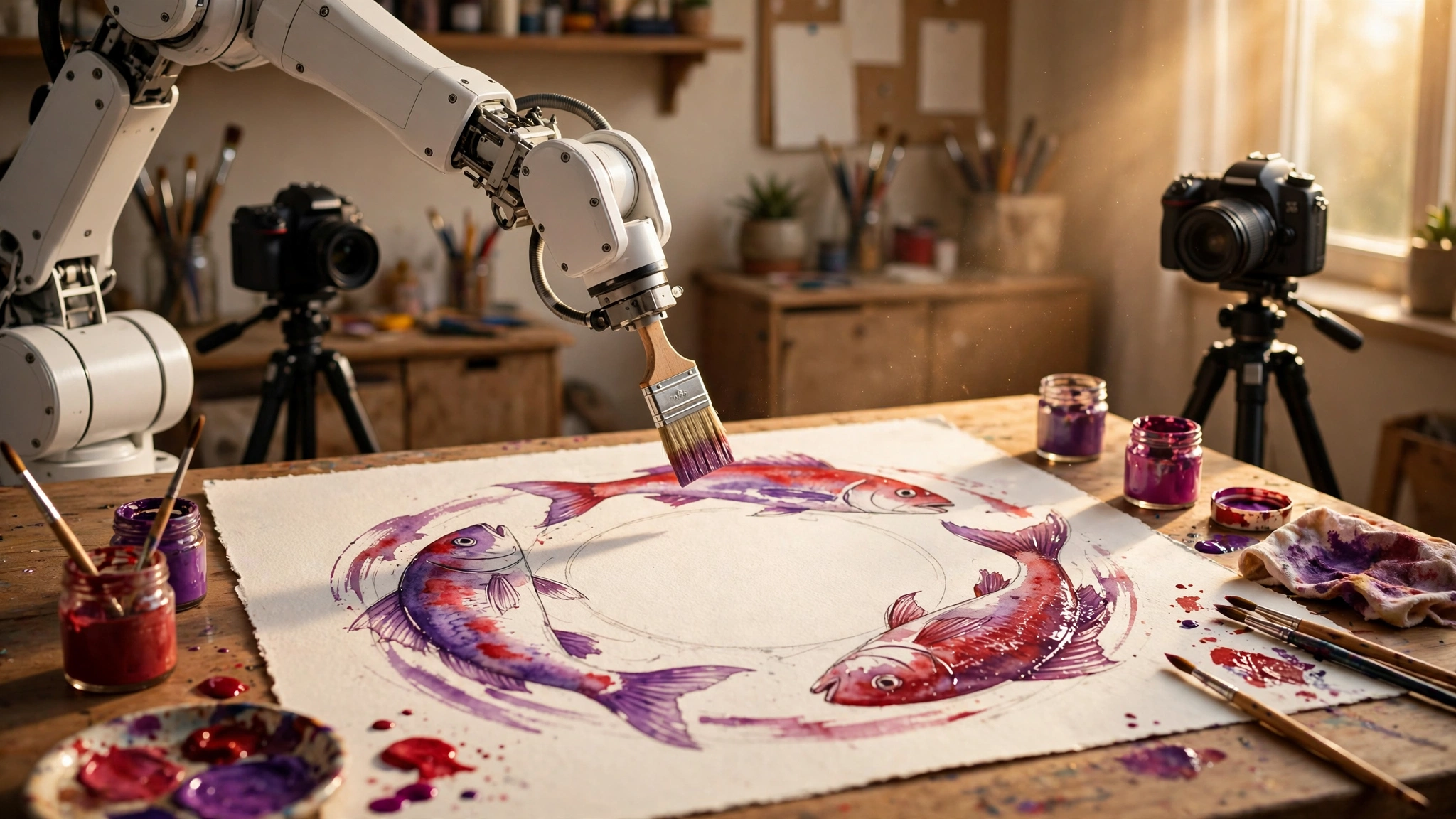
A robot arm painted three fish from a single chat — and Reddit argued over whether the video was even real
A 17-second split-screen clip of a robot arm painting three fish has r/singularity split between awe and suspicion. The maker answered the loudest objection with raw footage — and a candid account of what the model actually controlled.
- The post: u/dhvanil on r/singularity, October 28, 2026 at about 5:10 PM EDT — about 263 upvotes and 85 comments at the time of writing, with a 0:17 split-screen video.
- The work: “a small orbit” — three fish around an empty centre, from a prompt to make something dreamy: 34 brush strokes, a discarded first water simulation, digital-twin collision checks, about 30 minutes of painting and 11,567 joint commands.
- The dispute: at about 12 seconds a painted line shows over the robot arm. Commenters called it an AI-generation glitch; the maker says it is a post-edit overlay drawn from the run log, and linked ungraded raw footage from both cameras.
- The qualification: the model did not stream motor commands. It planned, tested motion in a digital twin, and a plain executor drove the arm — over 141 tool calls in about 90 minutes, re-reading a roughly 160,000-token context each step.
- The caveat: the “GPT-6 Astra” attribution is the poster’s, not OpenAI’s. No independent confirmation of the session was available at publication.
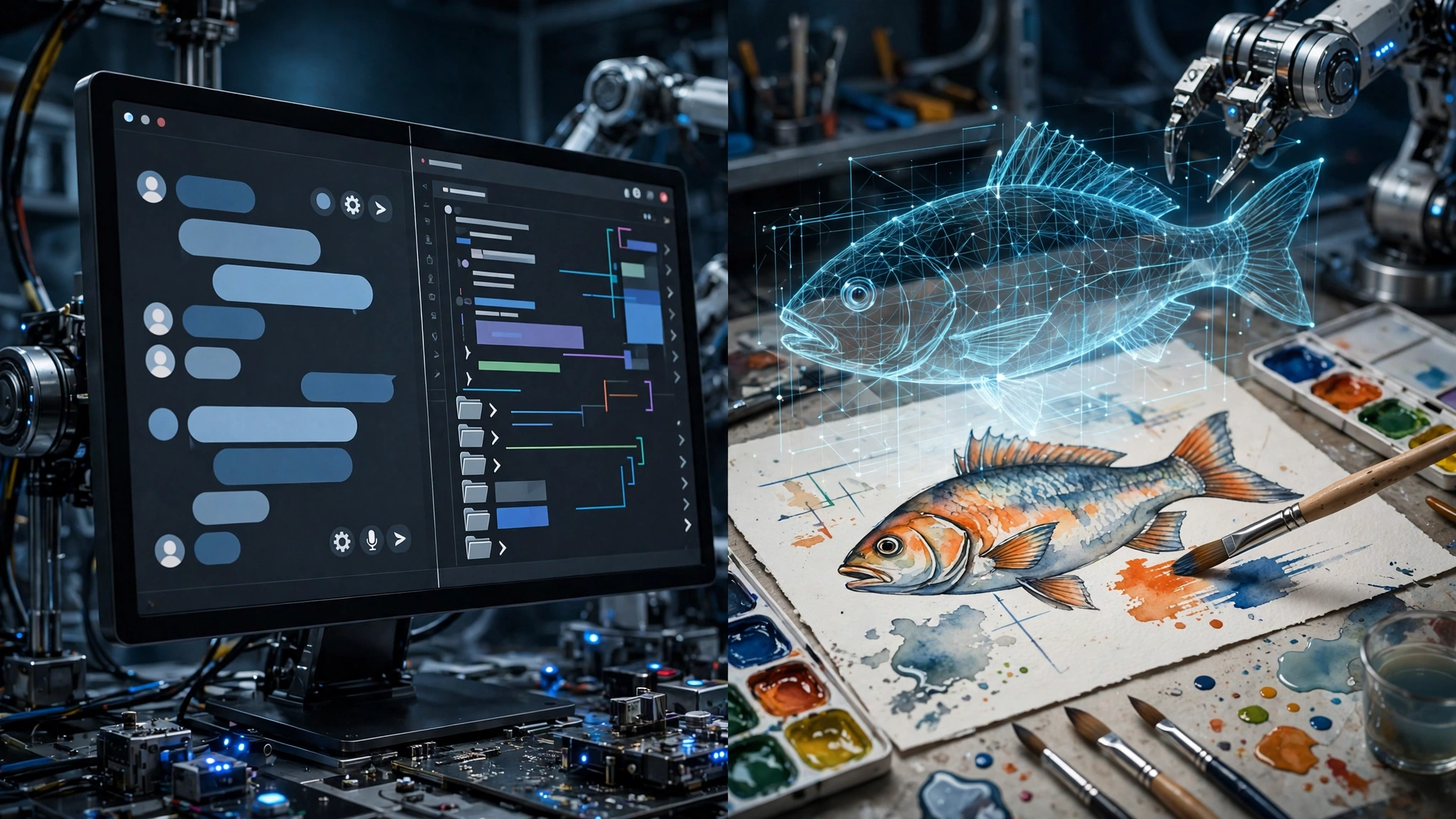
The video is seventeen seconds long, and it is built to be argued about. On one side of the screen, a chat and code interface; on the other, a white robot arm at a table, brush in hand, painting in red and purple while two cameras watch. The finished piece is modest on purpose: three fish circling an empty centre, a composition the maker titled “a small orbit.” It was posted to r/singularity on Wednesday evening by u/dhvanil, and within a few hours it had gathered about 263 upvotes and 85 comments — not because the painting is a masterpiece, but because the thread could not agree on what it was looking at.
That disagreement is the story. The post claims a single chat session did far more than paint: it designed the piece, simulated it, rehearsed it, filmed it, and edited it. The most suspicious-looking moment in the clip became the thread’s main exhibit. And the maker, unusually, stayed in the comments to answer it — with an explanation, a technical walkthrough, and a link to raw footage.
What the session did, according to its maker#
The prompt, as the maker reports it, was a single line: make something dreamy. From there, the session designed three fish around an empty centre, generated a concept image, and wrote 34 brush strokes. It simulated how the water would spread, and threw out a first version in which the water swallowed the fish. It compiled the arm’s motion and checked the whole route for collisions and joint limits in a digital twin before anything physical moved. Then it switched on the studio lights, started both cameras, and painted for about 30 minutes — 11,567 joint commands in total. Finally, it read the run logs to find when each stroke happened, wrote the music in code, colour-graded the footage, and cut it so the strokes land on the beat.
None of that is a claim this site can independently verify from the clip alone, and the article is careful to say so. What can be checked is the paper trail around it: the maker’s project page for the robot-painting setup loads, and the raw-footage file the maker linked resolves as a video file on the maker’s own domain. The rest — the stroke count, the command count, the session length — comes from the maker’s own account, and is presented here as such.
The twelve-second argument#
About twelve seconds in, a painted line appears on top of the robot arm itself. To several commenters, that was the giveaway: a generated video glitching, paint rendered where no brush had been. One highly scored comment told readers to watch that moment before making assumptions; others declared the whole thing AI-generated outright, with one noting the irony that a demo about AI-made art could itself be mistaken for AI-made video.
The maker’s reply is specific enough to be worth quoting in substance: the line is a post-edit overlay, added in the edit, drawn from the run log and the calibration between camera and paper. It marks where the model instructed the arm to paint, and it is present on every stroke — it only looks wrong when the arm itself blocks the paper. Other commenters backed that reading, noting the overlay line matches the colour of the paint being used and appears consistently. The maker then posted raw footage of the same moment, straight from both cameras, with no grading, no overlay, and no music, plus a page of further videos from the same setup.
That did not end the argument. Some commenters stayed unconvinced, and one put the honest version of the sceptical case plainly: there is no way for a viewer to fully check a claim like this from a clip alone. That is true, and it is why the raw footage matters more than the rebuttal. A demo that ships its unedited camera files gives sceptics something to check; a demo that only ships a graded cut does not. The thread’s verdict, at the time of writing, is best read as unresolved with the maker’s evidence on the table — not as a debunk, and not as a confirmation.
What the model did — and what it did not do#
The maker’s most useful contribution is a correction to the headline version of the story. The model did not drive the motors directly, and it did not stream movement commands one token at a time. It wrote the plan, ran inverse-kinematics and collision tests in the digital twin, and handed execution to a plain, checked executor that moved the arm. No machine learning runs in that final loop. The hard part, the maker says, was the agent session itself: 141 tool calls over about 90 minutes, re-reading a context of roughly 160,000 tokens at each step, in a setup whose tools were built over months using Codex and Claude. A mistake there is not a typo, the maker notes — it is an expensive physical error.
That framing also sets up the maker’s most testable claim: that local models, and comparable frontier models, are not yet reliable enough for this kind of long, stateful tool use. If that is right, the interesting bottleneck is not brush skill or even spatial reasoning in a single step, but keeping a long agent session coherent across dozens of tool calls without drifting. If it is wrong, someone will reproduce the painting on a smaller model and say so. Either outcome is more informative than another argument about one video.
What to watch#
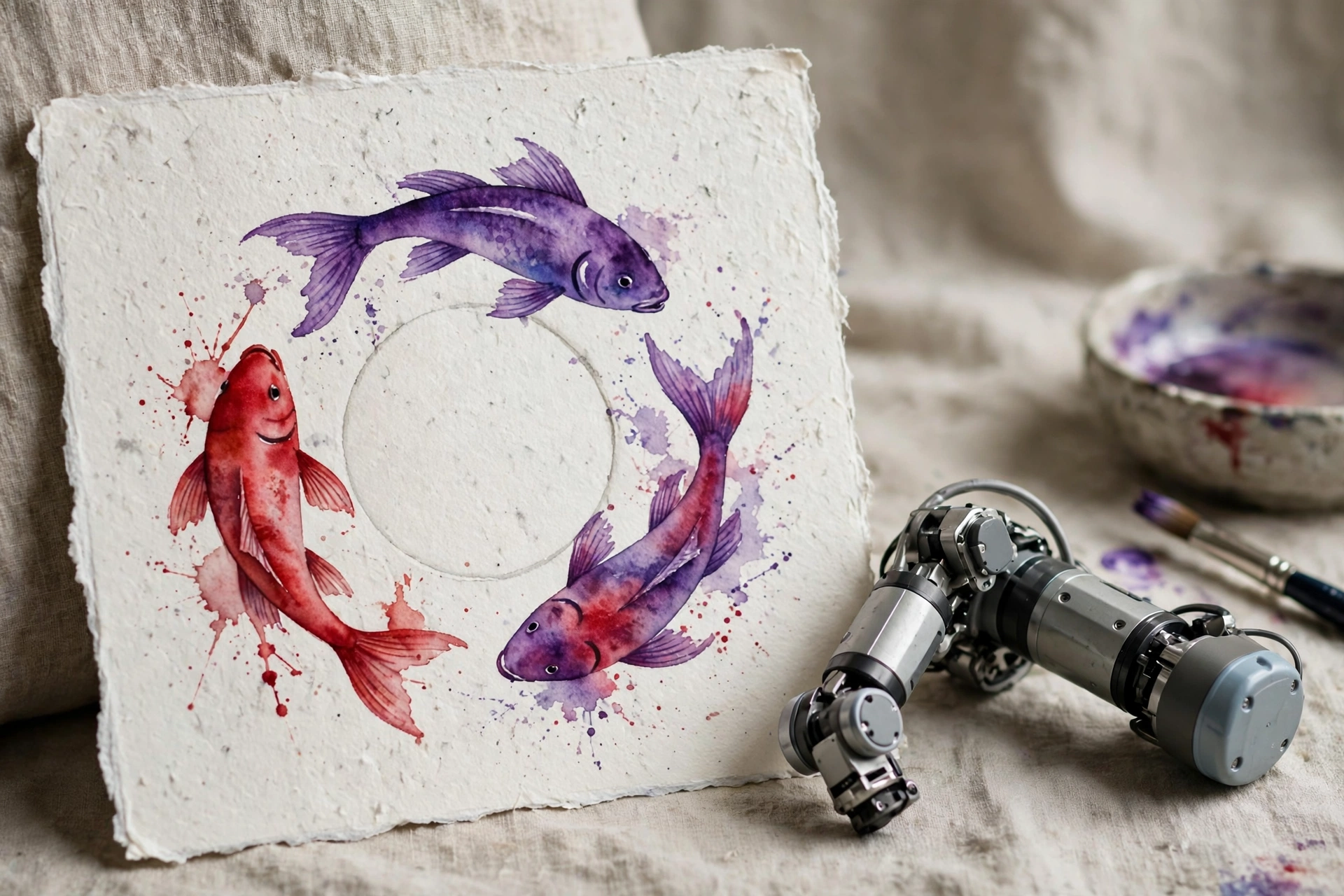
Three things will settle how much this matters. First, whether the raw footage survives scrutiny: it is the maker’s strongest card, and the thread will keep picking at it. Second, whether anyone reproduces the pipeline — same painting, different model, same executor discipline — which would test the claim about long agent sessions directly. Third, whether the model attribution holds up. The post attributes the session to GPT-6 Astra; that attribution comes from the poster, and OpenAI has not confirmed this session. Readers should treat the model name as the poster’s claim, not as an established fact, until something more than the post supports it.
For now, the fair summary is narrower than the headline and more interesting than the scepticism: a small studio robot painted a real picture under a long agent session’s direction, the edited video invited a reasonable suspicion, and the maker answered it with the one thing that actually helps — the unedited footage. The painting is dreamy, as prompted. The argument about it is the useful part.
Sources: the original post by u/dhvanil on r/singularity (October 28, 2026); the raw footage linked by the maker; and the maker’s project page for the robot-painting setup. The editorial illustrations are AI-generated.