Wikipedia’s parent tells the NYT v. OpenAI court: AI training can be fair use — chatbot answers must credit their sources
The nonprofit behind Wikipedia has asked a New York court to split the AI copyright question in two. In a brief announced on October 30, the Wikimedia Foundation argues that training an AI model can be fair use — but that chatbot answers which fetch and repeat copyrighted work must follow the source’s licence.
- Who and when: the Wikimedia Foundation, the nonprofit behind Wikipedia, announced on October 30, 2026 that it filed an amicus brief with the U.S. District Court for the Southern District of New York.
- The case: In re: OpenAI, Inc. Copyright Infringement Litigation, 12 combined lawsuits against OpenAI, the best known being The New York Times Co. v. Microsoft and OpenAI, filed in 2023. The court will rule on whether AI companies’ use of copyrighted content to develop large language models constitutes fair use.
- Training: the Foundation argues using copyrighted content should be considered fair if it trains LLMs that are something new and different from the original sources, with no requirement to meet copyright licensing terms.
- Retrieval answers: retrieval-augmented generation and similar grounding techniques should not be considered fair; companies must respect licensing requirements. Wikipedia’s licence, Creative Commons CC BY-SA 4.0, requires credit to the original creators and that remixes or adaptations remain under the same licence.
- The scale at stake: Wikipedia has more than 67 million articles across 300 languages, and nearly 250,000 volunteers contribute each month, according to the Foundation.

The Wikimedia Foundation, the nonprofit that hosts Wikipedia and other open-knowledge projects, said on October 30 that it had filed an amicus brief — a friend-of-the-court opinion — with the U.S. District Court for the Southern District of New York in In re: OpenAI, Inc. Copyright Infringement Litigation. The consolidated case combines 12 lawsuits against OpenAI; the best known is The New York Times Co. v. Microsoft and OpenAI. The court will rule on whether AI companies’ use of copyrighted content to develop large language models counts as fair use, a ruling the Foundation says will be highly influential because only a few cases have addressed the issue so far.
A third position#
The Times, which sued in 2023, alleges that OpenAI and Microsoft’s use of Times-owned content for any purpose — including AI model training — is a direct violation of copyright law. OpenAI and Microsoft argue that training and deploying models based on publicly available data is technological development that falls within fair use. Wikimedia’s brief says both extremes carry a cost: a too-restrictive version of fair use could inhibit technological innovation and limit the availability of tools that benefit open-source projects like Wikipedia, while a ruling for blanket fair use could lead to a more closed web, where knowledge online is weakened by a lack of available secondary source materials.
“We are taking a position in this case to defend the free and open human knowledge that Wikipedia depends on,” chief executive Bernadette Meehan said in the announcement. “Expanding access to knowledge through AI is a powerful goal, but it must respect the people, contributors, and communities that make reliable knowledge possible.”
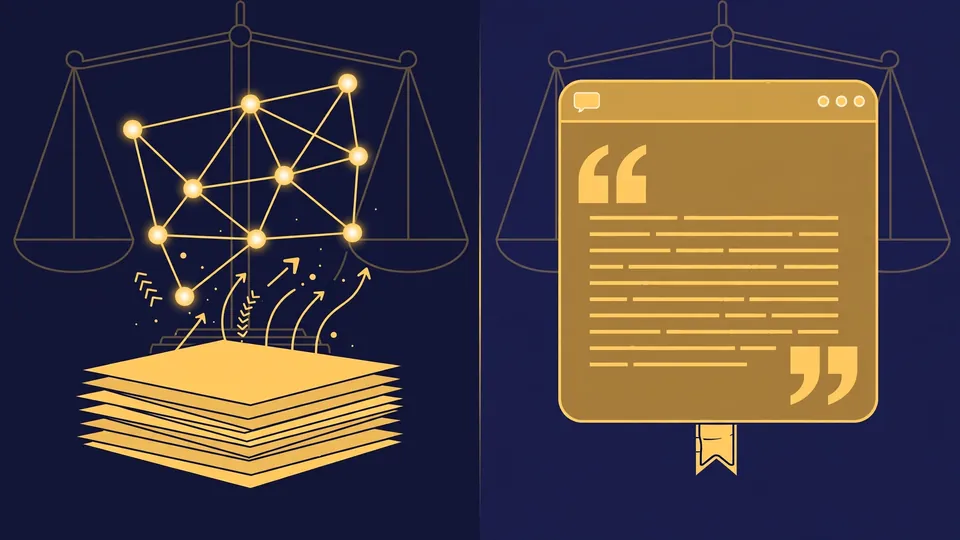
The split: training vs. grounding#
For model training, the Foundation argues that using copyrighted content should be considered fair if it is being used for training LLMs that are something new and different from the original sources. In that case, it says, there would be no requirement to meet any copyright licensing terms.
Retrieval-augmented generation is different, it argues. RAG is a process that finds and copies news content or other works of human knowledge from the web and then delivers that same content back to users through a chatbot interface — one of several techniques that ground a chatbot’s answers in current sources from the internet. For RAG and newer techniques that serve a similar grounding purpose, the Foundation argues the use of copyrighted works should not be considered fair, and companies offering the feature should respect each content platform or publisher’s licensing requirements to avoid copyright infringement. In Wikipedia’s case that licence is Creative Commons CC BY-SA 4.0, which requires credit to be given to the original creators of the work and that any remix or adaptations remain under the same CC licence.
The Foundation draws the practical line the same way: uncredited use of the content it hosts should be limited to model training, and any use for RAG or grounding must result in proper attribution under CC BY-SA 4.0. As importantly, it says, scraping of its projects must be done sustainably and in line with its public API rate limits or through its Enterprise API offerings.

Why Wikipedia is at the centre of it#
Wikipedia is one of the most popular and trusted open-knowledge websites in the world, with more than 67 million articles across 300 languages, the Foundation says. Every month, nearly 250,000 volunteers contribute their time to create and improve information on Wikipedia, using reliable sources such as well-researched news articles. It is also one of the highest-quality datasets used to train LLMs and part of the backbone of information on the internet, powering AI chatbots, search engines and voice assistants — which is why a ruling on how training data may be used lands directly on the project.
“A ruling that does not apply fair use principles carefully could threaten the sustainability of free knowledge, and stifle the development of open source technologies, ultimately impacting access to information for everyone in both cases,” the Foundation’s General Counsel Stephen LaPorte said. “The court needs to understand that Wikipedia is created through a collaborative process that requires a strong foundation of open and accessible human knowledge to thrive.”
What to watch#
An amicus brief argues a position; it does not bind the court, and the court has not decided the fair-use question. A summary judgment in the lawsuit is expected in the near future, according to Engadget’s report. Watch whether the judge adopts the training-versus-grounding split — and whether other courts, and AI labs writing their own attribution practices, treat grounded answers as licensed republication rather than fair use. For publishers, the distinction is the point: training may stay open, but the answer on the screen may still need a credit line.
Sources: the Wikimedia Foundation’s announcement, “The Wikimedia Foundation files to protect open knowledge in New York Times v OpenAI case”, and Engadget’s report, “The Wikimedia Foundation weighs in on the NYT’s case against OpenAI”. Images are AI-generated editorial illustrations.