xAI's Data Bot is Grok Bot's shared data scientist — and it handled 70 hours of work in a week
xAI introduced Data Bot on November 2, 2026, a Team Bot in Grok Bot that gives every employee a data scientist on call — querying the company’s warehouse with the data science team’s shared skills and memory. The company estimates it handled about 70 hours of work in the week before publication, a first test of whether one team’s expertise can scale without adding headcount.
- Who and when: xAI (SpaceXSI) introduced Data Bot on November 2, 2026, in a post titled “Giving every team a data scientist with Grok Bot.”
- What it is: A Team Bot in Grok Bot built by SpaceXSI’s data science team. It queries the company’s data warehouse, conducts analyses, and returns results in the form each person prefers; teams can add it to Slack channels.
- Skills: Four areas — metrics and analysis, experiments, charts and dashboards, and data engineering, including dbt models, pipeline alerts, and analytics event logging.
- Memory: Shared memory retains knowledge from day-to-day use, such as pipeline owners and holiday-driven metric drops. Team Bot managers approve or reject proposed additions before they are shared.
- Workload and limits: About 70 hours of work handled in the week before publication, by the company’s estimate. Complex analyses requiring judgment remain with the data science team; no pricing or availability outside SpaceXSI was announced.
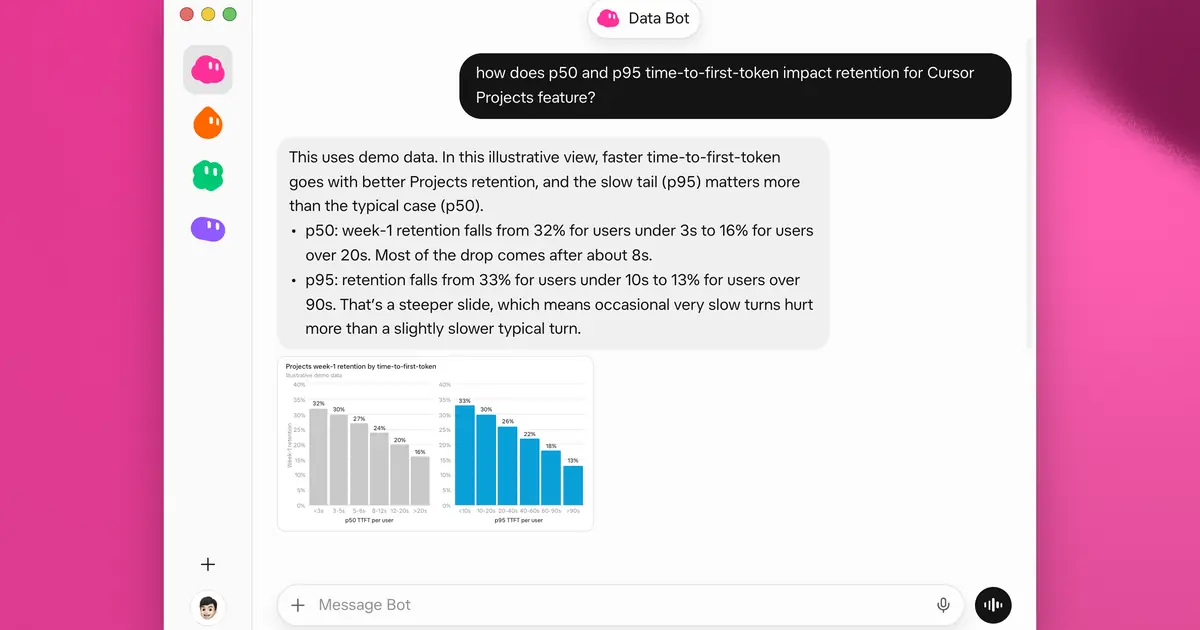
At SpaceXSI, the data science team helps the whole company answer difficult questions — but the team is small, and straightforward questions that still need specialist knowledge can make it a bottleneck. A few months ago, the team started exploring how AI agents could change that relationship, xAI said on November 2, 2026: it wanted to give everyone a data scientist, available around the clock, that draws on the team’s collective knowledge, while shifting the team’s own work toward building and improving that AI teammate.
The result is Data Bot, a Team Bot in Grok Bot that the data science team has taught how it works. It can query the company’s warehouse, conduct analyses, and return results in the form each person prefers. Unlike personal bots, which depend on what their owners know to teach them, Data Bot draws on a shared set of skills that the data team maintains and improves for everyone who uses it. Teams can also add it to their Slack channels, where it answers questions and contributes to ongoing work.
Four skill areas, one shared memory
Data Bot’s skills cover four areas, according to xAI. Metrics and analysis defines core measures such as active users and revenue, identifies the source tables and query logic behind them, and guides investigations into changes — breaking a spike or drop down by segment or region and checking for holidays or logging changes before attributing it to a product change. Experiments covers setting up A/B tests, running power analyses, checking exposure balance and sample bias, planning rollouts, and writing readouts once experiments reach power. Charts and dashboards sets visualization practice — line charts for trends over time, horizontal bars for category comparisons, plus the team’s chart themes and style guides — and can turn a chart created in chat into a Databricks or Hex dashboard. Data engineering covers writing and reviewing dbt models, conventions for automated pipeline alerts, and adding analytics event logging so new features can be measured from launch.
Data Bot also has shared memory, so it retains knowledge that emerges through day-to-day use — which teammate owns a pipeline, or that a previous drop in an important metric turned out to be a regional holiday. The next time it investigates a similar change, it can check the holiday calendar before blaming a product change. As the Team Bot’s managers, the data team reviews proposed additions to that memory and approves or rejects them before the knowledge is shared with everyone using Data Bot.
In use: product, marketing and revenue
Product managers get a way to explore questions their existing dashboards cannot answer. Kevin Niparko, a product manager at SpaceXSI, can message Data Bot in Grok Bot much as he would a teammate, get an answer in minutes, and follow up without starting a new analysis. He prefers a concise headline accompanied by a chart, and Data Bot presents its findings in that format — which, xAI said, means he can now explore questions he might otherwise have let go rather than asking a data scientist for help.
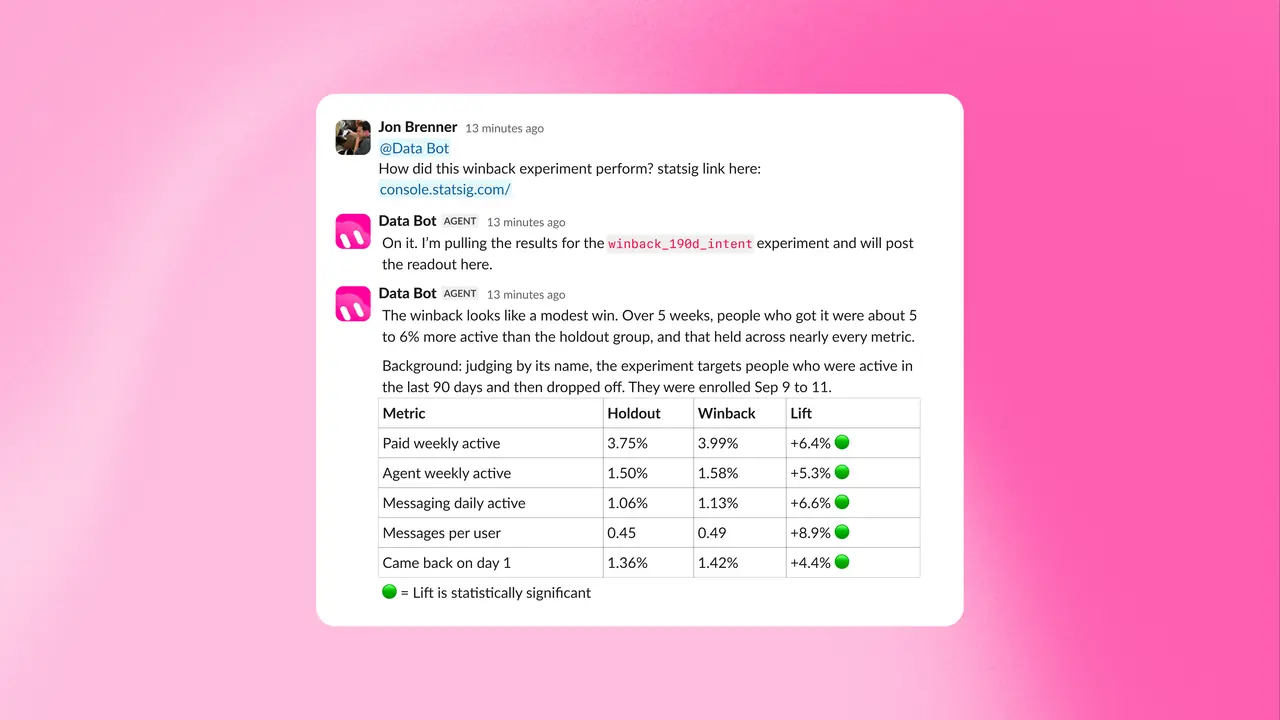
Jon Brenner, who works on lifecycle marketing, uses Data Bot as an on-call analyst: he can supply a Braze campaign ID and ask what recipients did afterward, and Data Bot queries the warehouse to see whether people who clicked went on to use the feature. For the recent launch of The X Subscription, Brenner wanted to know how many email recipients actually switched plans — a question Braze’s built-in conversion metric could not answer, so Data Bot tracked how many recipients received the email and how many went on to switch plans.
Katy Abbaszadeh, director of revenue growth, uses Data Bot to measure the impact of events on sales, tracking how events contribute to pipeline generation and accelerate existing deals. She also uses it to monitor weekly progress against targets, investigate what might be slowing progress, and turn the results into charts for presentations, Blockchain.News reported.
Beyond single questions
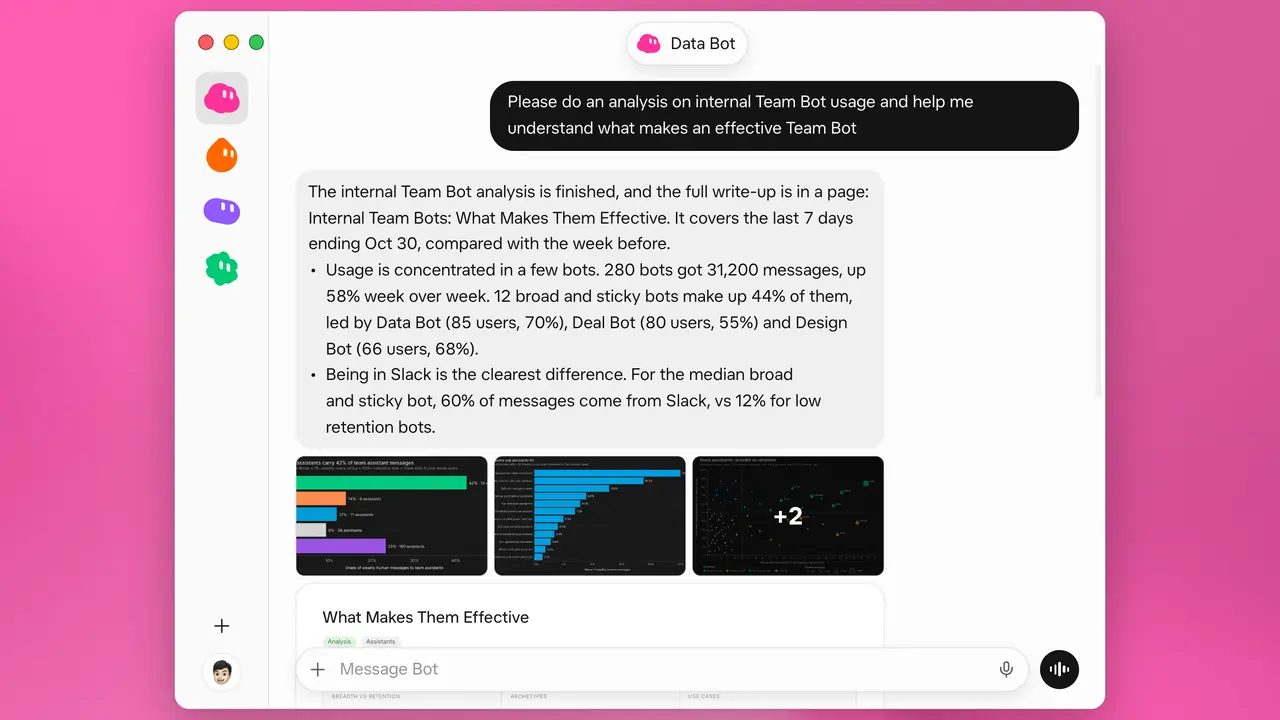
Data Bot can also take on work that goes beyond answering individual questions. A product manager investigating a change in product adoption can ask it to work out what happened; Data Bot can plan the analysis, query the warehouse, explore possible explanations, and produce a written report with charts or build a dashboard in Hex that the team can keep using. Teams can give it responsibility for ongoing reporting in Slack — tracking an important metric and posting weekly updates following the data science team’s reporting conventions — with colleagues asking follow-up questions or requesting an investigation into an unexpected change in the same conversation.
What it does not claim — yet
The headline number comes with a caveat. Data Bot adoption is growing quickly within SpaceXSI, and xAI estimates that in the week before the announcement alone, it handled about 70 hours of work that would otherwise have landed on the data science team. That is the company’s estimate, not an independently audited measurement, as Blockchain.News noted. The data team still handles complex analyses that require more judgment, and says it is learning where Data Bot needs additional guidance. And the announcement describes use inside SpaceXSI: it does not announce a general product release, pricing, or availability outside the company.
Frequently asked questions
What is Data Bot?
A Team Bot in Grok Bot built by SpaceXSI’s data science team. It queries the company’s data warehouse, conducts analyses, and returns results in the form each person prefers, using a shared set of skills and shared memory maintained by the data team.
How is it different from a personal bot?
A personal bot depends on what its owner knows to teach it. Data Bot draws on a shared skill set that the data science team maintains and improves for everyone, plus shared memory whose proposed additions managers approve or reject before they are shared. It can also be added to Slack channels, where it answers questions and posts scheduled updates.
How much work did it handle, and what still needs humans?
xAI estimates Data Bot handled about 70 hours of work in the week before the November 2 announcement — the company’s estimate, not an independently audited figure. Complex analyses that require more judgment are still handled by the data science team.